




Want to restore a firm, defined facial contour but feel overwhelmed by the many medical aesthetics brands out there? From the classic Phoenix Radiofrequency to the new-generation, high-efficiency Tenbei Radiofrequency, which one is right for you? This article provides an in-depth comparison of seven popular radiofrequency treatments (including Wanmei, Haifu, Wushuang, iG, and Jingling), covering their technology, pain levels, and prices, to help you understand the differences between them!
Radiofrequency Lifting Comparison Chart
What Is Radiofrequency Lifting? Principles and Levels of Action
Radiofrequency lifting uses high-frequency electromagnetic waves to generate heat, which is evenly conducted to the deeper layers of the skin through a process known as “volumetric heating.” This thermal stimulation activates the body’s natural repair mechanisms, resulting in skin tightening and facial contouring.
When the tissue is heated to between 55 and 65 degrees, the existing collagen fibers in the skin contract; several months later, fibroblasts are activated and continue to produce new collagen, making the skin appear plumper and more elastic.
How Does RF (Radiofrequency) Energy Affect the Different Layers of the Skin?
The energy transmission in radiofrequency lifting involves three-dimensional heating from the outside in, producing specific effects at different depths:
- Epidermis: The probe is equipped with a cooling system that prevents the epidermis from becoming too hot as the energy penetrates the skin.
- Dermis: This is where radiofrequency primarily takes effect. The heat causes the collagen fiber bundles to contract, reducing fine lines and enlarged pores and giving the skin a firmer feel.
- Subcutaneous Tissue: Energy penetrates deep into the area surrounding the fat layer, using heat to contract sagging tissue and produce a tightening effect that progresses from deep to shallow, thereby improving facial sagging (such as jowls and a sagging jawline).
Radiofrequency Lifting vs. Ultrasound Lifting: A Head-to-Head Comparison—Understand the Key Differences at a Glance
Although the two are often discussed together, their operating principles, the problems they address, and the depth of their impact differ significantly:
| Radiofrequency Lifting | sonic lifting (medicine) | |
|---|---|---|
| Energy Sources | RF (Radio Frequency) | High-Intensity Focused Ultrasound |
| Heating Method | Volumetric Heating | Spot Heating |
| depth of action (physics) | Mainly the dermis | SMAS fascia |
| Key Features | Firming, wrinkle reduction (improves skin laxity and skin texture) | Lifting and Contouring (Improves deep sagging and facial contours) |
| Suitable for | Skin that is soft, thin, and has fine lines or localized sagging | Sagging facial tissue with a noticeable drooping appearance |
Who is a good candidate for radiofrequency lifting? In what situations is it not recommended?
- Suitable for
- Mild to moderate skin sagging: You feel that your facial skin is starting to lose its firmness and no longer feels tight.
- Fine lines around the eyes or on the neck: Provides effective firming for sagging eyelids and a "turkey neck."
- Noticeable fat around the mouth: I’d like to tighten my jawline and reduce the appearance of excess fat in that area.
- People who are afraid of surgery: Those seeking anti-aging treatments with no incisions and a short recovery period.
- Situations in Which It Is Not Suitable
- Implantable electronic devices: If you have a pacemaker, electromagnetic waves may interfere with its operation.
- Pregnant women: Due to hormonal changes and safety concerns, this procedure is not recommended.
- Skin inflammation or open wounds: Wait until the symptoms have stabilized before undergoing radiofrequency treatment.
- People with autoimmune diseases, such as systemic lupus erythematosus, or those with a severe tendency to develop keloids.
- Recent dermal filler injections: If you’ve recently had hyaluronic acid or Botox injections, we recommend consulting your doctor about the recommended waiting period to avoid heat accelerating the metabolism of the fillers.
Comparison of Mainstream Radiofrequency Lifting Treatments on the Market
The current market is primarily divided into two major camps: American and Korean. American brands have a long history of clinical data, while Korean brands are highly competitive in terms of pain management and price flexibility.
Comparison of the Generations and Key Features of Radiofrequency Lifting Technologies Across Different Brands
| branding | Origin | distinctiveness | Suitable Groups |
|---|---|---|---|
| Phoenix Radio Waves | United States of America | Monopolar radiofrequency technology delivers significant deep heating effects. The probe covers a large treatment area, and AccuREP technology automatically detects skin impedance and adjusts the energy level accordingly. | Severe sagging, deep-seated aging |
| Perfect Radio Waves | Korea | Features 3D vibration and cold spray technology, resulting in less discomfort, making it suitable for targeted treatment or first-time users. | First-Time Radiofrequency Treatment: Firming Skincare for Budget-Conscious Consumers |
| Unrivaled Radio Waves | Korea | Hybrid monopolar and bipolar pulse technology that simultaneously provides deep lifting and smooths out superficial fine lines | For those looking to improve their skin texture and facial contours, or who are more sensitive to pain |
| Topei Radio | Korea | The probe has a large surface area and a wide heating range, and the energy output per pulse is stable, making it suitable for use on the entire face and body. | Reduces nasolabial folds, marionette lines, fine lines, and fine lines on the neck. |
| Hifu Radiofrequency | Korea | Utilizing a stable frequency of 6.78 MHz and continuous pulse technology, combined with multi-stage vibration and a continuous water-cooling system, this treatment stimulates collagen regeneration while enhancing treatment comfort and firming results. | Improved skin texture, firmer facial contours |
| iG Radio Waves | Korea | Using GFR mesh-segmented radiofrequency technology, thermal energy is evenly distributed across the skin. Also known as "grid radiofrequency," this technology is characterized by uniform energy delivery and minimal discomfort. | For those looking to improve early signs of aging and sagging and refine skin texture, as well as those who are sensitive to pain |
| Spirit Waves | South Korea/United States | This treatment combines microneedling with bipolar radiofrequency technology: the microneedles create micro-injuries to stimulate tissue repair, while the bipolar radiofrequency generates heat to contract collagen. | Improves skin firmness, reduces wrinkles and fine lines, minimizes acne scars, and tightens pores. |
| Sharp Radio | Korea | Utilizing 6.78 MHz high-frequency monopolar radio waves and featuring exclusive Auto Fit dynamic impedance compensation technology, it automatically detects skin impedance with each pulse and adjusts energy levels in real time; with an ultra-fast 0.1-second continuous pulse mode, a full-face treatment of 900 pulses takes only about 15 minutes to complete. | People who prioritize efficiency and precise customization, those who are afraid of pain, and those who are too busy to spend much time at the clinic |
Differences Between Shibei Radio Waves and Phoenix Radio Waves
Although both Shibei Radiofrequency and Phoenix Radiofrequency use monopolar radiofrequency technology, they differ in terms of their heating mechanisms and comfort levels.
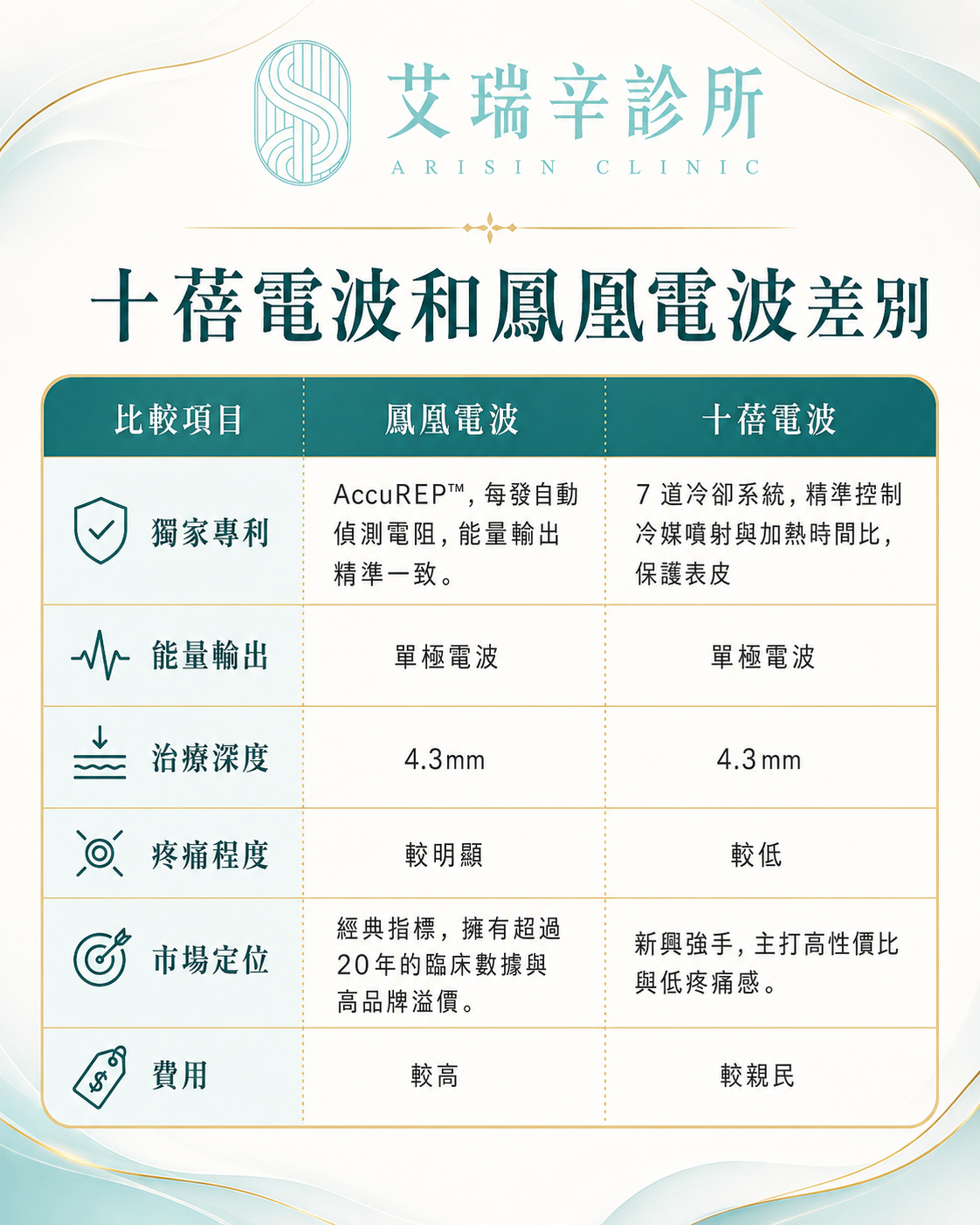
| Phoenix Radio Waves | Topei Radio | |
|---|---|---|
| Exclusive Patent | AccuREP™ automatically detects resistance with every shot, ensuring precise and consistent power output. | A 7-stage cooling system that precisely controls the ratio of refrigerant injection to heating time to protect the surface. |
| Power Output | Monopolar Radiofrequency | Monopolar Radiofrequency |
| Therapeutic Depth | 4.3 mm | 4.3 mm |
| Pain Level | More noticeable | Lower |
| Market Positioning | A classic benchmark with over 20 years of clinical data and a high brand premium. | An emerging contender, known for its great value and minimal pain. |
| Fees | Higher | More accessible |
Generally speaking, people choose “Phoenix Radiofrequency” because of its volumetric heating technology and significant skin-tightening effects, as well as its extensive global clinical track record and proven market performance. “Shibei Radiofrequency,” on the other hand, emphasizes minimal pain and affordability; if you’re sensitive to pain or have a limited budget but still want to maintain your skin’s health, Shibei Radiofrequency is a good choice.
Why do they both have the same name—"radio waves"—but produce such different results?
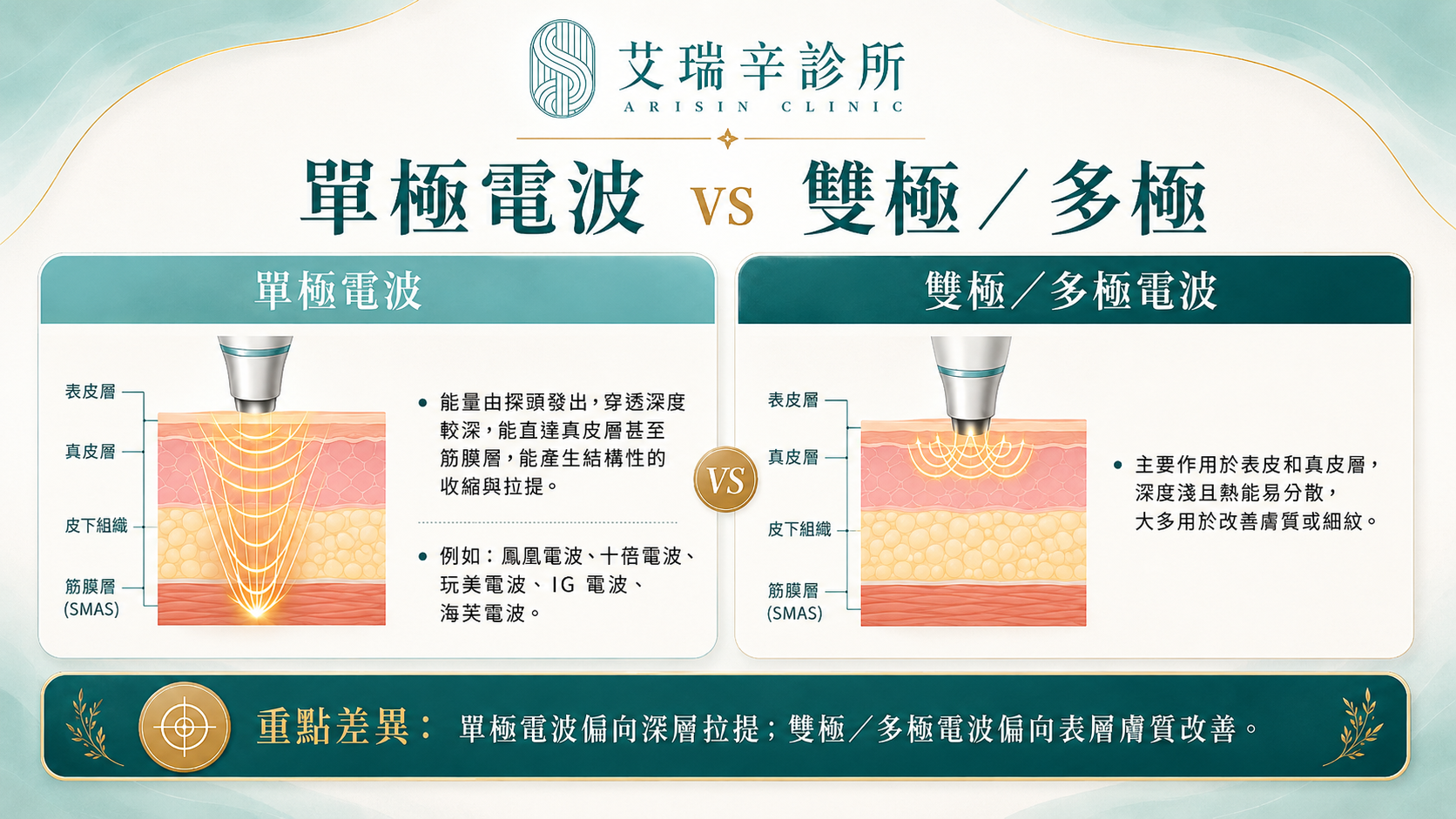
There are so many different types of radio waves—what are the differences between them? The main differences lie in the electrode configuration and output energy.
- Monopolar Radiofrequency vs. Bipolar/Multipolar
- Monopolar Radiofrequency: Energy is emitted from the probe, penetrating deeply to reach the dermis, where it induces structural contraction and lifting. Examples include Phoenix RF, Shibei RF, Wanmei RF, IG RF, and Haifu RF.
- Bipolar or multipolar radiofrequency: Primarily targets the epidermis and dermis; it operates at a shallow depth and the thermal energy disperses easily, so it is mostly used to improve skin texture or reduce fine lines.
- Energy Intelligence Optimization
High-end devices, such as the Phoenix Radiofrequency, automatically detect the skin’s impedance in the treatment area before each pulse and adjust the output power to ensure that every inch of skin receives a uniform and sufficient amount of energy; some radiofrequency devices, however, have a fixed output, which may result in insufficient energy in areas with thicker skin while causing excessive heat in areas with thinner skin.
What Factors Should You Consider When Choosing a Radiofrequency Skin Tightening Treatment?
- Probe Technology (Patented Technology)
- Non-timed probes: Many Korean brands (such as Wanmei Radiofrequency, Shibei Radiofrequency, and Haifu Radiofrequency) do not have time-locking features, making them suitable for those on a limited budget who want to start with 300 or 600 pulses for localized treatment.
- Time-Locked Probe: Once the Phoenix Radio Wave Probe is unsealed, it must be used within 2 to 4 hours to ensure that energy is delivered in the most stable state.
- Energy Mode (Comfort vs. Performance)
Vibration and Cooling Systems: Phoenix uses “Circular Vibration,” while PlayMe and Tenbei Radiofrequency offer “Multi-Stage Coolant Spray.” If you’re very sensitive to pain, we recommend choosing a Korean model with more advanced cooling technology; if you’re looking for results in a single session, American monopolar radiofrequency remains the top choice. - Treatment Depth and Coverage
Depth: Verify that the device can penetrate at least 4 mm below the skin, as this is the key depth for contour tightening. Area: The larger the probe area, the more uniform the energy distribution and the better the thermal stacking effect, which helps reduce treatment gaps.
Comparison of the Eight Major Radiofrequency Lifting Methods
Arixin Clinic has compiled a comparison of eight common radiofrequency treatments available on the market and presented them in a table to help you better understand the differences between them.
Complete Comparison Chart of the Eight Major Radiofrequency Lifting Treatments
| Name | Core Technology | Therapeutic Depth | recovery period | Cost Range | distinctiveness |
|---|---|---|---|---|---|
| Topei Radio | Monopolar Radiofrequency | Deep (4.3 mm) | Hardly any | 50,000 – 60,000 | A high-performance flagship model with a large probe that reduces treatment time, offering exceptional value for the price. |
| iG Radio Waves | Unipolar Grid | Medium to deep | Hardly any | 20,000 – 35,000 | The perfect choice for beginners; it delivers a very gentle exfoliation and is ideal for regular skincare. |
| Phoenix Radio Waves | Monopolar Radiofrequency | Deep (4.3 mm) | Hardly any | 80,000 – 120,000 | The market leader—it delivers the most power in a single charge and lasts the longest. |
| Hifu Radiofrequency | Monopolar Radiofrequency | Dermis · Superficial Fascia | Hardly any | 50,000 – 60,000 | The most comfortable fit; curved probe, ideal for those with delicate facial features or a low pain tolerance. |
| Unrivaled Radio Waves | Mixed monopolar and bipolar | All Levels | Hardly any | 70,000 – 80,000 | A two-in-one formula that simultaneously addresses sagging skin and fine lines on the skin's surface. |
| Perfect Radio Waves | Monopolar Radiofrequency | Deep (4.3 mm) | Hardly any | 50,000 – 60,000 | Affordable and causes minimal discomfort. |
| Spirit Waves | Microneedle | Adjustable based on needle depth | The scab will fall off in 5 to 7 days | 35,000 – 55,000 | Physical microneedling and radiofrequency, specifically designed to treat deep acne scars, severe wrinkles, and sagging skin. |
| Sharp Radio | Monopolar Radiofrequency | Dermis (adjusted according to the probe) | Hardly any | 50,000 – 70,000 | The efficiency champion of ultra-fast treatment—a full-face treatment in just 15 minutes. With Auto Fit intelligent energy control, it’s the top choice for those who are pain-sensitive or have busy schedules. |
Recommendations Based on the Degree of Sagging: Top Picks for Mild, Moderate, and Significant Sagging
- Mild Sagging (Ages 25–35, Preventing Early Signs of Aging):
- Top Picks: iG Radio / Perfect Radio / Sharp Radio
- Reason: At this age, only gentle thermal stimulation is needed to maintain collagen elasticity. These two options have a low cost barrier, making them a more affordable choice for annual premium skincare.
- Moderate sagging (ages 35–45, with facial contours beginning to lose definition and fine lines appearing):
- Top Picks: Shibei Radiofrequency / Wushuang Radiofrequency / Haifu Radiofrequency
- Reason: A more intensive heat treatment is needed to tighten the jawline. Wushuang Radiofrequency is suitable for people with drier skin and fine lines; Hifu is suitable for faces with sunken or hard-to-reach areas; and Shibei is suitable for those who want high-energy results but have budget constraints.
- Noticeable sagging (ages 45 and older, jowls, loose skin):
- Top Choice: Phoenix Wave / Genius Wave (Genius)
- Reason: The thermal energy from the Phoenix Radiofrequency treatment produces the greatest volumetric contraction; for deep wrinkles or cases of extremely poor skin support, the Elf Radiofrequency treatment can be combined with microneedling to deliver energy directly into the dermis, resulting in a more immediate effect on tissue remodeling.
Radiofrequency Alone vs. Combination Treatments: When Should You Combine It with Other Treatments?
Radiofrequency is primarily effective for “tightening” and “refining skin texture,” but the aging process is complex, and radiofrequency alone may not fully meet your expectations.
- Combined with Ultherapy
If there is noticeable sagging of the facial tissues, radiofrequency alone may not achieve optimal lifting results. We recommend using ultrasound to stimulate the fascia layer, generating an upward contracting and lifting force, and combining this with radiofrequency to tighten the skin, thereby achieving results that address both internal and external factors. - In combination with hyaluronic acid or collagen-stimulating agents
There are noticeable depressions on the face, such as at the temples, under the eyes, and in the cheekbones. Radiofrequency treatment can tighten the tissue but cannot restore lost volume. Performing radiofrequency tightening first, followed by injecting fillers into the depressed areas, will result in a more harmonious appearance. - In combination with Botox
Radiofrequency can improve static fine lines, but for dynamic wrinkles such as crow's feet and forehead lines, Botox is needed. Using both treatments together can result in smoother, more natural-looking facial expressions after the procedure.
Shibei Radiofrequency: The Top Choice for Those Who Fear Pain and Seek Efficiency
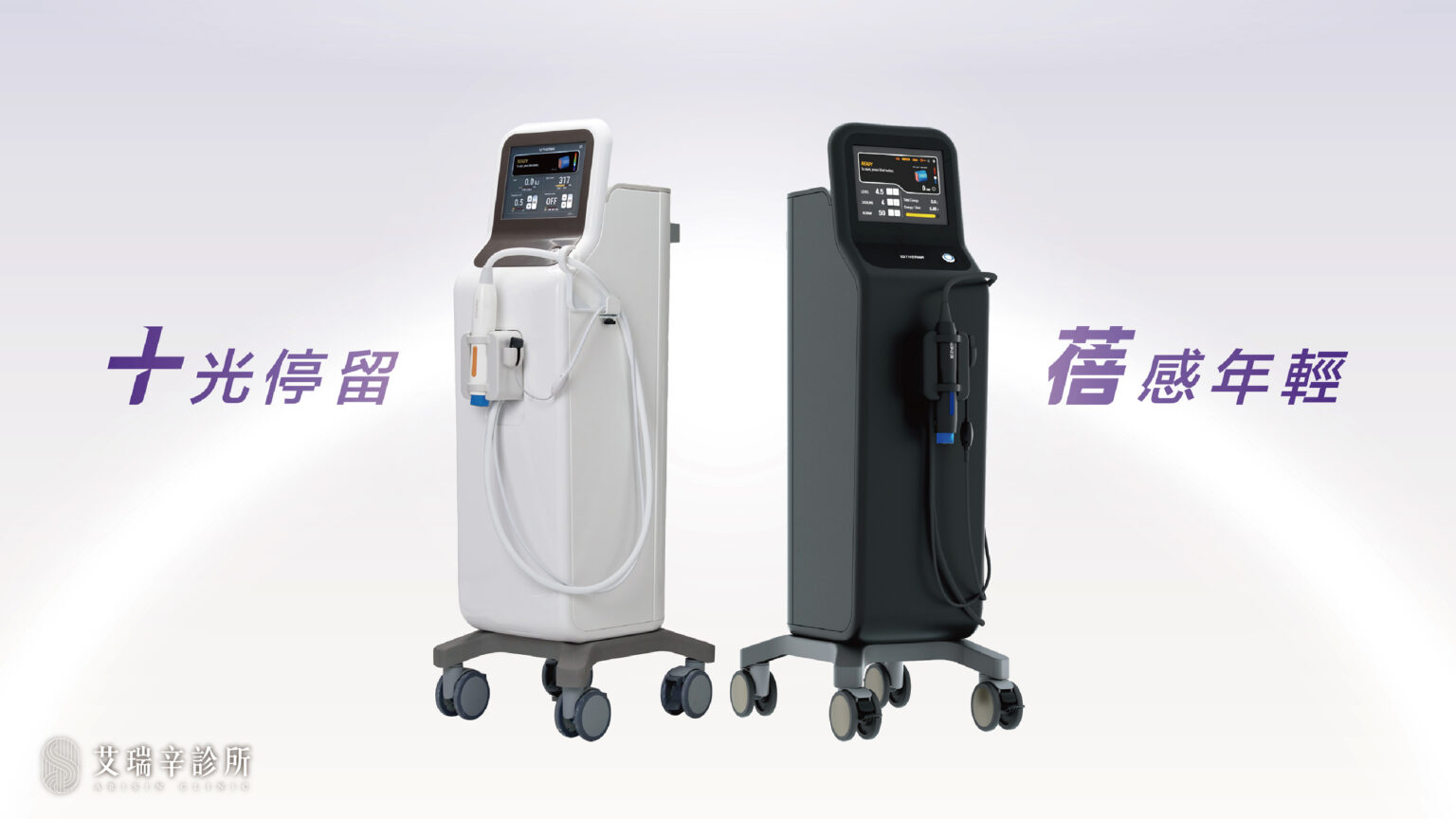
The Shibei Radiofrequency is a new-generation, high-efficiency monopolar radiofrequency device that builds on the advantages of traditional monopolar radiofrequency “volumetric heating” while featuring significant hardware upgrades.
What Is Shibei Radio Waves? Core Technology and Generational Positioning
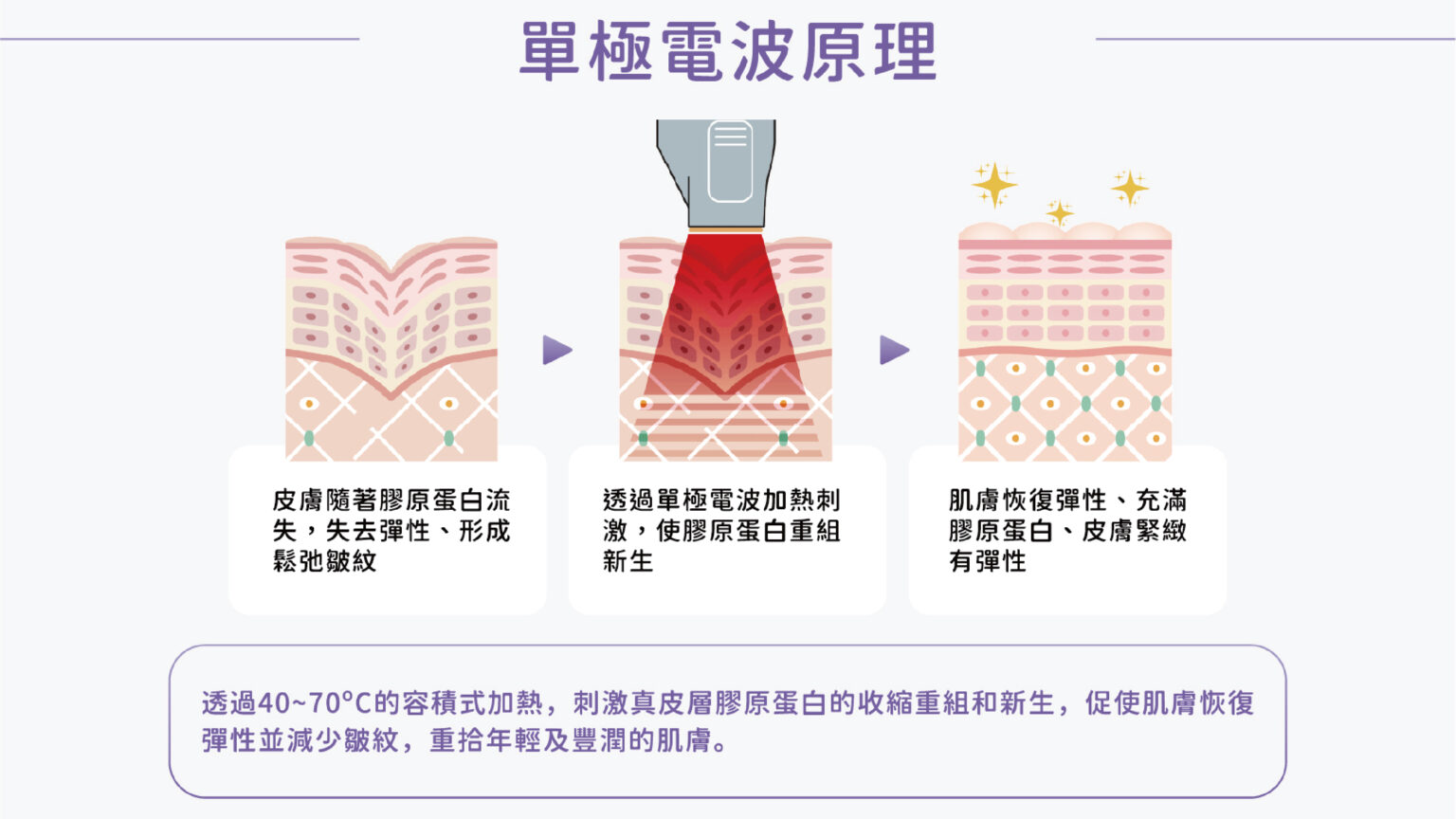
- Core Technology: The monopolar radiofrequency technology used delivers deep and stable thermal energy.
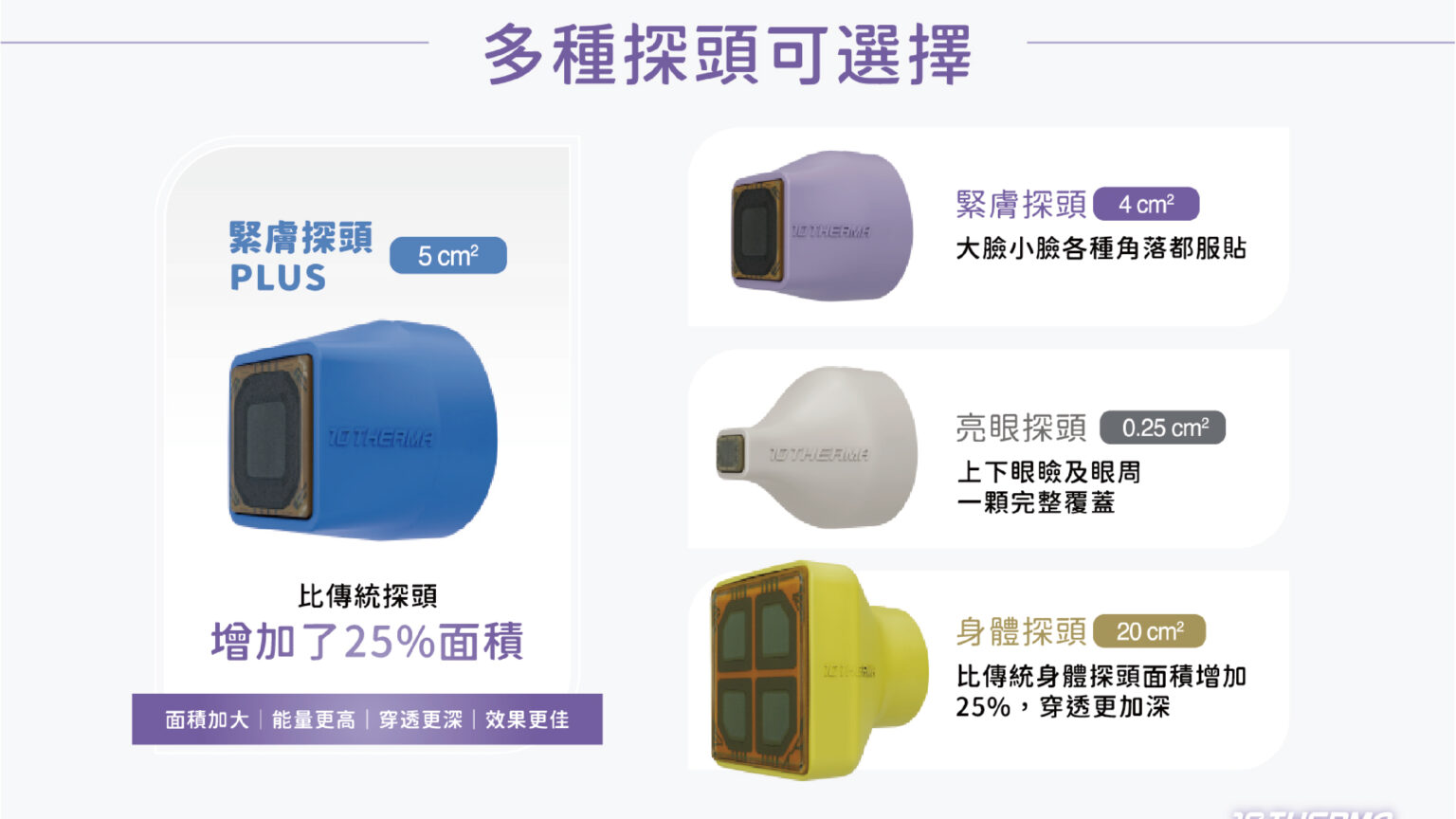
- Wide Coverage Area: Its most notable feature is the large 5-square-centimeter facial probe, which increases the coverage area per pulse by 25%, making treatment more efficient.
- Market Positioning: Shibei Radiofrequency is regarded as the leading Korean monopolar radiofrequency device in the current medical aesthetics market, offering high efficiency, high energy, and competitive pricing.
Treatment Depth and Energy Modes: Differences from Previous-Generation Radiofrequency Technology
The Shibei radiofrequency device has been designed to address the shortcomings of previous-generation radiofrequency devices, namely “significant discomfort” and “uneven heating.”
- Intelligent Impedance Detection: Before each energy pulse is emitted, the system automatically detects the electrical resistance of the skin tissue and precisely adjusts the output. Compared to older-generation radiofrequency devices with fixed output energy, this significantly reduces the risk of localized overheating and burns.
- Advanced Cooling System: Features “7-Stage Cooling Spray” and “Continuous Water Cooling Technology.” While thermal energy penetrates deep into the dermis, the epidermis is maintained at a safe temperature, significantly reducing the sensation of heat and discomfort during the treatment.
- Precise Depth: Energy is uniformly delivered to a depth of approximately 4.3 mm beneath the skin, heating the dermis and producing structural tightening.
Target Audience: Which Degree of Sagging Is Most Noticeable?
- Mild to moderate facial sagging: You may notice that your cheeks are starting to droop and that you have slight jowls.
- Blurred facial contours: I want to tighten my jawline to create a more defined facial silhouette.
- Sagging around the eyes and neck: For delicate skin or specific body areas, the Shibei Radiofrequency system features specialized eye and body probes, making it ideal for treating drooping eyelids or fine lines on the neck.
- Efficiency: Because the treatment head has a larger surface area, the number of pulses required for the entire face can be reduced, or a higher level of thermal accumulation can be achieved in the same amount of time, making it ideal for busy individuals.
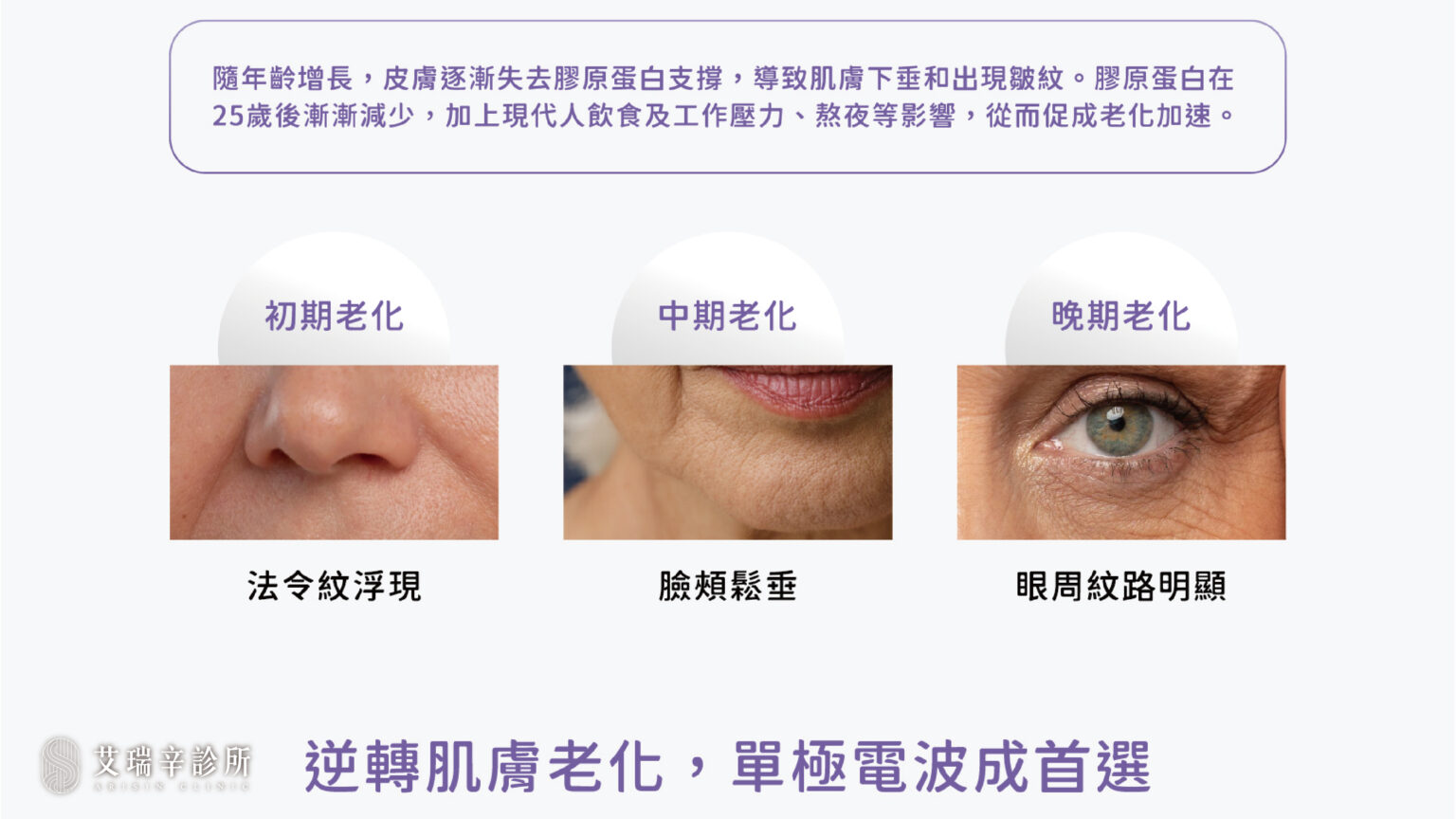
Treatment Process, Recovery Period, and Duration of Results
- Treatment Process: Before the treatment, your face will be cleansed and conductive pads will be applied. During the procedure, you will feel a warm sensation and vibration. A single session lasts approximately 45 to 60 minutes, depending on the number of pulses.
- Recovery Period: As this is a non-invasive procedure, there is no recovery period. The skin may experience slight redness and swelling after the treatment, which typically subsides within a few hours to one day. You may apply makeup and resume normal social activities immediately after the treatment.
- Duration of effects: Immediately after the procedure, you will feel an immediate tightening sensation as the collagen contracts due to heat. Long-term effects: Collagen regeneration and reorganization typically peak 2 to 3 months after the procedure, resulting in significant skin tightening. Duration of results: Depending on individual constitution and lifestyle habits (such as smoking or staying up late), the effects usually last 12 to 18 months.
Clinical Advantages and Evidence-Based Data of Shibei Radiofrequency
The advantages of the Shibei Radiofrequency treatment include its cooling technology, a 5-square-centimeter probe, impedance monitoring, and a volumetric heating method that penetrates up to 4.3 mm beneath the skin. While triggering collagen contraction, it minimizes thermal damage and can be used to improve nasolabial folds, marionette lines, fine lines, and neck lines.
A South Korean clinical study published in the *Journal of Dermatological Treatment* found that wrinkles around the eyes and on the face showed significant improvement after both 4 weeks and 16 weeks of treatment.
iG Radio: Patented mesh technology for enhanced comfort
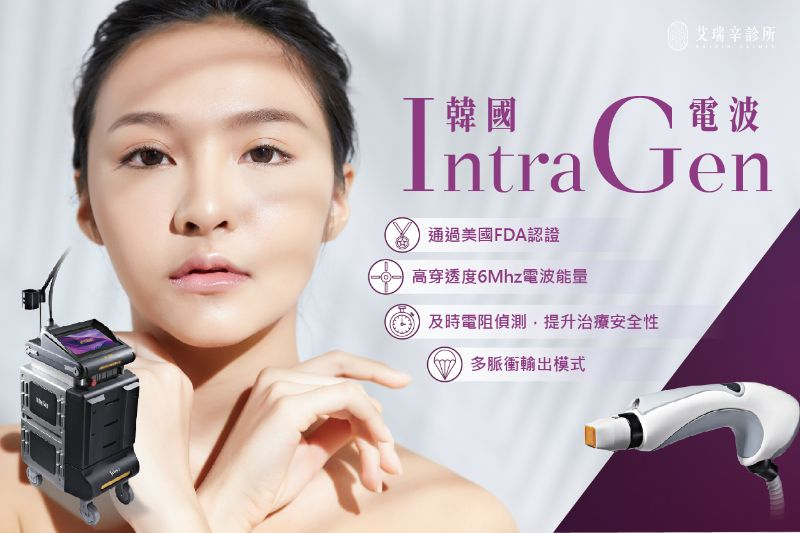
iG Radiofrequency is a monopolar radiofrequency treatment that combines safety and comfort; it is known as the “Little Phoenix Radiofrequency.”
Technical Principles and Probe Features
- GFR™ Grid-Segmented Radiofrequency Technology: This is the core patent behind iG Radiofrequency, transforming the broad-area heating of traditional monopolar radiofrequency into a “grid-like” output. This design allows energy to be distributed evenly, preventing excessive heat concentration at any single point and thereby significantly reducing the risk of burns and discomfort.
- Multi-pulse energy delivery: Rather than a single, intense burst of energy per pulse, energy is delivered in tiny pulses. This allows the skin tissue a very brief moment to cool down between pulses, enhancing overall treatment comfort and making it ideal for people with a low pain tolerance.
- Real-time Impedance Monitoring System: This system automatically monitors skin resistance, ensuring that every discharge remains within a stable, safe energy range and preventing energy inconsistencies caused by variations in skin thickness.
Target Population and Primary Treatment Areas
Because the iG Radio Frequency device features a gentler heating mode and a protective grid, it is the top choice for many people in their late 20s to early 30s and those new to medical aesthetics:
- Target Audience:
- For those seeking a natural facelift: People whose faces have not yet shown severe sagging but who feel their skin has lost elasticity and are beginning to show signs of aging.
- People who are extremely sensitive to pain: iG radiofrequency causes less pain than traditional American-style radiofrequency.
- For those looking to improve their skin texture: It is highly effective at refining enlarged pores, brightening dull skin, and reducing fine lines.
- Skincare for the Budget-Conscious: People who want to follow a regular anti-aging skincare routine but have a limited budget.
- Main Treatment Areas:
- Full-Face Contouring: Improves sagging cheeks and tightens the jawline.
- Targeted Areas: Reducing the appearance of nasolabial folds and marionette lines.
- Eye Area and Neck: The iG radiofrequency energy is relatively gentle, making it ideal for treating fine lines around the delicate eye area and on the neck.
Results, Recovery Time, and Cost Estimates
Immediately after iG radiofrequency treatment, you’ll feel your face become firmer as collagen fibers contract. There is usually only mild redness, which typically subsides within 30 minutes to 1 hour. The peak results occur 1 to 3 months after the procedure, when the skin becomes firmer and more radiant; these effects can last from six months to one year.
iG's rates are very competitive, and billing is typically based on the number of broadcasts, offering a high degree of customization flexibility:
- Local treatment (approximately 300–400 shots): approximately 25,000–30,000 yuan.
- Full-face treatment (approx. 600–900 pulses): approx. 35,000–40,000 yuan.
Although the energy per session of iG Radiofrequency isn’t as intense as that of Phoenix Radiofrequency, its “grid heating” technology is exceptionally effective at improving the texture of the skin’s surface. If you’re new to radiofrequency treatments or are looking for a maintenance treatment between two major radiofrequency sessions, iG Radiofrequency is a good choice.
Phoenix Radio Waves: The Gold Standard for Deep Firming
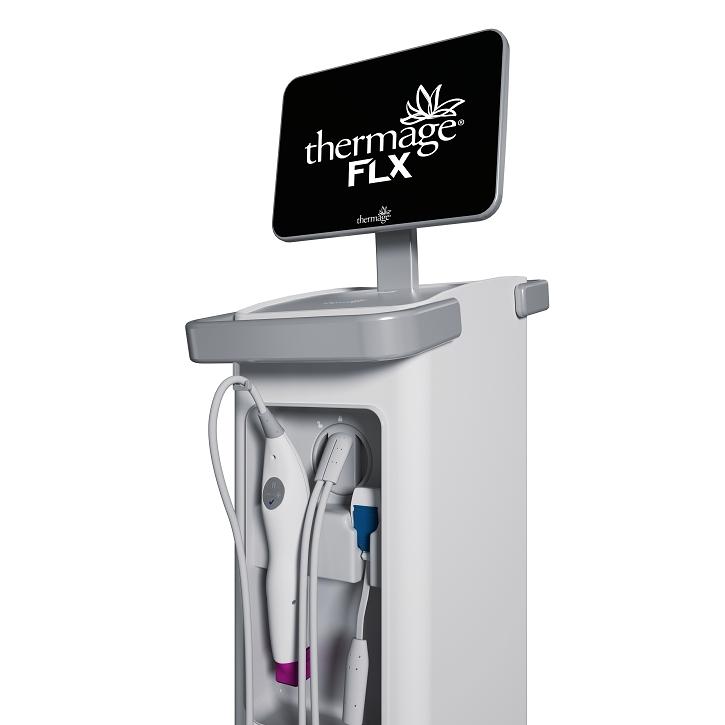
Phoenix Radiofrequency is currently recognized as the "flagship device" in the medical aesthetics industry, with its core competitive advantage lying in the combination of classic monopolar radiofrequency technology and the latest intelligent optimization features.
Technical Principles and Probe Features
- AccuREP™ Smart Energy Optimization: Before each pulse, the device automatically detects the skin’s electrical resistance at the treatment site and dynamically fine-tunes the output to ensure that each pulse of thermal energy is delivered precisely and consistently to the dermis and subcutaneous tissue.
- Circulating Vibration and Cooling System: Featuring multi-stage vibration and refrigerant spray technology, this system significantly reduces the sharp pain associated with early-generation monopolar radiofrequency treatments and enhances treatment comfort.
- Four Exclusive Probes:
- Purple Diamond Probe (Total Tip 4.0): With a 33% increase in contact area and higher heating efficiency, it is currently the go-to treatment for firming the entire face and the mid-to-lower face.
- Eye Tip 0.25: Designed specifically for the delicate skin around the eyes, it delivers energy at a shallower depth to help improve sagging eyelids and fine lines around the eyes.
- Blue Diamond Probe (Total Tip 3.0): A classic probe offering flexible needle counts, commonly used for delicate areas or specific vector lifts.
- Body Gold Probe (Body Tip 16.0): Offers the largest treatment area and delivers energy deep into the subcutaneous tissue; specifically designed to address skin laxity after childbirth or weight loss.
Target Population and Primary Treatment Areas
- Target Audience:
- My facial skin feels softer and looser.
- People whose jawline has become less defined due to aging, resulting in jowls or a double chin.
- People who are concerned about postpartum abdominal sagging, cellulite, or "bat wings."
- People who prioritize efficiency and want the results to last longer.
- Main Treatment Areas:
- Entire face: forehead wrinkles, sagging cheekbones, nasolabial folds, and marionette lines.
- Eye area: drooping upper eyelids, crow’s feet at the corners of the eyes.
- Lower Face: Tighten the jawline and reduce a "turkey neck."
- Body: Toned abdomen, inner arms, thighs, and buttocks.
Results, Recovery Time, and Cost Estimates
Phoenix Radiofrequency penetrates deep into the dermis and causes collagen to contract, so you can feel an initial tightening effect immediately after the procedure. As collagen continues to regenerate and reorganize, the results peak between 2 and 6 months, when the firming and plumping effects are most noticeable. The overall firming effect can last 1.5 to 2 years.
As for the price, the manufacturer strictly enforces a "one-person-one-probe" policy and imposes restrictions when the probe is chip-locked, which is why the price is higher:
- Full Face (Purple Diamond 600/900 pulses): Approximately 80,000–150,000 yuan.
- Around the eyes (450 Blue Eye treatments): Approximately 50,000–70,000 yuan.
- Body (Golden Body 500 shots): Approximately 120,000 to 180,000 yuan.
PlayMe Radiofrequency: The New Favorite for Comfortable, High-Value Skin Tightening
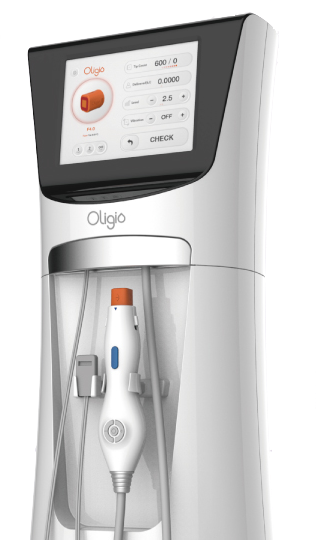
PlayMe Radiofrequency was developed by Won Tech, a leading South Korean medical aesthetics company. Designed specifically for Asian skin types, this monopolar radiofrequency device is on par with flagship models from the U.S. in terms of technology, while also offering enhanced comfort and efficiency.
Technical Principles and Probe Features
- 6.78 MHz monopolar radiofrequency technology: Utilizing the same core frequency as Phoenix Radiofrequency, this technology delivers energy deep into the subcutaneous tissue to provide volumetric heating, ensuring that the effects of collagen regeneration are backed by medical evidence.
- 3 Firing Modes: Offers single-shot, dual-shot, and continuous-fire modes, allowing physicians to switch flexibly based on the patient's comfort and the treatment area.
- 3D Vibration and Cold Spray Technology: Combines a vibration cushioning system with a 4-stage refrigerant spray to precisely cool the skin before and after energy delivery, minimizing heat-related discomfort during treatment.
- Exclusive probe for non-time-locked treatments: The probe is designed to contour to the face. Unlike some time-locked models, once opened, the probe does not need to be used up within a short period, offering greater flexibility in budget allocation and treatment planning.
Target Population and Primary Treatment Areas
Due to its excellent value for money and minimal discomfort, Wanmei Radiofrequency is regarded by many consumers as the top choice for “preventative radiofrequency treatments”:
- Target Audience:
- People interested in cosmetic procedures: Those who want to experience the skin-tightening effects of monopolar radiofrequency but are afraid of pain.
- Middle-class office workers: Looking for high-quality anti-aging results, but on a budget.
- Regular Maintenance: For those who have already undergone Phoenix Radiofrequency treatment and wish to maintain the lifting and firming effects six months or one year later.
- Mature Skin: Highly effective for fine lines, enlarged pores, and mild facial sagging.
- Main Treatment Areas:
- Facial Contouring: Jawline definition, fuller cheeks, and reduction of nasolabial folds.
- Targeted Areas: Fine lines around the eyes (requires use of a specialized eye probe), wrinkles on the neck.
Results, Recovery Time, and Cost Estimates
Generally speaking, you can feel your facial contours tighten immediately after a Perfect Radiofrequency treatment. As collagen is regenerated, your skin becomes plumper and more radiant 1 to 3 months after the procedure, and the overall results can last 12 to 18 months. The Perfect Radiofrequency treatment requires virtually no downtime. There may be only brief, mild redness after the procedure, which typically subsides within a few hours and does not interfere with your daily skincare routine or makeup application.
Compared to American-brand radio waves, Wanmei radio waves are more affordable:
- Localized reinforcement (300 shots): 20,000–30,000 yuan.
- Full-Face Treatment (600 pulses): 35,000–55,000 yuan.
- Eye Area/Neck: Pricing depends on the number of hair follicles; a single session typically costs between 15,000 and 25,000 yuan.
HIFU Radiofrequency: Creating a Firm, Well-Defined Contour with No Blind Spots
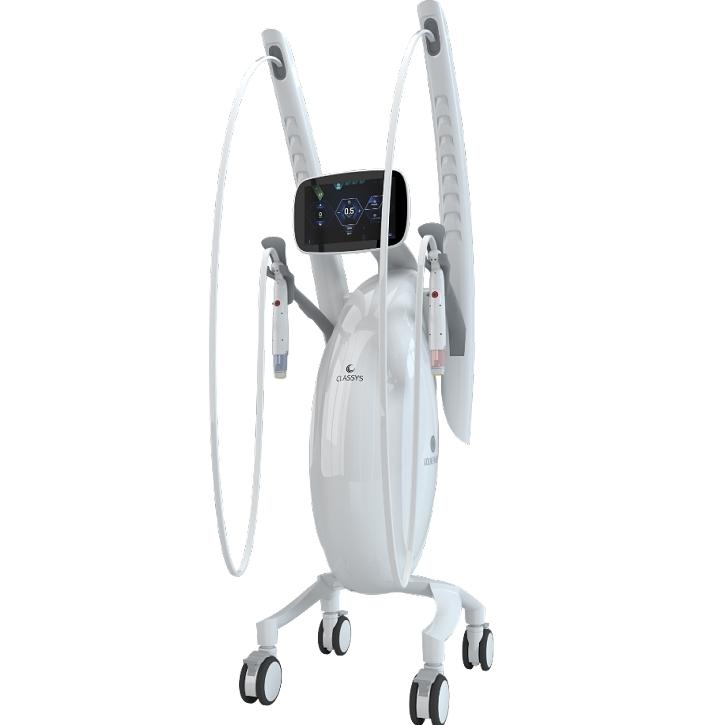
The design of the Hifu radiofrequency treatment places a strong emphasis on “comfort” and “painlessness,” successfully addressing the challenge of treating sunken areas of the face—a common issue with traditional radiofrequency treatments.
Technical Principles and Probe Features
- 6.78 MHz monopolar RF technology: Hifu radiofrequency energy penetrates deep into the dermis, stimulating collagen regeneration through volumetric heating.
- Curved Probe: This is the most unique enhancement of the Hifu Radiofrequency system. Unlike the flat probes used in conventional radiofrequency treatments, the Hifu Radiofrequency probe features a curved, arc-shaped edge that perfectly conforms to the contours of the face (such as the eye sockets and the sides of the nostrils), significantly reducing the risk of burns caused by poor probe contact and minimizing any stinging sensation along the edges.
- Water-Cooling System: Haifu Radiofrequency utilizes advanced water-cooling technology to continuously cool the skin while radiofrequency energy is being delivered, reducing the sensation of heat and minimizing discomfort during the procedure.
- Gold-plated probe material: Unlike the flat films used in other radiofrequency probes, the Hifu radiofrequency probe features a gold-plated surface, which offers excellent conductivity and biocompatibility, resulting in more stable energy output.
Target Population and Primary Treatment Areas
HIFU is known for its precise targeting and is particularly suitable for people with more defined facial contours or those who are extremely sensitive to pain.
- Target Audience:
- Prominent facial bone structure: Traditional flat probes can cause a stinging sensation in bony areas (such as the jaw and forehead), whereas HIFU’s curved probe allows for smoother operation.
- For those focused on anti-aging care around the eyes and smoothing fine lines: Features a more precise probe design specifically targeted at fine lines around the eyes and sagging of the upper eyelids.
- For those who are sensitive to pain but want the benefits of monopolar radiofrequency: The water-cooling system and contoured design make Hifu Radiofrequency a highly comfortable, low-pain option.
- Pursuing “Dual-Wave Electronic Therapy” Combination Treatment: Combining the same brand’s HIFU ultrasound with HIFU radiofrequency can achieve comprehensive results, including deep lifting and superficial firming.
- Main Treatment Areas:
- Full-Face Contouring: Jawline tightening, sagging cheeks, nasolabial folds, marionette lines.
- Detailed touch-ups: sunken areas such as the sides of the nostrils and around the corners of the mouth.
- Eye Area: Improves sagging around the eyes and drooping outer corners of the eyes.
Results, Recovery Time, and Cost Estimates
Immediately after the procedure, you’ll notice an immediate tightening of facial contours, along with a subtle plumpness and radiant, bright complexion. Collagen production peaks 2 to 3 months after the procedure, when the skin appears at its firmest and most refined; results typically last 12 to 18 months.
In terms of price, the Haifu Radiofrequency treatment is positioned in the mid-to-high range, falling between the Wanmei Radiofrequency and the Phoenix Radiofrequency treatments:
- Basic Full-Face Treatment (600 pulses): Approximately 35,000–55,000 yuan.
- Advanced Full-Face Treatment (900 pulses): Approximately 50,000–75,000 yuan.
- Eye Area / Localized Enhancement: Pricing varies depending on the number of shots; approximately 18,000 to 30,000 yuan per session.
Fairy Radiofrequency: Combining Microneedling and Radiofrequency in One Treatment
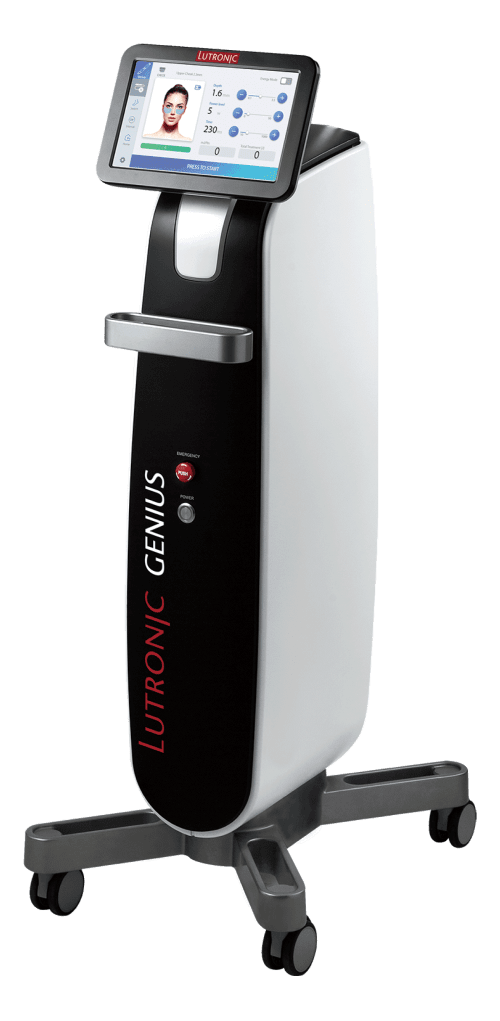
The Micro-Needle Radiofrequency treatment combines “microneedle penetration” with “radiofrequency energy,” which not only firms the skin but also stimulates the body’s natural repair processes and promotes the synthesis of new collagen.
Technical Principles and Probe Features
- AI-Powered Impedance Detection: Monitors skin resistance 1,000 times per second (every 1 ms) and adjusts output energy in real time.
- Ultra-fine insulated microneedles: Ensure precise delivery of energy to the dermis, maintain an optimal thermocoagulation temperature of 60 to 80 degrees, provide uniform heating, reduce the risk of epidermal burns, and promote highly effective collagen and elastin regeneration.
Target Population and Primary Treatment Areas
Elf Radiofrequency is suitable for people with enlarged pores, acne scars, pitted scars, fine lines, and neck wrinkles. It also effectively reduces the appearance of stretch marks and pregnancy marks.
Results, Recovery Time, and Cost Estimates
You won’t feel immediate firmness after the Fairy Radiofrequency treatment. About 1 to 2 weeks after the procedure, you’ll gradually notice that your pores are shrinking and your skin tone is brightening; After one month, you will notice that the tissue has become firmer; at three months, collagen regeneration peaks, and improvements in deep wrinkles and acne scars are most noticeable. The results typically last for about 12 to 18 months.
Because the Fairy Wave treatment uses microneedles, you may experience a sunburn-like sensation of redness and warmth immediately after the procedure. Subsequently, extremely fine scabs—barely visible to the naked eye—may form; these feel slightly rough to the touch and will naturally peel off in about 5 to 7 days.
Unparalleled Radio Waves: Tighten Contours and Refine Skin in One Step
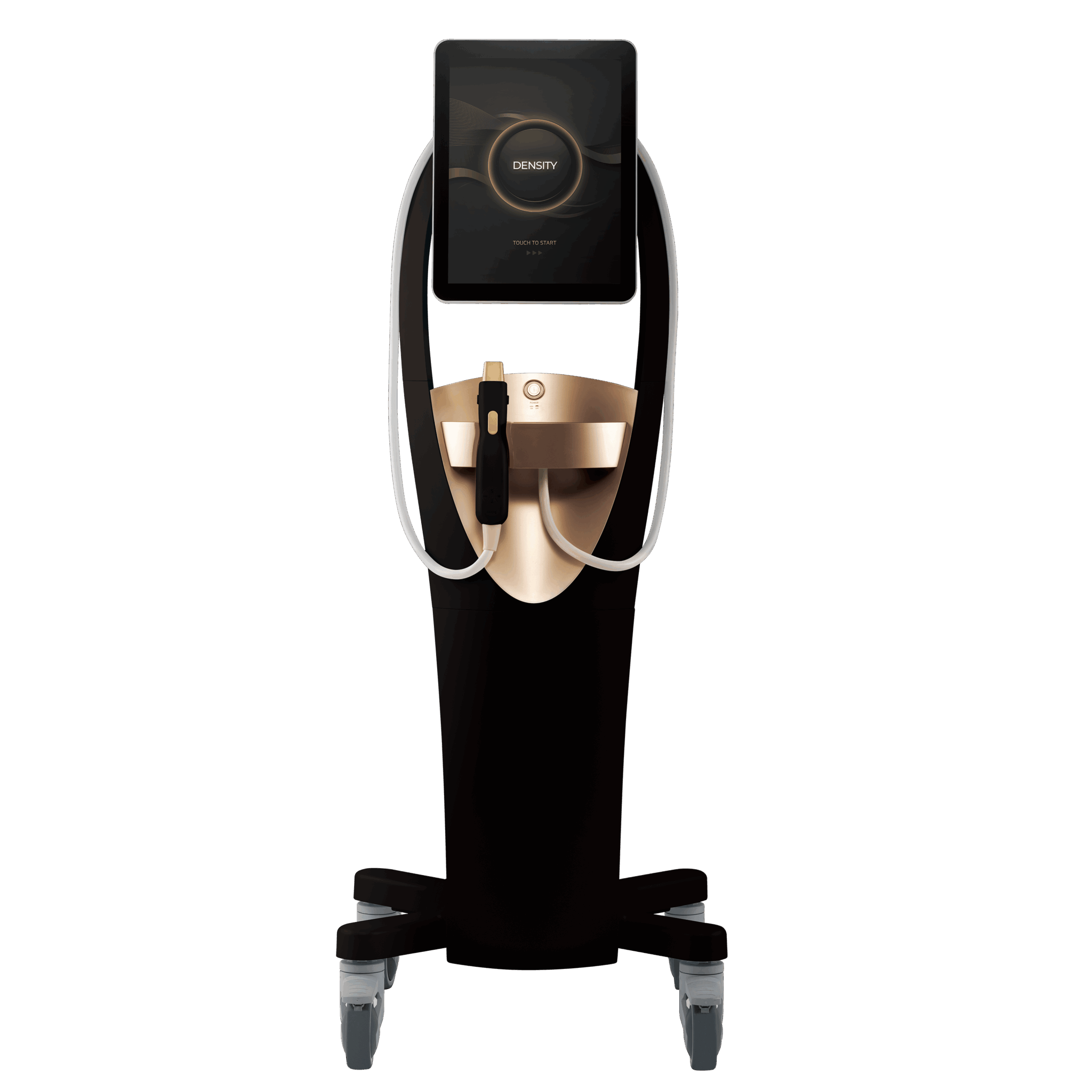
The most distinctive feature of Wushuang Radiofrequency is its simultaneous use of monopolar and bipolar energy, which allows it to target both the deep and shallow layers of the dermis at the same time.
Technical Principles and Probe Features
- Simultaneous Monopolar and Bipolar Modes: Unlike traditional radiofrequency technologies, which allow only one mode at a time, Dual Radiofrequency enables deep volumetric heating (contour tightening) via monopolar radiofrequency and, simultaneously, uniform heating of the epidermis and superficial dermis (skin refinement) via bipolar radiofrequency—all in a single treatment.
- RIC Smart Impedance Monitoring: Automatically calibrates output power to ensure consistent energy delivery to every inch of the skin, enhancing safety.
- Smart Cooling Technology: Features patented cold spray technology that provides precise cooling of the skin’s surface before and after energy delivery, significantly reducing pain and the risk of burns.
Target Population and Primary Treatment Areas
Wushuang Radio Frequency is ideal for those seeking "efficiency" and "all-in-one" anti-aging solutions:
- Target Audience:
- I hope to address multiple levels of sagging at once: I want to improve both deep sagging and superficial fine lines simultaneously.
- For those who are sensitive to pain but want high-energy results: Hybrid Mode allows for layered energy absorption, reducing the stinging sensation caused by overheating at a single point.
- Thinner, lined skin: Bipolar energy is highly effective at restoring the texture of the epidermis.
- For those looking for great value: It offers flagship-level performance at a more affordable price compared to American brands.
- Main Treatment Areas:
- Lower and mid-face: jowls, marionette lines, and jawline tightening.
- Overall skin condition: Enlarged pores, fine lines on the forehead and around the eyes.
- Neck: Improves horizontal lines and sagging skin on the neck.
Results, Recovery Time, and Cost Estimates
The Wushuang Radiofrequency treatment leaves no wounds; there will only be temporary redness after the procedure, which will fade within a few hours. A mild skin-tightening effect is visible immediately after the procedure, and the skin will appear plumper and more radiant. The peak results are seen 2 to 3 months after the procedure, when skin density is noticeably improved and the skin feels firmer; these results typically last for 12 months or longer.
As for pricing, the cost varies depending on the treatment area and the number of injections administered:
- Localized / Around the Eyes (approx. 400–600 shots): approx. 35,000–65,000 yuan.
- Lower-Mid Face Lift (approx. 600 shots): approx. 50,000–65,000 yuan.
- Full face and neck (approx. 900–1,000 shots): approx. 60,000–95,000 yuan.
Sharp Radio Waves: Blazing-Fast Combos—A New Generation of Radio Waves That Combines Efficiency and Comfort
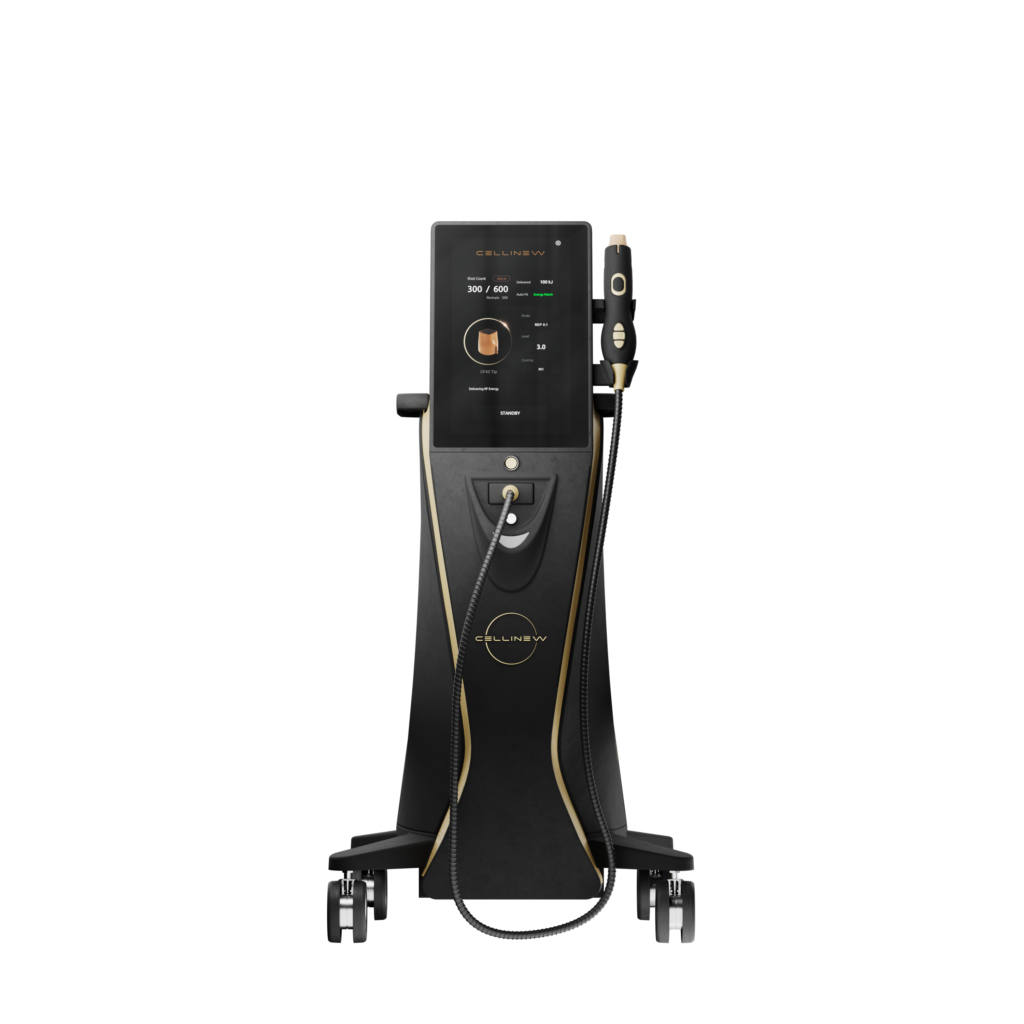
Sharp Radiofrequency is a new-generation monopolar radiofrequency device that has recently garnered significant attention in the radiofrequency market. It is designed to address the pain points of traditional radiofrequency treatments—such as long treatment times and noticeable discomfort—by offering speed and precision.
Technical Principles and Probe Features
- 6.78 MHz Energy Navigation: Creates a thermal gradient between the epidermis and dermis, precisely delivering heat to the deep dermis to promote efficient collagen regeneration.
- Auto Fit Dynamic Power Management: It continuously monitors skin impedance in real time and automatically fine-tunes the output, eliminating energy blind spots and preventing localized overheating.
- 0.1-Second Lightning-Fast Combo: The full-face treatment, consisting of 900 shots, takes only about 15 minutes to complete and is also ideal as a pre-treatment to enhance the effectiveness of the main procedure.
- Adjustable Cooling System: The refrigerant spray duration can be as long as 30 ms, allowing for flexible, customized cooling based on pain tolerance to balance comfort and speed.
Target Population and Primary Treatment Areas
Sharp Radio Waves are ideal for those seeking "efficiency" and a "comfortable experience" in their anti-aging routine:
- Target Audience:
- For busy people who value efficiency: The full-face treatment takes only 15 to 20 minutes, so you can complete it during your lunch break and resume your normal routine immediately afterward.
- For those who are extremely sensitive to pain: With Auto Fit Smart Energy Control paired with an adjustable cooling system, most people can complete treatment without the need for anesthesia.
- For those interested in combining treatments: Due to its fast pulse rate and high thermal energy accumulation efficiency, this treatment is ideal as a warm-up session prior to mainstream radiofrequency treatments (such as Phoenix RF), enhancing the overall lifting effect.
- For those concerned about sagging skin around the eyes: When used with the specialized eye-area probe, it delivers a sufficient number of pulses to provide targeted treatment for fine lines and sagging around the eyes.
- Main Treatment Areas:
- Full-Face Contouring: Improves sagging cheeks, tightens the jawline, and reduces nasolabial folds.
- Targeted Areas: Delicate areas such as around the eyes and lips, to address sagging and fine lines.
- Neck: Reduces fine lines and improves skin firmness on the neck.
Results, Recovery Time, and Cost Estimates
You’ll feel an initial tightening effect immediately after the Sharp Radiofrequency treatment. As collagen continues to regenerate, the results will gradually peak approximately 2 to 6 months after the procedure. The overall results last an average of 1.5 to 2 years; it is recommended to undergo the treatment once a year as part of your annual skincare routine to maintain the results. Sharp Radiofrequency requires virtually no downtime. You may experience mild redness, swelling, or a sensation of warmth after the procedure, which typically subsides naturally within 24 hours. You can apply makeup and resume social activities on the same day.
As for pricing, it varies slightly depending on the probe and the number of strands:
- Full-face treatment (approximately 900 pulses with the facial probe): Approximately 50,000 to 70,000 yuan.
- Targeted treatment around the eyes (approximately 900 pulses with the eye-area probe): approximately 30,000 to 45,000 yuan.
(The price ranges listed above are for market reference only; actual quotes are subject to the clinic’s assessment and the number of teeth to be treated.)
Case Study: Radiofrequency Skin Tightening Treatment at Arixin Clinic
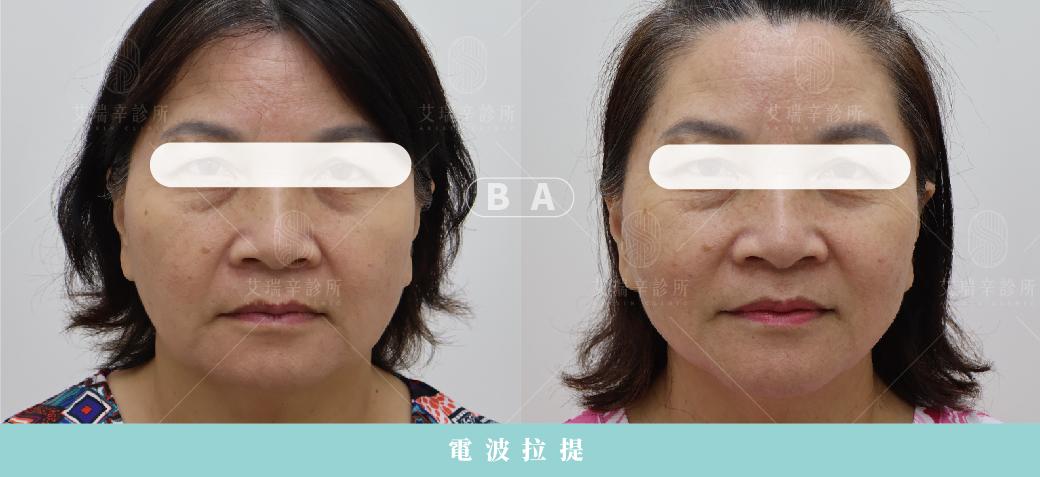
I. De-identified Customer Information
A 45-year-old woman, a homemaker. In recent years, she has noticeably felt her face gradually sagging; in particular, her nasolabial folds have deepened and her jawline has become less defined, causing her to become self-conscious about her profile and overall complexion. Due to work and family commitments, she hopes to improve her skin’s firmness and facial contours without undergoing surgery.
II. Physician’s Professional Judgment and Assessment
Based on the physician’s physical examination and assessment of the patient’s skin condition, it was determined that the patient’s collagen loss in the dermis indicates moderate aging; however, the subcutaneous fat layer still retains a certain degree of elasticity, making this skin condition suitable for non-invasive treatment. Following the evaluation, the physician determined that radiofrequency lifting to stimulate collagen regeneration was the most appropriate treatment approach, with a particular focus on the cheeks and the jawline—the two areas where sagging was most pronounced.
III. Customized Treatment Plans
Based on the assessment results, the doctor has planned the following treatment steps:
- Pre-treatment Preparation: Cleanse the face to remove surface oil and impurities, ensuring optimal energy absorption.
- Radiofrequency Lifting Treatment: Using a radiofrequency lifting device with a specialized facial probe to treat the cheeks, jawline, and neck
- Energy Settings: Approximately 900 pulses in total, providing full coverage of the relaxation area
- Treatment Duration: Each session lasts approximately 60 minutes
- Post-procedure care: Focus on moisturizing and sun protection to help stabilize the skin during the recovery period and prevent pigmentation.
IV. Treatment Outcomes and Progress
Immediate post-treatment response: Mild redness appears at the treatment site, and the skin immediately feels firmer.
Tracking Timelines and Results:
- 1 month post-surgery: My skin feels firmer, and my jawline is starting to look more defined.
- 3 months post-op: The effects of new collagen formation are gradually becoming apparent; the nasolabial folds have noticeably softened, and the overall facial contours appear more defined and firmer.
Complete Guide to the Radiofrequency Lifting Treatment Process
Radiofrequency lifting isn’t something that’s simply done once the treatment is complete; rather, it’s a process that triggers the skin’s natural repair mechanisms. From the doctor’s initial assessment to the peak of collagen production, each stage has its own key considerations.
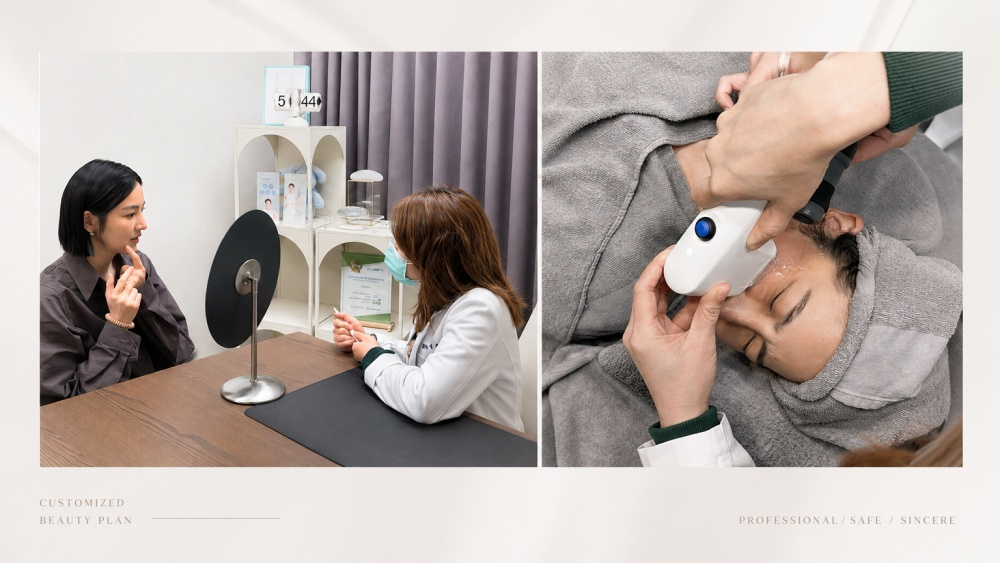
Consultation Phase: How Doctors Determine the Radiofrequency Device Model and Energy Settings
The doctor will assess your skin's age, soft tissue distribution, and pain tolerance. If sagging is the primary concern, they will recommend Ultherapy; if the issue is skin laxity or a lack of elasticity when pinched, they will primarily use monopolar radiofrequency.
In addition, for areas with thinner skin, such as around the eyes, the physician may opt to use a shallow-penetration probe or apply multiple low-energy pulses; areas with thicker tissue, on the other hand, will require deep heating with high energy.
What to Expect on the Day of Your Treatment: The Injection Process, How It Feels, and How Long It Takes
- Preparation (30–40 minutes): Includes cleansing and makeup removal, as well as the application of a numbing agent. If you are receiving monopolar radiofrequency treatments such as Phoenix or Shibei, conductive pads must be applied to your back.
- Treatment Time (40–60 minutes): The physician will first mark the treatment area (with grid lines) to ensure even energy distribution.
- Sensations: During the treatment, you’ll feel the coolness of the refrigerant spray, followed by a sensation of deep warmth, slight soreness, or mild tingling. If the vibration mode is used, the discomfort is alleviated, and most people find the treatment tolerable with the aid of cooling.
- Many radiofrequency devices now feature automatic impedance detection. Physicians refer to the system’s recommended values and make adjustments as needed during the procedure to ensure both therapeutic effectiveness and patient comfort.
Postoperative Day 1–3: Common Reactions and Care Instructions
This period is when the skin heals. Generally speaking, aside from the Elf Radiofrequency procedure, which may result in scabbing, other radiofrequency procedures typically cause only temporary redness, warmth, or swelling.
- Common reactions: The skin may become slightly red and swollen (similar to a sunburn) and feel slightly warm. Some people may experience temporary swelling, which usually subsides within 24 hours.
- Care Instructions: To retain heat and stimulate collagen regeneration, it is recommended to avoid applying ice, unless you experience significant discomfort—in which case, apply ice briefly. Pure Moisturization: Use moisturizers with simple, minimal ingredients, and avoid products containing alcohol, acids (such as retinol or alpha hydroxy acids), or exfoliating ingredients. Sun Protection: To prevent UV rays from irritating skin that has been exposed to heat, use sunscreen with an SPF of 30 or higher in combination with physical sun protection measures such as wearing long sleeves and a hat.
Week 1 to 3 Months Post-Surgery: Timeline of Collagen Synthesis
During the first week after surgery, the tissue begins to contract, making the face look more vibrant as the swelling subsides. After one month, collagen production begins, resulting in a more refined skin texture and smaller pores. By the second and third months, collagen production peaks and structural reorganization is complete. At this point, the jawline is at its firmest, fine lines are less noticeable, and you’ll look younger.
After the treatment is complete: When should I return for a follow-up evaluation to determine if additional treatment is needed?
It is generally recommended to schedule a follow-up visit 2 to 3 months after the procedure so that the doctor can evaluate the results and identify areas for improvement. It is also generally recommended to undergo a maintenance treatment between 1 and 1.5 years after the procedure. This not only helps maintain the skin’s firmness but also yields better overall results when performed before the effects of the previous treatment have completely worn off.
In addition, if there are any areas that you feel need further enhancement after the procedure, you can discuss this with your doctor, who will assess whether it is possible to switch to a different radiofrequency device or use ultrasound to enhance the lifting effect.
Post-Procedure Care and Precautions for Radiofrequency Lifting
Post-treatment care after a radiofrequency lift is key to determining the quality of new collagen production. Proper at-home care not only reduces discomfort but also maximizes skin tightening results.

Key Postoperative Care Steps for the First 48 Hours
The first two days after surgery are when the skin is most sensitive. The goals during this time are to “gently soothe” and “retain heat”:
- Gentle Cleansing: Use lukewarm water and a mild facial cleanser. Avoid hot water or products containing exfoliating particles. Wash your face gently, avoiding vigorous rubbing.
- Avoid applying ice: Radiofrequency treatment uses heat to stimulate the body’s repair mechanisms. Unless there is abnormal redness, swelling, or a burning sensation after the procedure, there is no need to intentionally apply ice, as this may counteract the stimulating effect of heat on collagen. If you experience discomfort, dryness, or itching, you can use a moisturizing spray or a cooling mask for relief.
- Simple Hydration: Your skin may be drier after surgery, so we recommend using a simple moisturizer containing ingredients such as ceramides, hyaluronic acid, or vitamin B5, and avoiding toners that contain alcohol or fragrances.
- Be sure to protect your skin from the sun: Since your skin is sensitive after surgery, we recommend using an umbrella, wearing a hat, or applying a hypoallergenic sunscreen to prevent hyperpigmentation.
Can I undergo other treatments immediately after a radiofrequency lift?
It is generally recommended to allow the skin at least 1 to 2 weeks to recover after a radiofrequency treatment before undergoing the next session. However, if there isn’t enough time and the doctor determines that it will not harm the skin, the procedures can be performed on the same day. For example:
- sonic lifting (medicine)
Since ultrasound and radiofrequency treatments penetrate to different depths, many people opt to undergo radiofrequency treatment after their ultrasound session. - botulinum toxin
Administer Botox on the same day as the radiofrequency treatment; Botox relaxes dynamic wrinkles, while radiofrequency tightens static sagging, and the two treatments do not interfere with each other. - Laser Treatments
We recommend waiting 1 to 2 weeks. Since the radiofrequency treatment has heated the deep layers of tissue, you should allow the epidermis to heal and stabilize before undergoing laser treatment to avoid damaging the skin barrier. - Hyaluronic Acid/Collagen Stimulants:
We recommend waiting one month after the radiofrequency treatment before receiving the filler injection, or receiving the filler injection first and then waiting one month before the radiofrequency treatment. If the filler is injected on the same day, the heat may accelerate the metabolism of the filler or alter its distribution. We recommend waiting until the initial results of the radiofrequency treatment are visible before addressing any areas of depression with additional filler.
How Can You Extend the Effects of Radiofrequency Lifting Through Daily Skincare?
The effects of radiofrequency treatments typically peak after 3 months, and when combined with proper lifestyle habits, they can help maintain firmness for a longer period:
- Supplement Collagen Building Blocks: Increase your intake of vitamin C and high-quality protein to provide the building blocks needed for collagen synthesis.
- Limit your intake of high-sugar foods, tobacco, and alcohol: Glycation is the main culprit behind collagen breakdown. Reducing your intake of high-sugar foods, quitting smoking, and getting enough sleep can lower oxidative stress in the body and slow down the aging process.
- Deep Antioxidant Care: Incorporate serums containing antioxidants such as vitamin C derivatives and resveratrol into your daily skincare routine to protect newly formed collagen from free radical damage.
- Regular low-energy maintenance: Six months after the procedure, you may consider combining it with a low-pulse-count Perfect Radiofrequency or iG Radiofrequency treatment for “fine-tuning and maintenance,” which helps maintain the peak firming effect more consistently.
Frequently Asked Questions FAQ

Is one session of radiofrequency lifting enough? How long should I wait between sessions?
For most people with mild to moderate skin laxity, a single radiofrequency treatment may be effective; however, since aging is an ongoing process and the results of radiofrequency treatment are not permanent, it is recommended to undergo one treatment per year as part of a regular maintenance regimen.
Can radiofrequency lifting and thread lifting be done together?
Sure. I would recommend doing the radiofrequency treatment first, followed by the thread lift. The heat from the radiofrequency treatment helps firm and thicken the tissue, and if you perform the thread lift 1 or 2 weeks later, the threads will adhere better and the results will last longer.
Additionally, for safety reasons, there is generally a one-month interval between the two procedures. The heat generated by radiofrequency energy may affect the stability and metabolic rate of the threads used in thread lifting; therefore, if thread lifting is performed first, it is usually recommended to wait one month before undergoing radiofrequency treatment.
Is there a difference in the sensation between Shibei radiofrequency and other types of radiofrequency?
The Shibei Radiofrequency treatment causes less pain. For example, compared to the Phoenix Radiofrequency treatment—although both involve vibration and the application of a cooling agent— the Tenbei Radiofrequency’s seven-stage cooling technology—which involves multiple applications of cooling gel before and after each pulse—creates a more pronounced cooling sensation on the skin’s surface, effectively counteracting the heat-induced discomfort felt in deeper layers.
Most people who have undergone the Shibei radiofrequency treatment describe the sensation as a warmth slowly spreading deep within the skin, accompanied by a gentle vibration. Compared to the burning sensation of a rubber band snapping against the skin associated with earlier radiofrequency treatments, this method is much more comfortable.
At what age is it appropriate to start radiofrequency lifting?
Ages 25–30 (Preventive Phase): Collagen begins to break down. It is recommended to use low-energy, maintenance-type radiofrequency treatments (such as iG or Wanmei) to maintain skin elasticity and prevent the formation of fine lines.
Ages 30–45 (prime years): The ideal age group for radiofrequency treatments. At this stage, the skin’s ability to repair itself is still strong, so radiofrequency stimulation is most effective at promoting collagen production, which can effectively delay the onset of noticeable sagging.
Ages 45 and older (anti-aging phase): Addresses significant sagging. At this stage, higher-energy devices such as Phoenix, Shibei, Wushuang, or combination treatments may be necessary to achieve optimal results.
How long do the results of the Shibei radiofrequency treatment last?
How long the effects of the Shibei Radiofrequency treatment last depends on an individual’s physical constitution and lifestyle habits. On average, the effects last 12 to 18 months; however, if you maintain an irregular schedule after the procedure, or if you smoke, drink alcohol, or fail to use sunscreen properly, the duration of the effects may be shorter.
What's the difference between the Shibei Radio Wave and the Phoenix Radio Wave? Which one is better for me?
Simply put, the Phoenix Radiofrequency treatment may offer better lifting results, but it’s noticeably painful and comes with a higher price tag; Tenbei Radiofrequency, on the other hand, is a more pain-tolerable, high-value entry-level option. If you’re very sensitive to pain, are trying radiofrequency lifting for the first time, or have a limited budget, Tenbei Radiofrequency is a good choice; however, if you have noticeable skin laxity and want better lifting results, you might want to consider Phoenix Radiofrequency.
What is the difference between Radiofrequency Lifting and Ultrasound Lifting? Can they be performed at the same time?
Radiofrequency lifting involves heating the entire skin layer at a relatively shallow depth. Its primary benefit is “skin tightening,” making it ideal for improving skin laxity, smoothing out fine lines, and reducing a chubby appearance, leaving the skin looking plump and smooth.
Ultrasound, on the other hand, targets the SMAS fascia layer, using thermal energy to contract the fascia and create a lifting effect. It is suitable for correcting sagging facial contours and drooping eyebrows by providing support from the underlying layers, thereby restoring an upward lift to the facial contours.
Ultrasound and radiofrequency treatments can be performed simultaneously—this is the currently popular “ultrasound-radiofrequency dual-wave” treatment. The doctor will first administer the ultrasound treatment (which penetrates deeper) and then the radiofrequency treatment to achieve lifting, firming, and tightening effects.
Is anesthesia or sedation required for the Shibei radiofrequency treatment?
A key feature of the Shibei Radiofrequency treatment is that it is relatively painless; typically, only a topical anesthetic is needed. Neither radiofrequency nor ultrasound treatments are recommended to be performed under sedation. This is because the physician needs to adjust the energy level based on your response to heat; therefore, you must remain awake so you can actively communicate your sensations to the physician and reduce the risk of burns.
I’ve had hyaluronic acid or Botox injections before. Can I still get a radiofrequency lift?
Yes, but you need to pay attention to the timing. It’s generally recommended to wait 2 to 4 weeks before undergoing radiofrequency treatment. However, it’s more effective to have the radiofrequency treatment first, followed by hyaluronic acid or Botox injections. This is because after the radiofrequency treatment, your facial contours will first contract and tighten, allowing the doctor to more accurately determine where additional hyaluronic acid is needed and which muscles require Botox to relax, resulting in a more natural overall appearance.
Compared to PlayMe Radio and iG Radio, what are the advantages of Shibei Radio?
The advantage of the Shibei Radiofrequency system lies in the precision of its cooling technology. The Shibei Radiofrequency device employs patented “Pulsed Jet Cooling,” which precisely controls the injection of coolant based on the duration of energy delivery. Compared to traditional devices or some other devices in its class, this technology more effectively protects the epidermis and significantly reduces the sensation of burning, resulting in a more comfortable overall treatment experience.
Another advantage is the variety of treatment heads available. Shibei Radiofrequency has developed a range of treatment heads in various specifications, enabling more precise, layered treatment of fine lines around the eyes, facial contours, and even specific areas of the body, thereby providing physicians with greater flexibility when planning combination treatments.
How long after a radiofrequency lift procedure will I see results? When are the results at their best?
With radiofrequency lifting, you can expect to notice that your skin becomes smoother and your facial contours gradually become more defined within about 1 to 3 months after the procedure; the results typically reach their peak 3 to 6 months after the procedure.
Will my face swell up like a "pig's head" after a Tenbei radiofrequency treatment? How long is the recovery period?
After a Tenbei Radiofrequency treatment, you won’t experience severe swelling like a “pig’s head,” and the recovery period is typically only 1 to 3 days. Tenbei Radiofrequency features patented pulse cooling technology that effectively protects the epidermis and reduces thermal damage; most people experience only slight redness after the procedure.
On the day of the procedure, you may experience mild swelling or tenderness in the skin. This is a normal reaction to the accumulation of heat and will subside significantly within 24 hours. Visually, it will mostly resemble the puffiness you might see after a late night, and it will not interfere with your daily life or work. You can apply makeup as usual the very next day.
What should I keep in mind for post-radiofrequency lift care? Can I use face masks or exfoliate?
Post-treatment care for radiofrequency lifting should focus on hydration, sun protection, and minimizing skin irritation; exfoliation is not recommended. For one week after the procedure, avoid using skincare products that contain skin-lightening agents, acids (such as salicylic acid or alpha-hydroxy acids), alcohol, or other irritating ingredients.
When it comes to washing your face and skincare, we recommend using lukewarm water and being gentle, as well as incorporating more products containing ceramides or hyaluronic acid to help the stratum corneum retain moisture; for face masks, focus primarily on hydration.
As for exfoliation, it is recommended that you avoid it for the first week after the procedure. At this time, the skin’s stratum corneum is fragile, and both physical and chemical exfoliation can cause further damage.
Why do some people feel nothing after a radiofrequency treatment? What factors affect the results?
If you “don’t feel anything” after a radiofrequency treatment, it may be due to the following factors:
Insufficient energy accumulation: Uneven distribution of pulses and a setting that is too low prevent the dermis from reaching the critical temperature required to trigger collagen production.
Differences in the Physician's Technique: If the physician does not focus the energy on the areas requiring relaxation or misjudges the facial layers, the results may not be significant.
Individual healing capacity: Radiofrequency promotes regeneration after tissue damage; however, factors such as advanced age, inadequate nutrition, or smoking can affect collagen production.
Time Lag in Results: The best results from radiofrequency treatment typically appear 3 to 6 months after the procedure; evaluating the results immediately after treatment can easily create the false impression that it is ineffective.
Non-OEM equipment: Using counterfeit probes or refurbished, secondhand "remanufactured probes" results in unstable energy output and negligible results.
Are there any side effects to radiofrequency lifting? Can it cause skin burns?
The most common side effects include temporary redness, warmth, or mild swelling after the procedure, which usually subside on their own within a few hours to a few days.
The most concerning issue—burns—may be caused by a doctor administering too high a level of energy or focusing on the same area for too long. The doctors at Arixin Clinic are highly skilled and have extensive experience in controlling radiofrequency energy, which significantly reduces the risk of burns.
Can I get the Tenbei Radiofrequency treatment while breastfeeding or during my period?
Menstruation is not an absolute contraindication for radiofrequency treatments and does not directly affect the treatment’s effectiveness. However, due to hormonal fluctuations during menstruation, the skin may become more sensitive and tolerance for pain may decrease. If you typically experience menstrual discomfort or have a low pain tolerance, it is recommended that you avoid the first few days of your period when you feel the most uncomfortable.
As for breastfeeding mothers, the energy does not enter the bloodstream and does not affect breast milk, so it is safe for breastfeeding.
Is radiofrequency treatment suitable for people with very thin faces? Will it cause the face to look sunken?
Radiofrequency primarily “tightens the skin” rather than reducing fat. For people with slimmer faces, the doctor will precisely target the dermis with thermal energy to increase skin thickness and elasticity, while deliberately avoiding sunken areas (such as the cheeks and temples) to enhance facial contour lifting.
As for the risk of indentations, these mostly occur when the energy level is too high and the energy is excessively concentrated in the fat layer. The doctors at Arixin Clinic have extensive experience and know how to avoid areas with thin fat layers. This not only prevents indentations but also improves the tired appearance caused by sagging. When necessary, they also combine treatments with fillers such as hyaluronic acid.
If I have dental implants or braces, will that affect the radiofrequency treatment?
We recommend that you inform your doctor beforehand. Radiofrequency energy transmits heat through high-frequency electromagnetic waves. Since metal conducts heat more efficiently, some patients may experience a noticeable “tingling sensation” or “electric shock-like feeling” in their teeth when the treatment is administered near the mouth (such as on nasolabial folds or along the jawline).
Therefore, if you have metal implants, such as dentures or dental implants, the dentist will place cotton pads or gauze inside your mouth, between your teeth and lips, to provide insulation and cushioning, effectively reducing the discomfort caused by thermal sensation.
Does long-term use of collagen powder have a synergistic effect on the results of radiofrequency treatment?
It has a positive synergistic effect. The thermal energy from radiofrequency lifting creates microscopic damage, triggering the body’s self-repair mechanisms to generate new collagen. This process requires amino acids and vitamin C to function properly. Since oral collagen supplements are themselves a source of amino acids, taking them helps maintain a stable environment for collagen synthesis.
How can I verify that the Tenbei Radiofrequency treatment I received is a genuine, factory-direct product? Does it have an anti-counterfeit laser label?
To verify whether a product is genuine, keep these three key points in mind:
Look for the laser label: The outer packaging of the Shibei RF probe features an original manufacturer’s anti-counterfeit laser label with a unique serial number printed on it.
Unboxing on Site: Ensure that the probe packaging is intact and that the physician unboxes the disposable probe in your presence.
Scan to Verify: Scan the QR code on the outer box to access the official system and verify the authenticity of the serial number.
Before the procedure, you can ask the doctor to show you the anti-counterfeiting laser label, or request that the doctor open a new probe right in front of you.
Are the Tenbei radiofrequency treatments at Arixin Clinic administered by a doctor in person?
Yes. At Arixin Clinic, a doctor will assess the degree of skin laxity and your tolerance level to determine the number of pulses and energy level. The doctor will also personally operate the probe and adjust the energy settings to ensure the entire treatment is both effective and safe.
Should you go for great value or top-tier lifting results? Arixin Clinic’s transparent pricing makes it easy and stress-free for Shi Bei and Feng Huang to achieve beauty through radiofrequency treatments.

Want the powerful results of Phoenix Radiofrequency while also experiencing the comfort and value of Tenbei Radiofrequency? At Arixin Clinic, we understand that everyone has different aesthetic preferences and budget considerations.
Whether you prefer the classic, top-of-the-line Phoenix Radiofrequency treatment or are seeking the new generation of highly effective and comfortable Shibei Radiofrequency treatment, we insist that all assessments and treatments be performed personally by professional physicians. We provide completely transparent, upfront pricing and verification of genuine, factory-direct products—say goodbye to price opacity— ensuring every penny of your budget is precisely transformed into visible, youthful firmness.