



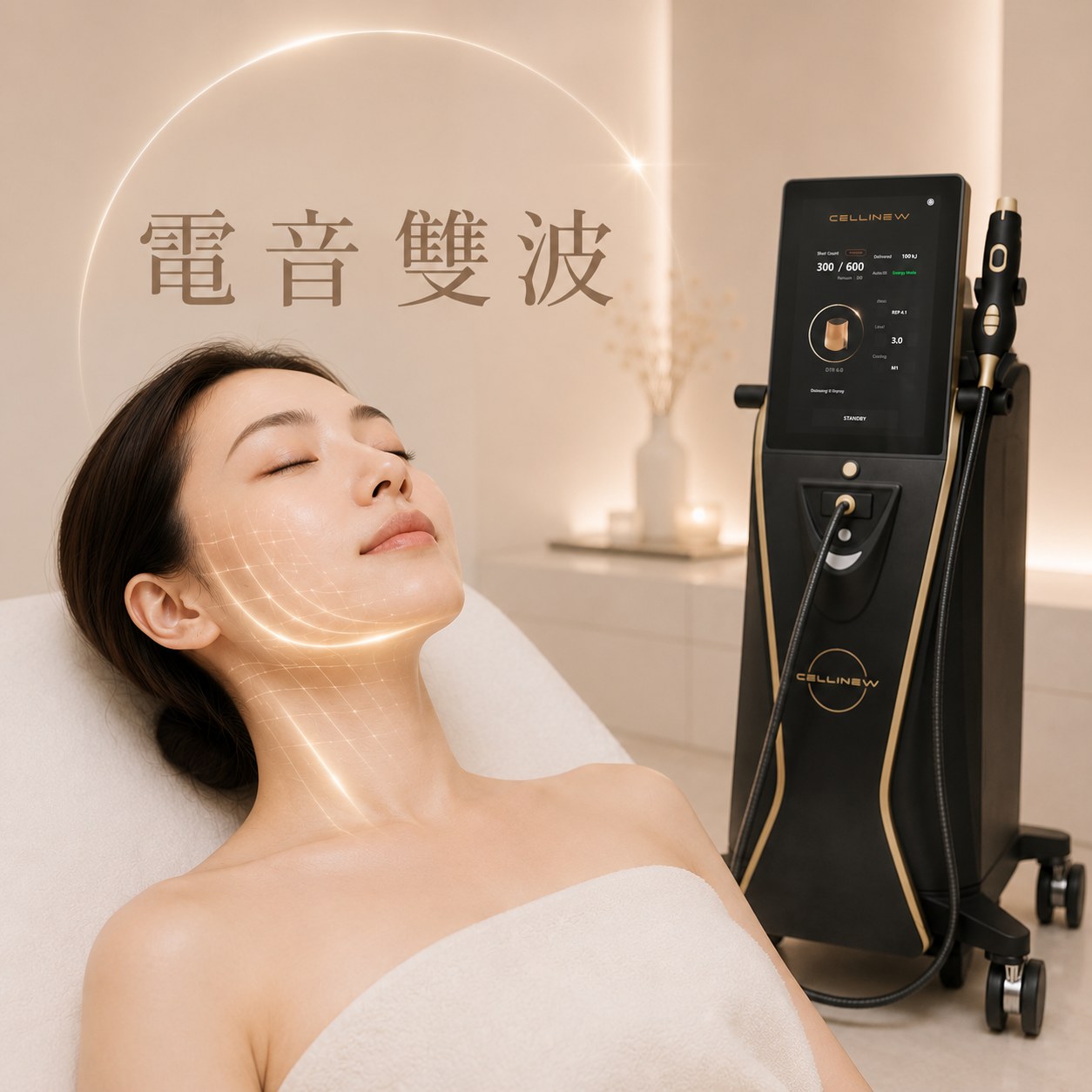
“What’s the difference between radiofrequency and ultrasound?” This is probably the question asked most often in medical aesthetics clinics—yet one that’s rarely explained clearly. Every so often, new devices hit the market, each with a catchier name than the last: Sharp Radiofrequency, Z-Wave, Phoenix Radiofrequency, and Sonic Lift—they all seem to promise “firming and lifting,” but consumers often end up spending twice as much without being sure whether they’re getting the same treatment or actually targeting different areas.

The Cellinew Sharp Radiofrequency (nicknamed “New Q-Wave”), newly launched in 2026, paired with the Linear Z Ultrasound Lift, is currently one of the most frequently inquired-about combinations in clinics. However, before deciding whether to undergo the treatment, it’s even more important to first understand exactly which layer of the skin the thermal energy from these two devices targets—this is the key factor that determines the results and whether you should opt for both treatments.
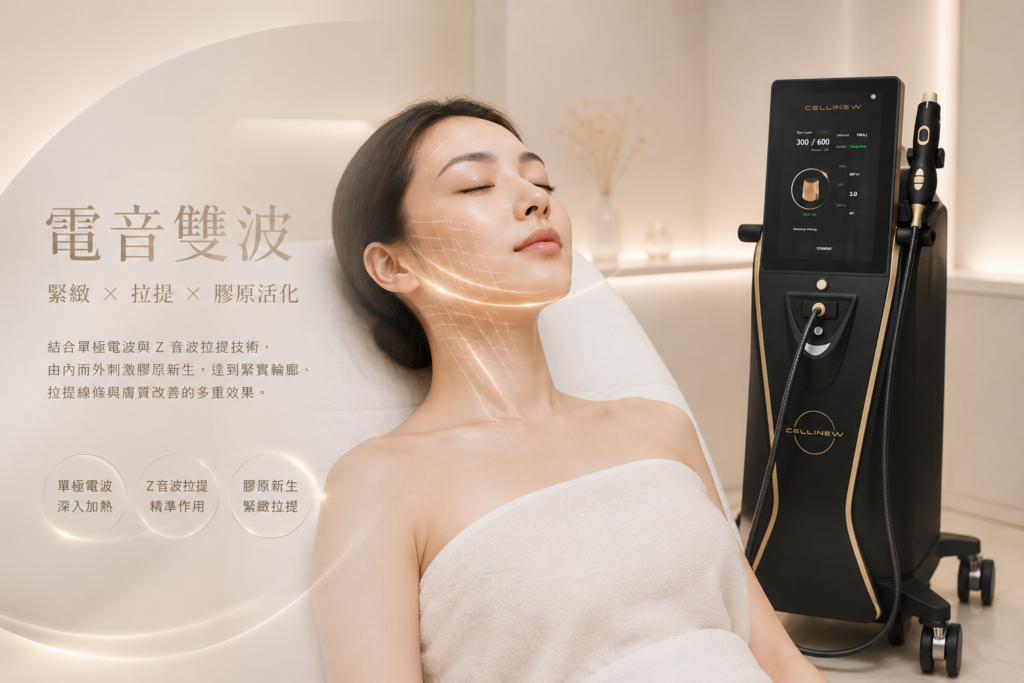
▲ The fact that radio waves and sound waves act on different tissue levels is the key factor in determining how treatments should be combined.
Let’s get one thing straight: electromagnetic waves and sound waves are not the same type of energy to begin with.
Radiofrequency (RF) uses high-frequency electrical currents to cause charged particles within the tissue to vibrate rapidly, generating heat. This thermal energy spreads “in a sheet-like manner” from the superficial layers to the deeper layers, as if heating the entire skin surface evenly; High-Intensity Focused Ultrasound (HIFU), on the other hand, uses ultrasound waves focused at a specific depth to create “point-like” thermal coagulation points, much like precisely targeting and securing the fascia at a specific depth.
To put it simply: Radiofrequency is like a comprehensive “deep-heating treatment” that warms the entire skin surface simultaneously to stimulate collagen regeneration; while ultrasound is like “driving piles” at the right depth to re-anchor and tighten sagging fascial structures. This is why many people find that while radiofrequency alone can make the skin appear finer and more radiant, improvements in issues that require “lifting”—such as the jawline and nasolabial folds—are often less than expected. This is because those are not the problems radiofrequency is best suited to address.
Sharp Radio Waves (New Q-Wave) vs. Z-Wave Lift: Understanding the Treatment Depths at a Glance
| Comparison Items | Cellinew Sharp Radio Waves (New Q-Wave) | Linear Z Sonic Lift |
|---|---|---|
| Forms of Energy | 6.78 MHz Unipolar Radio Frequency (RF) Waves | High-Intensity Focused Ultrasound (HIFU), Dual-Mode (Point and Line) |
| Role Level | Dermis, superficial fascia (uniform, surface-level heating) | SMAS fascia layer / fat layer (deep punctate fixation) |
| primary purpose | Refined skin texture, reduced appearance of pores, prevention of early signs of aging, superficial firming | Jawline Lift, Double Chin, and Cheek Fat Firming |
| Duration of a single treatment session | Approximately 20 minutes for the entire face (900 shots) | Depending on the combination of probe and mode, approximately 30–60 minutes |
| compassion | Low; most procedures can be performed without anesthesia | Low; depending on the depth and mode, topical anesthesia may be used. |
| Suitable Groups | Ages 25–50; focuses primarily on skin care and preventing the early signs of aging | Those with noticeably sagging facial contours who need a lift and tightening |
As the table shows, the two treatments are by no means interchangeable; rather, they address “surface” and “point” concerns, respectively—Sharp Radiofrequency lays the foundation by improving the skin’s texture and elasticity across the entire area, while Z-Wave is responsible for tightening and repositioning sagging, loose tissue. This is why doctors often recommend combining the two treatments rather than choosing one over the other.
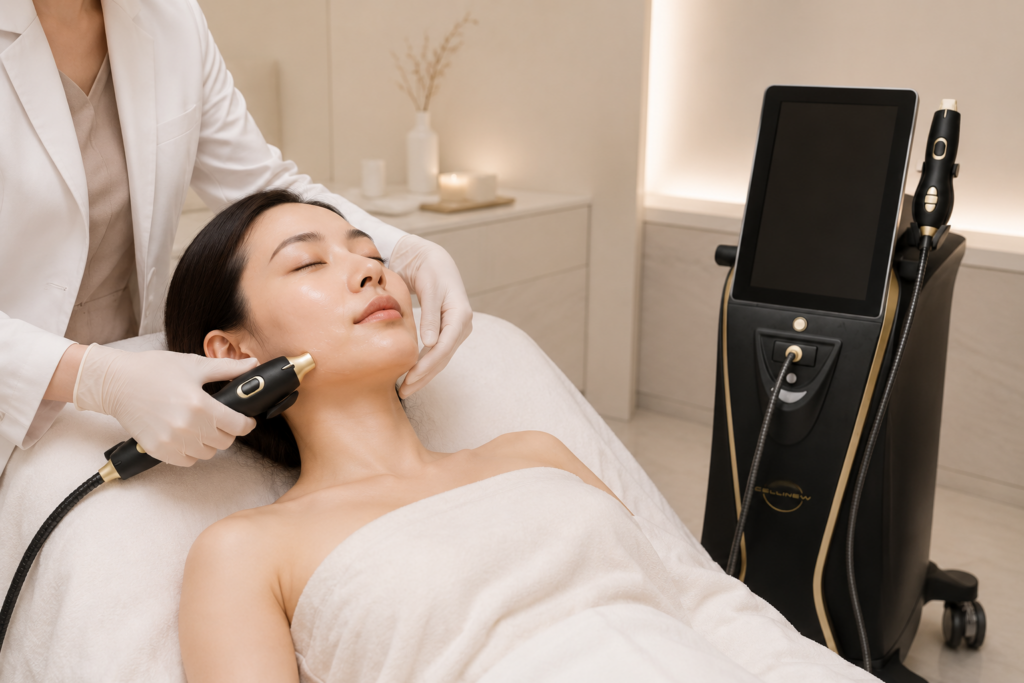
▲ Sharp Wave features Auto Fit dynamic impedance compensation technology, which instantly adjusts energy output based on the impedance of every inch of skin.
"With this newly released machine, am I just a guinea pig?" — Everyone’s most practical concern
This is almost always the first question asked whenever a new device hits the market. First, let’s clarify: Cellinew Sharp Radiofrequency is not a brand-new technology that was just introduced in 2026; its core 6.78 MHz monopolar radiofrequency principle has already been extensively validated for many years in other well-known radiofrequency devices (such as the Phoenix Radiofrequency); The Sharp Radio Frequency builds upon this established, mature technology by incorporating next-generation features such as “Auto Fit Dynamic Impedance Compensation” and “0.1-Second Ultra-Fast Pulse Sequencing.” It has received U.S. FDA approval and is sold in more than 45 countries worldwide. In other words, you’re not using an unproven, experimental technology, but rather a mature principle combined with more precise energy control.
Preclinical histological studies conducted by the manufacturer also show that, 30 days post-treatment, the average dermal thickness increased by approximately 20%, with a collagen increase of 31.6%—outperforming comparable control devices. However, it is important to note that such data is primarily derived from the manufacturer’s experimental models. Actual results may vary depending on individual skin condition, the degree of sagging, and the physician’s technique. It is recommended that during your consultation, you ask the physician to explain the expected outcomes based on your specific situation, rather than relying solely on figures from advertisements.
Frequently Asked Questions About Combination Treatments
Q: Should the tests on the two instruments be done on the same day, or on separate days?
In practice, the procedures can be performed on the same day or scheduled separately, depending primarily on your skin condition, tolerance, and the doctor’s assessment. The advantage of having both procedures on the same day is that the recovery period is concentrated into a single session; scheduling them separately allows the skin more time to absorb the benefits of each individual treatment. Both approaches have their merits, so we recommend discussing your lifestyle and skin condition with your doctor during your consultation before making a decision.
Q: Will the effects of the two devices overlap, meaning I’ll be paying for the same thing twice?
There is no overlap because the two treatments target different tissue layers—radiofrequency generates heat evenly in the dermis and superficial fascia, while ultrasound precisely targets the deeper SMAS fascia layer. If your only concerns are dull skin and enlarged pores, Radiofrequency alone is sufficient; however, if you also have noticeable sagging along the jawline and drooping skin around the mouth, Radiofrequency alone is unlikely to achieve a “lifting” effect. In such cases, combining it with Ultrasound is the best way to address the root of the problem, rather than spending money unnecessarily.
Q: How long after the treatment will I see results? How many sessions are needed?
With the Sharp Radiofrequency treatment, you’ll feel initial tightening immediately after the procedure; collagen continues to regenerate over 2–6 months, with results gradually peaking and lasting an average of 1.5–2 years. An annual maintenance session is recommended. With Z-Wave, collagen regeneration peaks in about 1–3 months, and results last approximately 12 months. Neither treatment is a “one-and-done” solution; both require a schedule of periodic maintenance sessions.
Q: Is there a recovery period after the procedure? Will there be a lot of redness and swelling?
Both procedures have a short recovery period. After the Sharp Radiofrequency treatment, you may experience mild redness, swelling, or a sensation of warmth, which typically subsides within 24 hours; you can return to work and apply makeup on the same day. After the Z-Wave treatment, you may experience mild redness or tenderness, which generally subsides within 1–3 days. It is recommended to focus on moisturizing and sun protection for one week following the procedure, and to avoid high-temperature environments (saunas, steam rooms) and strenuous exercise.
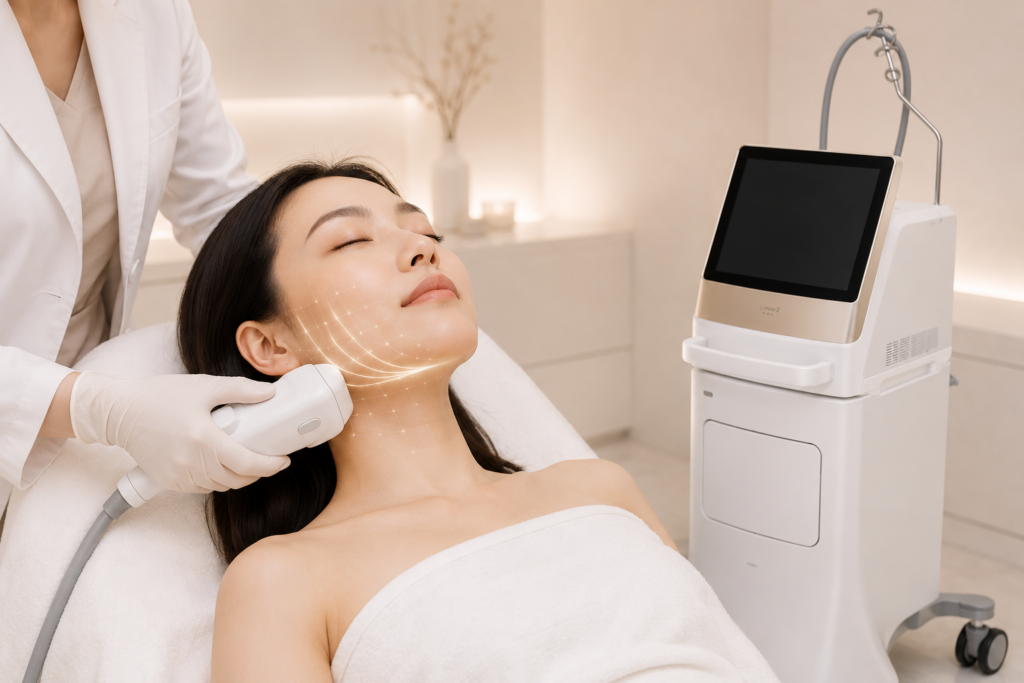
▲ Z-Wave Lifting uses dual point-and-line modes to precisely target the SMAS fascia layer, providing deep lifting for the jawline and facial contours
Instead of agonizing over which one to choose, first figure out whether your problem is a “surface” or a “line.”
If your concerns are rough skin texture, visible pores, or skin that looks a bit dull and tired, these are “surface” issues, and treatments like Sharp Radiofrequency—which provide uniform heating and comprehensively stimulate collagen—would be the top choice; If, when you look in the mirror, you notice that your jawline has become less defined, the skin around your mouth is starting to sag, and your side profile has become blurred, these are issues related to “contour” and “structure,” which require treatments like ultrasound—which can precisely anchor deep fascia—to effectively address them. Most people actually experience a bit of both of these concerns, which is why combination treatments have become the mainstream approach to anti-aging skincare.
Of course, the most accurate way to determine this is to have a doctor perform a physical examination to assess the degree of sagging, your fat distribution, and your skin condition. Only then can a treatment plan be developed with proportions that truly address your specific concerns—rather than simply following a trend just because you’ve heard it’s popular.
ARISIN CLINIC
First, figure out what your problem is, then decide which one to use.
The doctors at Arixin Clinic will conduct a thorough assessment of your skin type and the degree of sagging,
Determine the optimal balance between radiofrequency, ultrasound, and combination treatments to ensure every penny of your budget is spent wisely.
The content of this article is for reference only. Actual treatment results may vary depending on individual skin conditions. Treatments carry risks and side effects; please consult a professional physician during your clinic visit for a detailed evaluation.