




How can I get rid of the bags/tears under my eyes? How long does the surgery last? A Complete Guide to Common Causes and Improvements
What are Eye Bags? A look at the factors that contribute to the formation of bags under the eyes
Bags under the eyes are a common phenomenon under the eyes, mainly formed under the eyes of the fatty tissue, usually due to fat bulges or surrounding tissue laxity, this problem not only affects the appearance of the aesthetic, but also may have a negative impact on personal self-confidence and the overall image.
There are many reasons for the formation of bags under the eyes, the most important of which is related to the physiological aging process. As we age, skin elasticity gradually decreases, causing the tissues around the eyes to relax, making it easier for bags to form. In addition, loss of collagen and loss of skin elasticity are also closely related to under-eye bags. Collagen is the main structural protein in the skin, muscles and other tissues, responsible for supporting and firming the skin to keep it young and elastic, however, with age, the body gradually loses collagen, leading to sagging and fragile skin tissues, especially in the weaker areas around the eyes.
The formation of eye bags is also related to the aging of the orbicularis oculi muscle. The orbicularis oculi is a group of muscles around the eyes that control the opening and closing of the eyes. As we age, the orbicularis oculi muscle may lose some of its function due to aging, resulting in the bulging out of fat under the eyes as well as a decrease in the ability of the tissues around the eyes to support it, which can make the bags under the eyes even more noticeable.
Genetic factors also play an important role in the formation of bags under the eyes. Some people may have inherited weak eye structures from their parents or grandparents, which can lead to the appearance of bags under the eyes at a young age. Lifestyle and environmental factors also play a role, such as prolonged exposure to electronic screens, lack of sleep, high-pressure jobs, or stressful life situations may accelerate the aging of eye tissues and the formation of eye bags. Certain diseases or eye problems, such as thyroid disorders, allergic reactions or infections, may also contribute to the appearance of bags under the eyes.
Understanding 3 types of eye bags at once
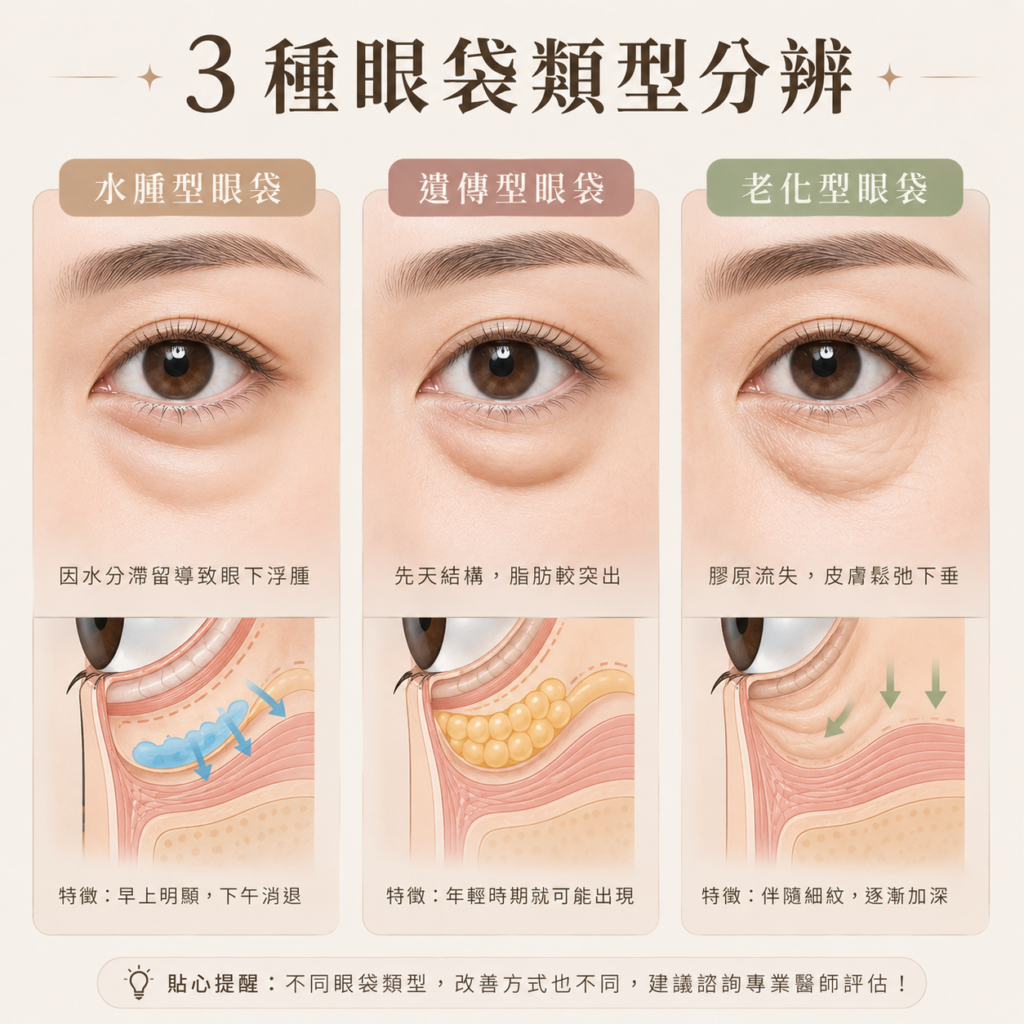
Hydrocolloid Eye Bags
Hydrocele can develop when there is excessive fluid penetration or accumulation in the eye tissue. Lack of sleep, poor diet, excessive fatigue, and prolonged use of digital devices can cause damage to the eye tissues, leading to edema under the eyes.
To solve the problem of edema-type eye bags, first of all, we need to pay attention to water intake and dietary adjustments. It is recommended to consume enough water every day, but avoid over-drinking, and reduce the intake of high sodium and sugary foods. Appropriate eye massage can also help to relieve edema, gently massage from the corners of the eyes towards the temples to promote lymphatic drainage. Eye exercises, such as eye exercises or eyeball rotations, can help strengthen the muscles around the eyes and promote blood circulation, which in turn can improve the appearance of bags under the eyes.
Genetic Eye Bags
Genetic under-eye bags are caused by hereditary factors and usually appear similar to other members of the family. Factors that contribute to the development of under-eye bags include more fat around the eyes, natural muscle development, etc. This type of under-eye bag may begin to appear at a young age and become more pronounced as we age. To address this problem, fillers or Botox injections can be used to improve the appearance of the eyes by reducing the volume of bags around the eyes. Fillers fill in the hollows underneath the eyes, making them look smoother and fuller, while Botox relaxes the surrounding muscles, reducing the prominence of the bags and achieving a more natural look.
Aging Eye Bags
Eye bags are common with age, and their formation is closely related to the structural changes of the skin around the eyes. Over time, the collagen and elastin fibers in the skin gradually decrease, causing the tissues around the eyes to relax and sag; at the same time, the fatty tissues under the skin also gradually lose or shift downward with age, further accelerating the appearance of bags under the eyes. In addition, the function of the muscles around the eyes gradually weakened, losing the supporting role of the surrounding tissues, so that the bags under the eyes more prominent.
Aging eye bags can be treated with either internal or external eye bag surgery. Inside-out surgery focuses on adjusting and removing the fatty tissues inside the eye bags, while outside-in surgery focuses on adjusting and repairing the skin and tissues outside the eye bags.
How to tell the difference between a sleeping worm, bags under the eyes, and tear troughs?
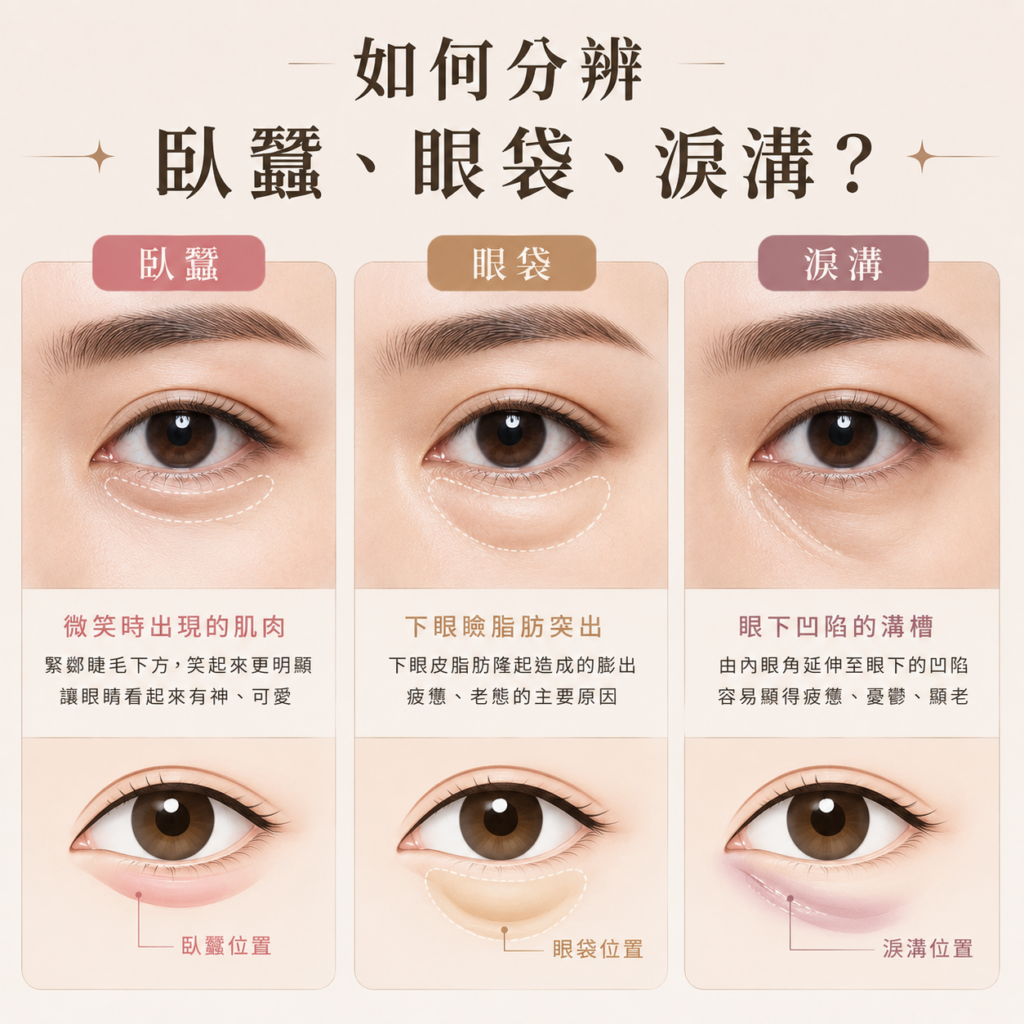
Silkworm
Blepharoplasts are small bumps of tissue or fat located under the eyes, usually in the shape of a triangle or inverted triangle. They are usually smaller, more localized, and more closely connected to the orbital rim of the eye than are bags. This attractive eye feature is sometimes seen as a sign of peach blossom eyes, which can make the facial features appear more youthful and attractive. The presence of sleepy eyes can be influenced by the structure of the tissues and fat distribution around the eyes, or can be caused by genetic factors, lifestyle and natural aging, or can be created through medical injections.
bags under the eyes
Puffiness under the eyes is a bulge under the eyes caused by an increase in fatty tissue and skin laxity, usually associated with age. It is caused by aging of the eye tissue and loss of collagen, which leads to tissue laxity and sagging. The formation of under-eye bags is also related to the relaxation of the orbicularis oculi muscle, a group of muscles located around the eyes that weakens with age and is unable to effectively support the eye tissue, thus contributing to the formation of under-eye bags.
tear duct
The tear trough is a ligamentous structure located underneath the eye that creates a depression between the eye and the face, giving the skin around the eye a distinctly sunken appearance. As we age, the skin loses collagen, leading to tissue changes and laxity, especially in the skin around the eyes, making the tear trough more visible.
What are the causes of tear ducts? These are 4 ways to improve your tear ducts!
The tear trough is a sunken structure located underneath the eye that forms between the eye and the face, giving the skin around the eye a distinctly sunken appearance. Loss of collagen in the skin leads to loosening of the tissues around the eyes, which is one of the main reasons for deepening the tear trough. Many people subconsciously rub their eyes when they are tired or have sore eyes. This action tends to damage the collagen and elastin fibers in the skin, causing the skin around the eyes to relax, resulting in a more pronounced tear trough. Lack of sleep also reduces the blood circulation rate, which accelerates the aging of the skin around the eyes in the long run, making the tear troughs more visible.
There are a variety of non-surgical fillers available for tear trough improvement, including the following four main options:
Tear Trough Improvement Option 1: Hyaluronic Acid Filler
Hyaluronic acid is a naturally occurring polysaccharide found in the connective tissue of the human body, with excellent moisturizing effect and histocompatibility. As a filler, hyaluronic acid is popular because of its immediate effect. It can quickly fill in the tear troughs and enhance the fullness of the skin around the eyes, so that patients can see significant improvement immediately after treatment.
Tear Trough Improvement Option 2: Collagen Fillers
Collagen is another material commonly used to fill the tear troughs. It has good biocompatibility and moderate filling effect, which can effectively improve the appearance of the tear troughs. However, as collagen is gradually absorbed by the body, its effect is usually only short-lived, and it is more prone to allergic reactions than hyaluronic acid, so allergy testing is required before use.
Tear Trough Improvement Option 3: Peter Peter's Place
Peter Peter's Place not only fills the tear troughs instantly, but also stimulates collagen regeneration, so the effect increases over time, lasting anywhere from 1 to 4 years. This dual mechanism of action makes Peter Peter's Wax one of the choices for many patients who are looking for a long-lasting solution.
Tear Trough Improvement Option 4: Soothing Essence
Soothing Essence works by stimulating collagen production in the body to improve the appearance of tear troughs and other facial depressions. As the effect is gradual, patients need to wait patiently for the final result and also need to undergo multiple treatments, it is more suitable for patients who wish to gradually improve their facial depressions in a natural way.
What is your daily maintenance routine to avoid eye bags?
The main effect of eye cream is to improve the fine lines and dryness around the eyes, and it has limited effect on the problem of sagging or drooping eye bags. In addition, if not used properly, eye creams may lead to granulation, and even cause dermatitis, hyperpigmentation and other counterproductive effects.
Appropriate massage, eye exercises and hot compresses can still relieve puffiness to a certain extent. Eye massage can help relax the eye muscles, while ice and hot compresses can promote blood circulation around the eyes and reduce puffiness. It is important to note that these methods can only improve the effect of minor or edema-type pseudo-puffiness under the eyes. For genetic or aging-type puffiness under the eyes, it is recommended that a more aggressive and effective aesthetic treatment be used. In addition, adequate moisturization of the skin around the eyes, proper sun protection, and adequate sleep can also help to prevent and alleviate the problem of under-eye bags.
How do I get rid of bags under my eyes?
In the treatment of eye bags, there are two main types of surgery available: internal and external eye bag surgery. For young patients with mild under-eye bags and good skin elasticity, internal eye bag surgery may be the ideal choice, as it can effectively deal with the excess fat under the eyes, and the surgical incisions will not be visible externally, with a shorter recovery period. For older patients with visible bags under the eyes and loose skin, external eye bag surgery may be more suitable, not only to solve the problem of bags under the eyes, but also to lift the under-eye area and minimize the fine lines around the eyes.
Comparison of Surgical Procedures to Eliminate Eye Bags
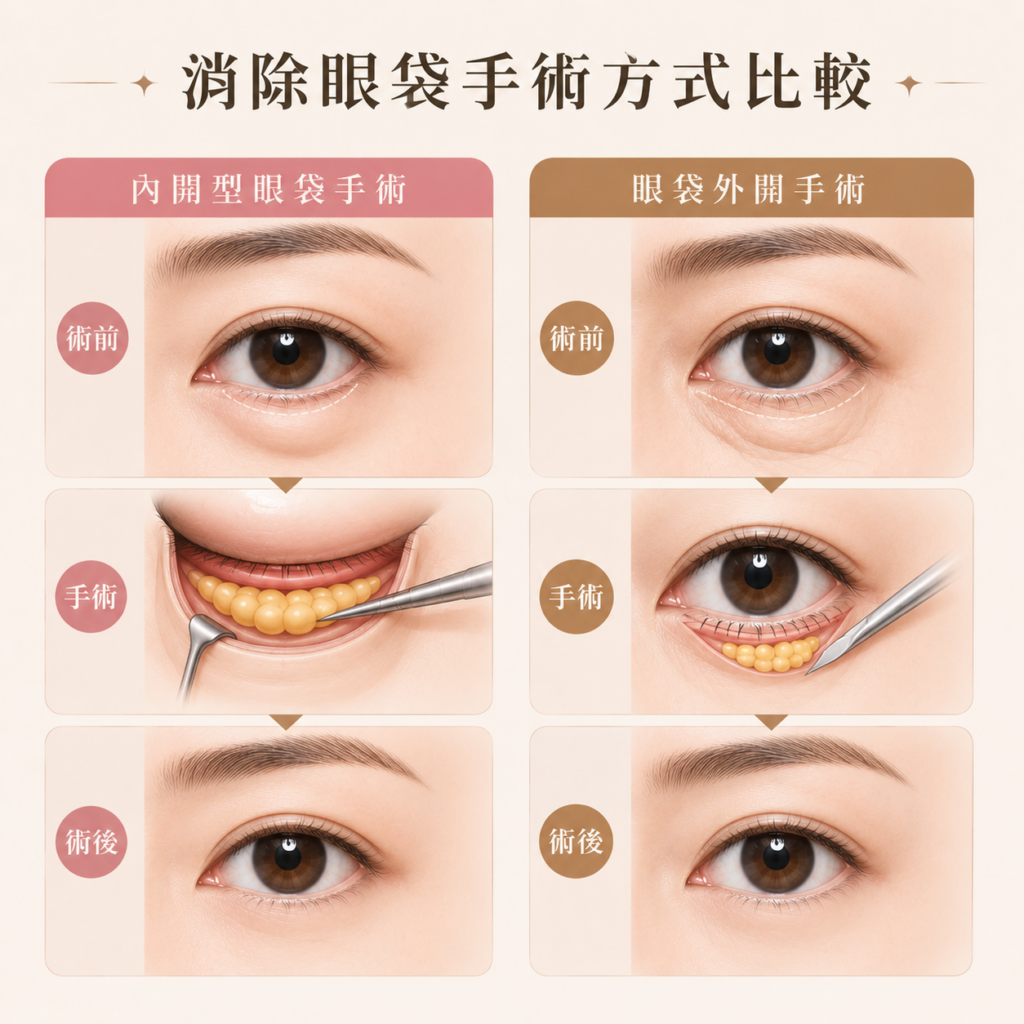
Inside-Out Eye Bag Surgery
Inside-out eye bag surgery is also known as "puffy eye surgery", which is more suitable for young people with mild symptoms of under-eye bags and good skin elasticity, as the surgery mainly removes the excess fat and does not effectively improve the loose skin. During the procedure, the surgeon makes a small incision (about 5mm) in the inner side of the lower eyelid and separates and removes the excess fat from the orbital septum. The main advantage of this procedure is that the incision is made on the inside of the eyelid, leaving no marks on the outside of the eye, no suture removal and a shorter recovery period.
Surgery for Eye Bags
Open eye bag surgery, also known as cut eye bag surgery, is a treatment for older patients with visible bags under the eyes and loose skin. The procedure involves incising the skin near the eyelashes to remove excess fat and loose skin, which not only solves the problem of under-eye bags, but also lifts the under-eye area and minimizes fine lines around the eyes. However, the incision is large and requires careful care and a return visit to remove the stitches, and may recur in the future, so patients need to consider carefully and follow the doctor's instructions for aftercare.
How long does eye bag surgery last?
Surgical maintenance time for internal eye bag surgery
Inside-Out Eye Bag Surgery is suitable for young people to improve the problem of under-eye bags by extracting the excess fat. The duration of the procedure varies from person to person, depending on factors such as body type, lifestyle and aftercare. Although the result is obvious after surgery, with ageing and natural aging, the bags under the eyes may reappear. Therefore, it is necessary to assess the condition of the eye area regularly and carry out follow-up maintenance or other complementary treatments as necessary to ensure that the aesthetic effect lasts for a long period of time.
Duration of External Eye Bag Surgery
The effect of external eye bag surgery usually lasts for a longer period of time and is suitable for elderly patients with skin laxity. The duration is also affected by individual's physical condition, lifestyle and aftercare. Since the incision is external to the skin, special attention needs to be paid to wound care to prevent scarring. As the skin relaxes again with age, additional surgeries or other care measures may be required.