




Explore the Picosecond Catalog
What Is a Picosecond?
Discovery Pico is a new-generation picosecond laser technology that utilizes ultra-short “picosecond” (one trillionth of a second) pulses to instantly deliver laser energy to pigment particles in the skin. According to information from Quanta System, the Italian manufacturer that developed Discovery Pico, the device has the following features:
- Multiple Wavelengths: Commonly used in combination with wavelengths such as 1064 nm, 595 nm, and 694 nm, this technology enables selective treatment of pigments of varying depths and colors, and can also be applied to tattoo removal.
- Extremely short pulse duration: Measured in “picoseconds,” it is much shorter than that of traditional nanosecond lasers, allowing energy to be delivered to the target pigment in an extremely short time and reducing the likelihood of heat spreading to surrounding healthy tissue.
- High Instantaneous Power Output: Through the instantaneous release of high power, the “photomechanical effect” shatters pigment particles into finer particles, facilitating their subsequent metabolism by the body and clearance by the lymphatic system, rather than simply burning tissue with thermal energy.
- Probe Selection: The Picosecond device offers 8 different probe sizes and shapes, including round, square, and dot matrix, which can be combined with various spot sizes and wavelengths to address a wide range of skin concerns.
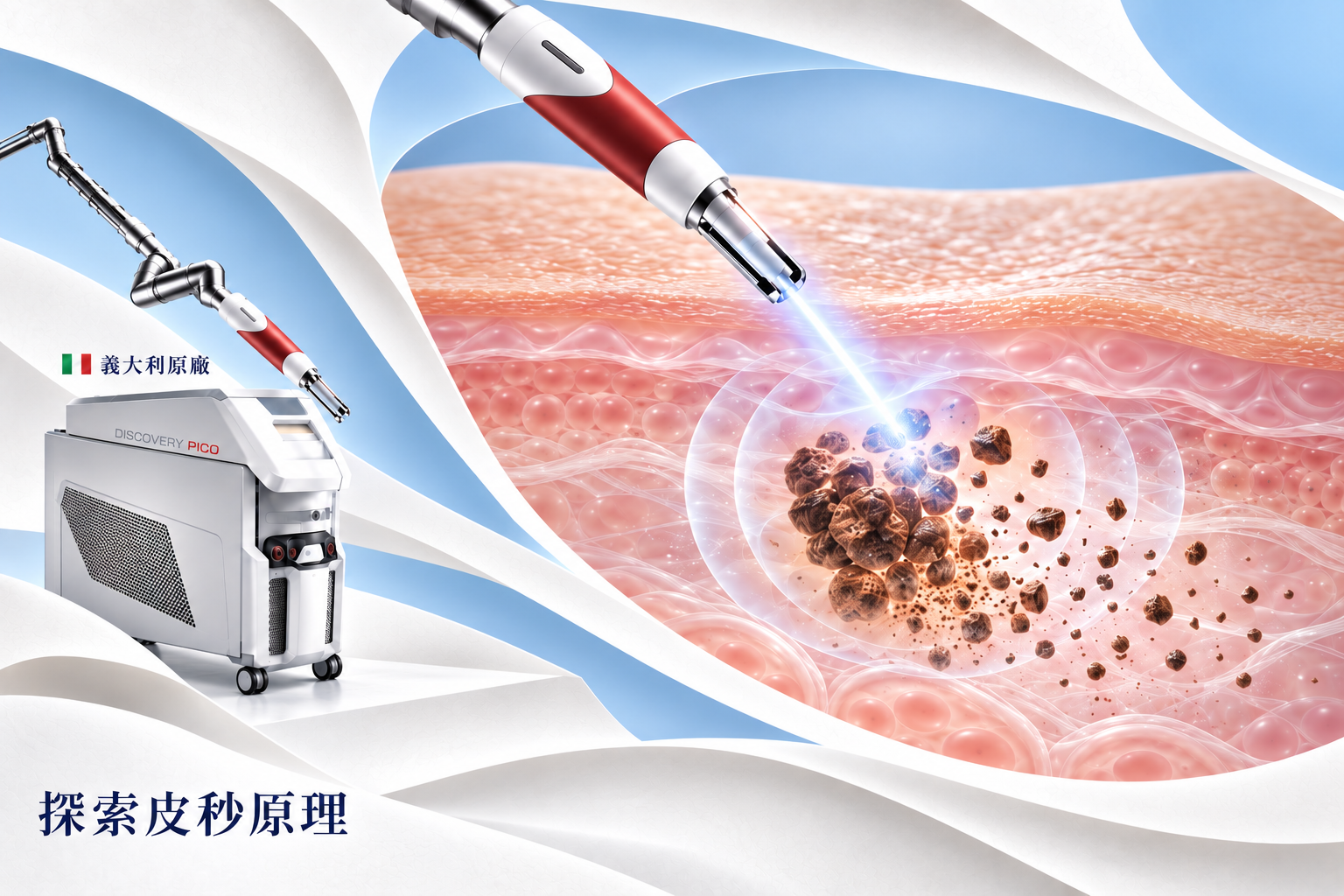
Because the mechanism of action of picosecond lasers is “fragmentation” rather than “heating,” they are more effective than traditional lasers at reducing thermal damage, inflammatory reactions, and the risk of post-treatment hyperpigmentation when treating pigmented conditions such as spots and tattoos. This is one of the reasons why picosecond laser technology is widely used in medical aesthetics clinics.
Discover the Benefits of Picosecond Treatments
Exploring the Benefits of Picosecond Laser Treatment #1: Fading Dark Spots
For common pigmentation issues such as sunspots, freckles, and cheekbone birthmarks, picosecond laser treatment works by shattering pigment particles into finer particles, which are then eliminated from the body through the skin’s natural metabolic processes, thereby lightening the spots.
Exploring the Benefits of Picosecond Laser Treatment, Part 2: Improving Skin Texture
Picosecond technology concentrates laser energy and delivers it to the dermis, inducing the “photomechanical effect” and “laser-induced tissue breakdown (LIOB).” This stimulates dermal remodeling and promotes the regeneration of collagen and elastin without damaging the epidermis, resulting in the smoothing of fine lines, the reduction of pore size, the improvement of acne scars, and an overall refinement of skin texture.
Exploring the Benefits of Picosecond Laser Treatment, Part 3: Reducing Post-Treatment Hyperpigmentation
Traditional lasers primarily rely on the “photothermal effect” to remove pigmentation, but this can easily lead to post-inflammatory hyperpigmentation due to thermal damage. The picosecond laser employs extremely short picosecond pulse durations, primarily utilizing the photomechanical effect to instantly shatter pigment particles while minimizing thermal damage to surrounding healthy tissue. As a result, it reduces the risk of post-treatment inflammation and post-treatment hyperpigmentation, and the recovery period is relatively shorter.
Exploring the Benefits of Picosecond Lasers, Part 4: Tattoo Removal
The picosecond laser’s ability to deliver high energy in an instant makes it ideal for shattering tattoo pigment particles in the skin. It is particularly effective at breaking down dark-colored pigments—such as blue, green, and black—compared to traditional lasers, which is why many people choose picosecond laser tattoo removal.
Exploring Picosecond vs. Honeycomb Picosecond: What's the Difference?
Many people confuse “Exploration Picosecond” with “Honeycomb Picosecond,” but in fact, they refer to the same laser system with different treatment modes; the difference lies in whether a honeycomb lens is used.
Technical Principles
- Exploring Picosecond Technology: The key lies in high energy and multiple wavelengths (such as 1064 nm, 532 nm, and 694 nm). When used with a focusing lens, it creates a “cavitation effect” in the dermis, using photomechanical waves to directly shatter deep-seated pigmentation while promoting collagen reorganization.
- Honeycomb Picosecond: This treatment primarily uses a 755 nm wavelength, and the lens redistributes the laser energy, focusing it into hundreds of tiny spot-like areas. It delivers energy to the dermis to stimulate collagen production without damaging the epidermis.
Treatment Outcomes
- Exploring Picosecond Laser Treatment: This treatment is highly effective for improving deep pigmentation (such as cheekbone birthmarks), stubborn acne scars, pitted scars, and dark or colored tattoos. With its high energy output, it effectively stimulates collagen regeneration; however, minor bleeding or slight redness and swelling may occur after the procedure.
- Honeycomb Picosecond Laser: This treatment focuses on improving skin texture, brightening the complexion, and reducing fine lines and superficial spots. It quickly reduces redness and has a short recovery period, making it ideal for regular maintenance.
Suitable for
- Discover Picosecond Laser Treatment: Ideal for those with severe acne scars and indentations, deep, stubborn dark spots, multicolored tattoos, and uneven skin tone who want to achieve brighter, fairer skin.
- Honeycomb Picosecond: Suitable for people with uneven skin tone, superficial spots or fine lines, those who are sensitive to pain, or those who want to avoid a long post-treatment recovery period.
| Discovery Pico | PicoSure | |
|---|---|---|
| Host Source | Made in Italy | Manufactured in the U.S. |
| Main Wavelengths | 1064 nm / 532 nm / 694 nm | 755nm |
| Core Lens | Focusing Lenses / Super Lenses | Patented Honeycomb Lens (Focus Lens) |
| Key Benefits | Treats deep pigmentation spots, severe pitted acne scars, tattoo removal, improves dullness, and brightens skin tone | Brightens skin tone, lightens superficial spots, minimizes pores, and reduces fine lines |
| Energy Intensity | 高 | Gentle and Precise |
| Recovery Period and Reactions | There may be slight bleeding, and the redness will subside in about 3 to 7 days. | The recovery period is short, and any slight redness typically subsides within 1 to 2 days. |
Taichung Arixin Clinic: Real-Life Picosecond Laser Case Studies
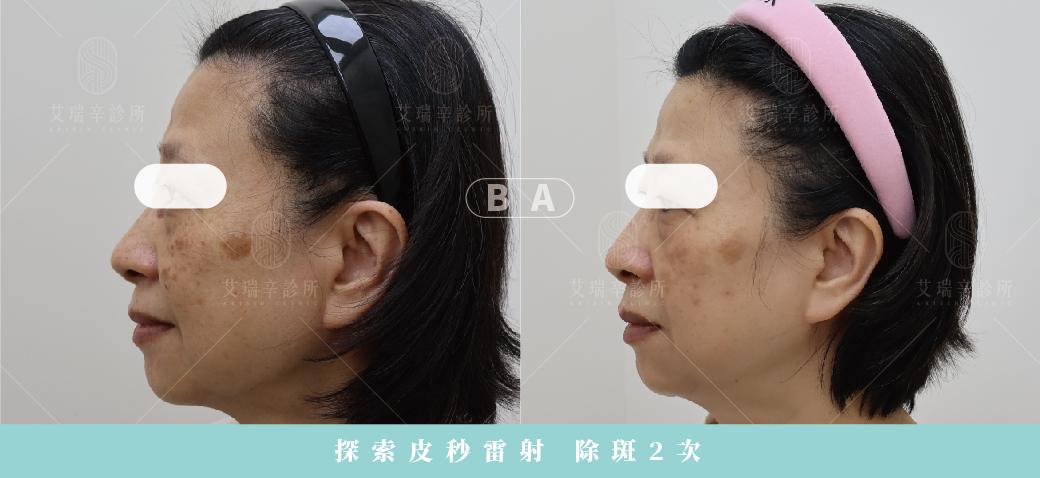
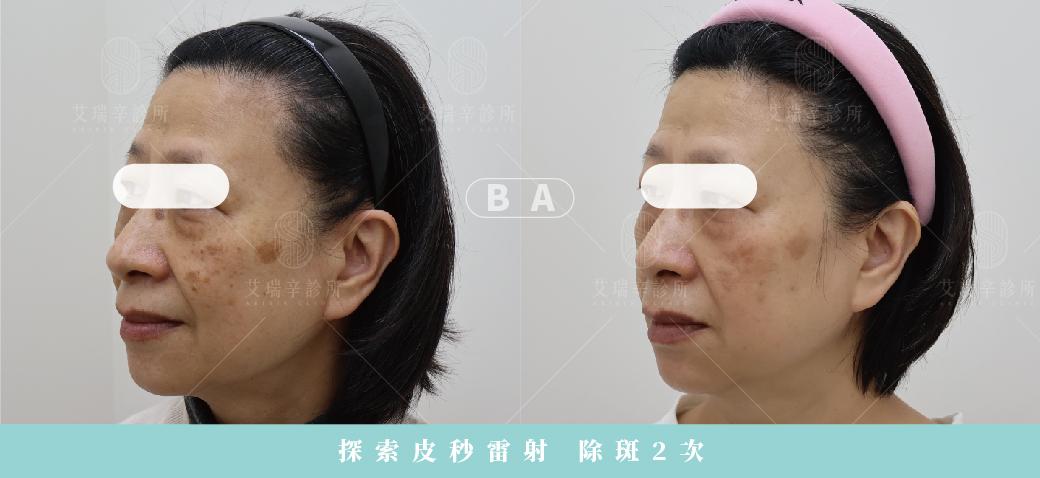
Picosecond Laser Case Study 1: Fading Pigment Spots
I. De-identified Customer Information
- Customer Background: A nurse at a hospital who works long-term rotating shifts and has an irregular daily schedule.
- Skin concern: Multiple sunspots and superficial pigmentation have appeared on both cheeks; the spots are more noticeable when viewed from the side and are difficult to completely cover even after applying makeup.
- Main Concerns: Due to work requirements, the patient needs to maintain a presentable appearance for extended periods and is particularly cautious about the safety and effectiveness of aesthetic medical devices. The patient hopes to improve facial spots and uneven skin tone while minimizing the impact on daily work.
II. Physician’s Professional Judgment and Assessment
After a detailed assessment of the patient’s skin condition, the physician determined that the facial spots were primarily sunspots combined with mild post-inflammatory hyperpigmentation, and that the spots varied in depth. Considering the client’s desire to improve the spots while minimizing disruption to her daily work, the doctor recommended treatment with the “Discovery Pico Picosecond Laser” and adjusted the treatment parameters based on the depth of the spots and the client’s skin condition.
III. Customized Treatment Plans
- Discovery Pico Picosecond Laser: Treats facial spots of varying depths by adjusting the wavelength and energy parameters to suit the individual’s skin condition.
- Pre-treatment Assessment: After the physician assesses your skin tone, the distribution of spots, and the depth of pigmentation, a suitable treatment plan will be developed.
- Treatment Process: Since the patient’s spots were primarily located in the superficial layers, the physician assessed the condition during the session and determined that no additional anesthetic was necessary; laser treatment was performed immediately. The patient experienced a mild stinging sensation during the procedure, which took approximately 15 to 20 minutes to complete.
- Post-Treatment Care: After the procedure, our nursing staff will provide soothing and moisturizing care. We will also provide health education on the importance of sun protection and advise against using skincare products containing acids or alcohol.
IV. Treatment Outcomes and Progress
The client has completed two treatment sessions so far. Following this initial phase of treatment, the previously noticeable spots on both cheeks have faded, and there has been an improvement in skin tone evenness and overall skin texture. The client wishes to continue with subsequent sessions to further address the remaining pigmentation and uneven skin tone.
Picosecond Laser Case Study 2: Improving Pigmentation Left by Acne Scars
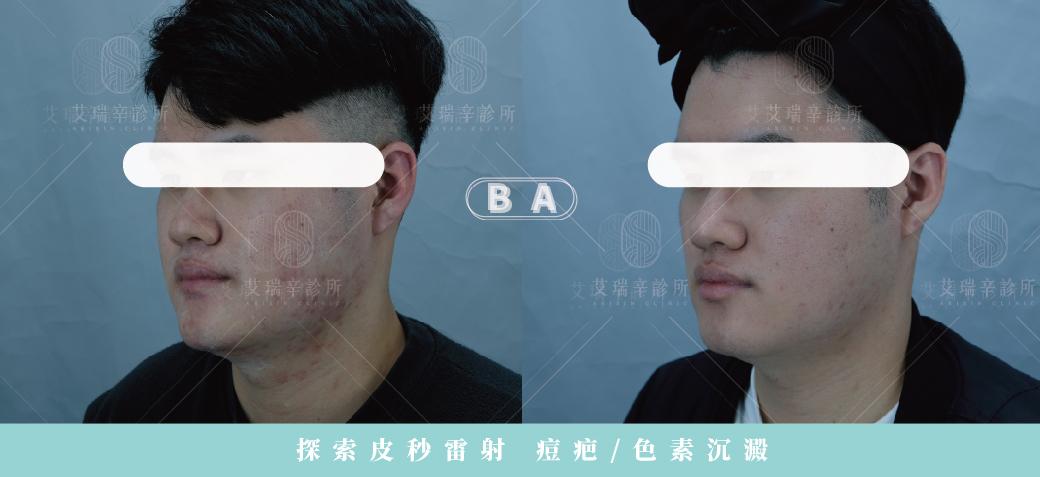
I. De-identified Customer Information
- Customer Background: Real estate agent; faces significant sales pressure; has an irregular schedule; the job requires frequent field visits to show properties and face-to-face meetings with clients.
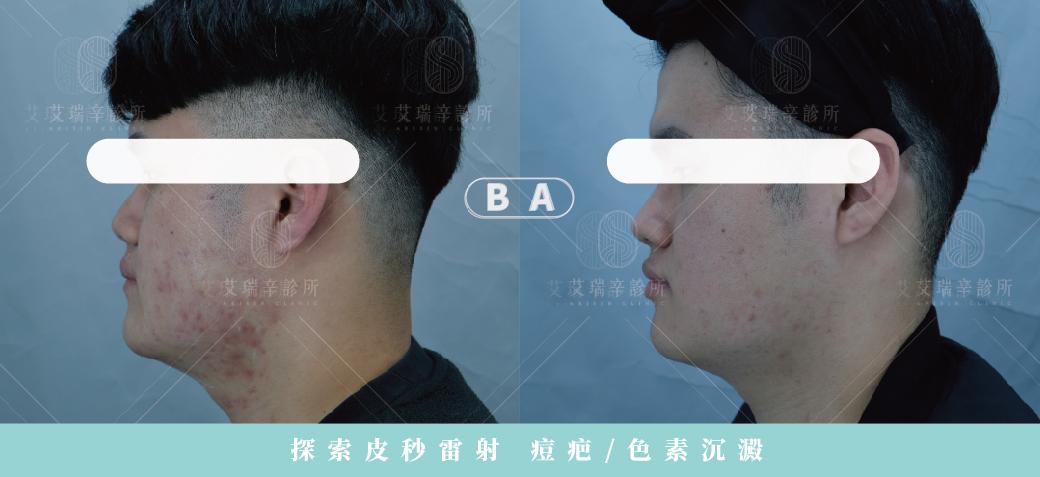
- Skin Concerns: Recurring acne on both cheeks over a long period of time; after the acne clears up, it leaves behind uneven acne scars and hyperpigmentation, accompanied by enlarged pores.
- Main Concerns: Due to the nature of her work, she frequently interacts with clients face-to-face. Acne scars, hyperpigmentation, and enlarged pores have made her feel less confident, so she hopes to improve her overall skin condition and achieve a smoother, more even complexion.
II. Physician’s Professional Judgment and Assessment
After a thorough examination of the patient’s skin condition, the physician determined that the patient primarily had skin issues such as post-inflammatory hyperpigmentation, mild acne scars, and enlarged pores. Considering that the client frequently interacts with clients face-to-face and cannot take an extended leave of absence, the physician recommended treatment with the “Discovery Pico Picosecond Laser.” This treatment is characterized by low thermal damage and a short recovery period, making it well-suited to the client’s need to maintain their daily work routine and frequent client meetings.
III. Customized Treatment Plans
- Discovery Pico Picosecond Laser: Treats acne scars, pigmentation, and overall skin condition by adjusting the energy parameters to suit the client’s specific pigmentation patterns and skin condition.
- Pre-treatment Assessment: After the doctor assesses the distribution of facial pigmentation, the severity of acne scars, and the condition of the pores, a suitable treatment plan is developed.
- Treatment Process: After cleansing the face and applying a numbing cream, the laser treatment begins. During the procedure, there is a slight prickling and warming sensation, but it remains within a tolerable range for the client. The entire process takes approximately 15 to 20 minutes.
- Post-Treatment Care: After the treatment, our nursing staff will provide soothing care and moisturizing treatments. They will also remind you to use extra sun protection and avoid irritating skincare products to help your skin heal properly.
IV. Treatment Outcomes and Progress
After a course of treatment, before-and-after photos show that the customer’s previously noticeable acne scar discoloration on her cheeks has faded, her skin tone has become more even, and her pores appear finer. Follow-up treatments are currently ongoing to further improve the remaining acne scars and pore concerns.
Exploring Pre- and Post-Treatment Precautions for Picosecond Laser Treatment
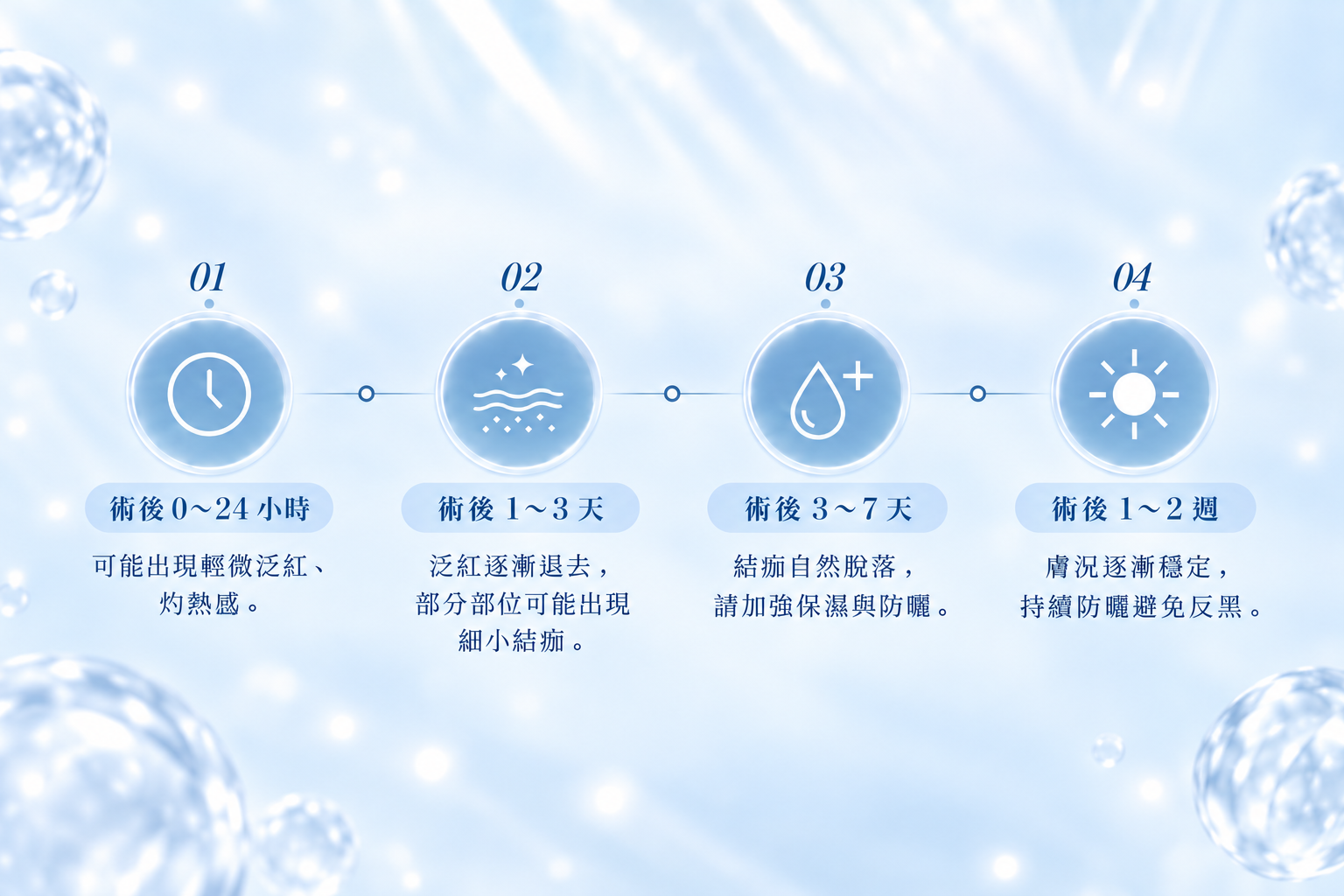
Recovery Period Guidelines
The recovery period for picosecond laser treatments is shorter than that for traditional lasers. Common post-treatment reactions and their typical timeline are as follows (for reference only; actual recovery may vary depending on individual skin type):
- 0–24 hours after the procedure: Mild redness or a burning sensation may occur at the treatment site; this is a normal reaction.
- 1–3 days after surgery: Redness gradually subsides, and very small, pinpoint scabs may appear in some areas.
- 3–7 days after surgery: The scab will fall off naturally. During this stage, the skin barrier is still healing, so it is important to step up moisturizing and sun protection.
- 1–2 weeks after surgery: Your skin has stabilized, but we still recommend continuing to use strong sun protection to prevent hyperpigmentation.
Pre-Treatment Considerations for Picosecond Laser Treatments
- Avoid acids and exfoliants: It is recommended to discontinue the use of irritating ingredients such as alpha-hydroxy acids, salicylic acid, retinoic acid/retinol, and azelaic acid, as well as exfoliating products, 1 to 2 weeks before the procedure.
- Sun Protection and Avoiding Sun Exposure: Avoid exposure to high temperatures, sunbathing, or outdoor sun exposure for 2 weeks before the procedure to prevent skin inflammation or an increased risk of post-procedure hyperpigmentation.
- Avoid other cosmetic procedures and facials: Do not have blackhead extractions, facials, high-energy laser treatments, or chemical peels for 2 weeks before the procedure, as these treatments may weaken the skin barrier.
Exploring Post-Treatment Care After Picosecond Laser Treatment
- Enhance Hydration and Sun Protection: After surgery, the skin barrier is more fragile and loses moisture more quickly, so it’s recommended to use moisturizing serums and lotions with simple, minimal ingredients to boost hydration. Additionally, apply sunscreen with an SPF of 30 or higher and a PA rating of +++ or higher 30 minutes before going outside, and reapply every 2 to 3 hours. Combine this with a hat and an umbrella to reduce post-inflammatory hyperpigmentation (darkening) caused by UV rays.
- Do not pick at scabs: If small, spot-like scabs appear in the treated area, this is a normal part of the healing process. Do not scratch or pick at them, and do not force them off, to avoid pigmentation or scarring.
- Temporarily avoid irritating skincare products and heat sources: For 1 to 2 weeks after the procedure, discontinue the use of products containing alcohol, skin-lightening agents, acids (such as alpha-hydroxy acids, salicylic acid, and retinoic acid), and exfoliants; also avoid hot springs, saunas, steam rooms, or bathing in very hot water to prevent aggravating skin inflammation.
- Prevention and Care During Hyperpigmentation: If you experience temporary hyperpigmentation due to your individual constitution or higher energy levels, there’s no need to worry. Continue to use sunscreen and maintain a basic moisturizing routine, and your body’s metabolic processes will typically gradually eliminate the pigment within 1 to 3 months.
Overall, the recovery period after a picosecond laser treatment typically lasts about one week, after which you can resume your daily routine; however, it is recommended to allow 2 to 4 weeks for your skin to fully stabilize. The specific skincare routine you follow during this period is often the key factor in determining the final results.
Exploring Picosecond: Frequently Asked Questions (FAQ)
How often should you get a picosecond laser treatment?
It is recommended to have the treatment once every 4 to 6 weeks (about 1 month). The skin’s natural renewal cycle and collagen regeneration cycle are approximately 28 days. If the interval between treatments is too short, the skin may be damaged again before it has fully healed. If the treatment targets deep pigmentation spots or tattoos—which take longer to metabolize—the doctor may recommend waiting 6 to 8 weeks before the next treatment.
How many picosecond laser treatments are needed to see results?
Since the darkness of spots and skin conditions vary from person to person, a treatment course typically consists of 3 to 6 sessions. However, some deeper or more stubborn pigmentation may require additional sessions to achieve the desired results. For example:
Superficial spots (freckles, sunspots): Approximately 1 to 3 treatments are required.
Deep pigmentation spots (cheekbone nevi, Nevus of Ota) or pitted acne scars: It may take 3 to 6 or more consecutive treatment sessions to achieve the desired results.
Tattoo Removal: Depending on the color, depth, and size of the tattoo, an average of 4 to 8 or more sessions is typically required.
Is the success rate high for picosecond laser treatment to lighten dark spots?
Lower than traditional lasers. Picosecond lasers primarily use “photomechanical waves” to shatter pigment, which reduces thermal damage to surrounding tissue; therefore, they are less likely to cause post-treatment hyperpigmentation than traditional lasers. However, if proper sun protection is not maintained after the procedure, or if irritating acid-based skincare products are used before or after the procedure, there is still a risk of post-treatment hyperpigmentation.
Can people with sensitive skin undergo the Explorer Picosecond laser treatment?
Yes, but it requires a doctor’s evaluation and adjustment of the settings. The picosecond laser causes minimal thermal damage and has a short recovery period, making it relatively gentle on sensitive skin. During treatment, the doctor will reduce the energy level and use a gentle treatment mode.
However, if your skin is in an acute inflammatory phase—such as during a flare-up of rosacea, severe atopic dermatitis, or contact dermatitis—it is recommended that you treat the skin condition first and then undergo the treatment once your skin has stabilized.
Is the Explorer Picosecond laser suitable for treating melasma?
It is suitable, but a “low-energy, multiple-session” approach must be taken. The causes of melasma are complex, influenced by hormones and microvasculature, and the condition can easily worsen due to excessive stimulation. Picosecond laser therapy shatters melanin without causing excessive heating, making it a complementary treatment for melasma. However, one should not set the energy level too high in an attempt to achieve immediate results. For optimal outcomes, it must be combined with a comprehensive treatment regimen that includes oral medications, topical creams, or tranexamic acid.
How long after a picosecond laser treatment can I undergo other procedures?
It is generally recommended to wait at least 2 to 4 weeks to allow the skin barrier to stabilize before scheduling other treatments. Here are some examples:
Moisturizing and Repair Treatments (e.g., hydrating injections, moisturizing infusions): These can be performed 1–2 weeks after the procedure, once the skin has healed and any redness has subsided.
Electrotherapy, chemical peels, and other laser treatments: It is recommended to wait at least 4 weeks to allow the skin barrier and dermal tissue to heal before undergoing a new treatment.
Find out how picosecond treatment costs are calculated.
The cost of picosecond laser treatment generally varies depending on the “treatment area size,” “number of sessions,” and “whether a combination treatment is used.” It is recommended that you visit the clinic in person for a physician to assess your skin condition before an accurate quote can be provided. For example, for pore scars or deep pigmentation spots, each session costs approximately 3,000 to 6,000 yuan; if combined with a honeycomb lens for a full-face treatment, the cost per session is approximately 6,000–8,000 yuan.
Recommended Picosecond Laser Treatments in Taichung | Arixin Clinic
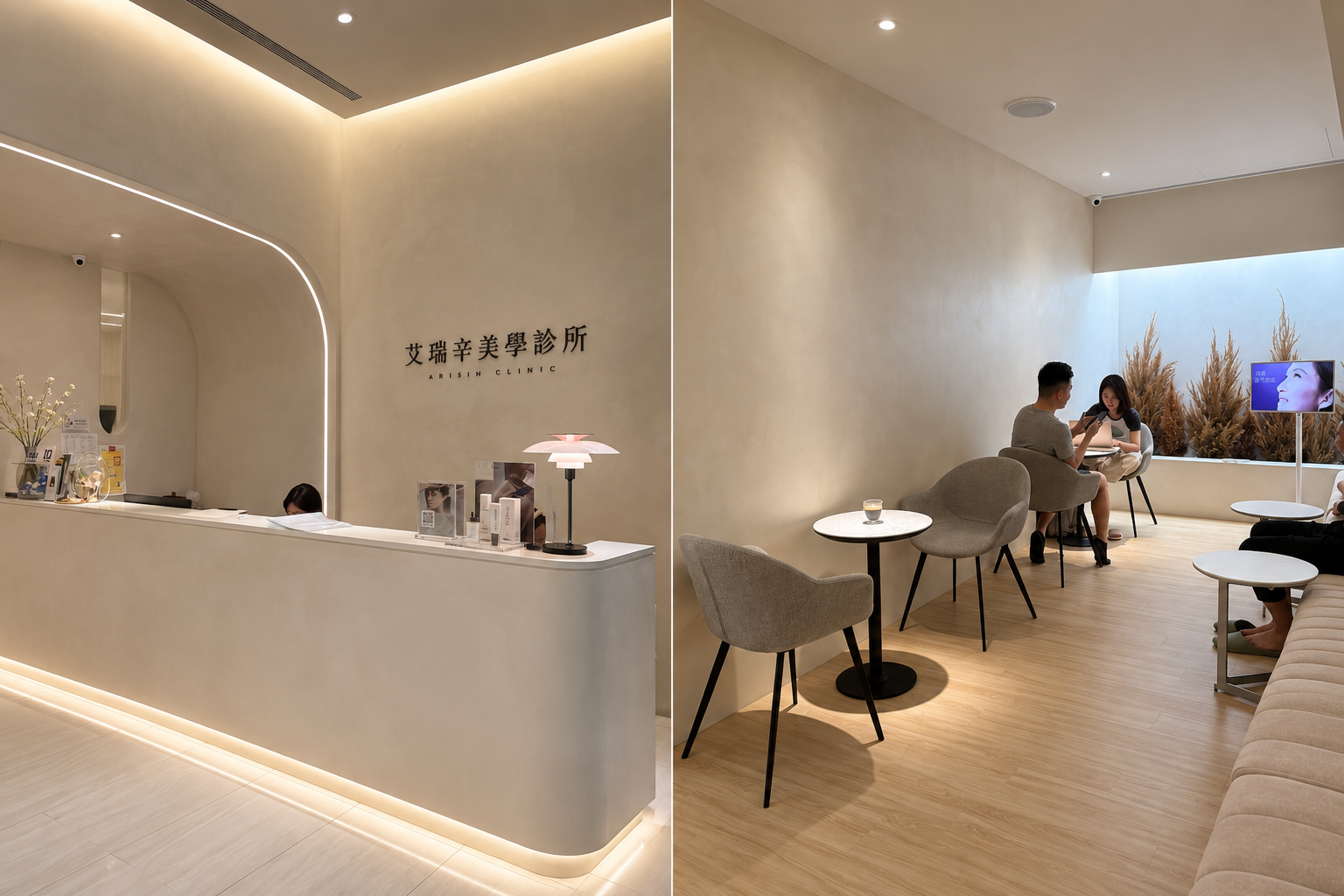
If you’re struggling with stubborn blemishes, acne scars, enlarged pores, or uneven skin tone, and are eager to regain smooth, radiant, and healthy skin, Arixin Clinic is your trusted professional choice in Taichung.
We have introduced the Discovery Pico from the Italian manufacturer, featuring industry-leading peak power and multi-wavelength capabilities. Combined with the precise assessments and customized treatment plans developed by our team of medical professionals, we create treatment plans tailored to meet the specific needs of each patient’s skin.
From detailed pre-operative diagnosis and precise energy control during the procedure to comprehensive post-operative recovery care, Arixin Clinic upholds a service philosophy centered on professionalism, peace of mind, and warmth, accompanying you on your journey to a confident transformation and helping you restore clear, flawless skin.
Why choose Aresin Clinic?
- Manufacturer-Certified Equipment: We exclusively use the manufacturer’s original Explorer picosecond laser system and high-quality lenses to ensure both safety and effectiveness.
- Customized, Precise Assessment: Experienced medical professionals personally conduct consultations and tailor the optimal treatment parameters based on the depth of the spots, the type of scars, and the skin’s tolerance.
- Enhanced Post-Operative Care: We provide professional recovery advice and personalized follow-up services to help you recover faster and achieve more noticeable results.
Book a professional consultation today to begin your journey toward radiant, beautiful skin:Arixin Clinic Official Website