


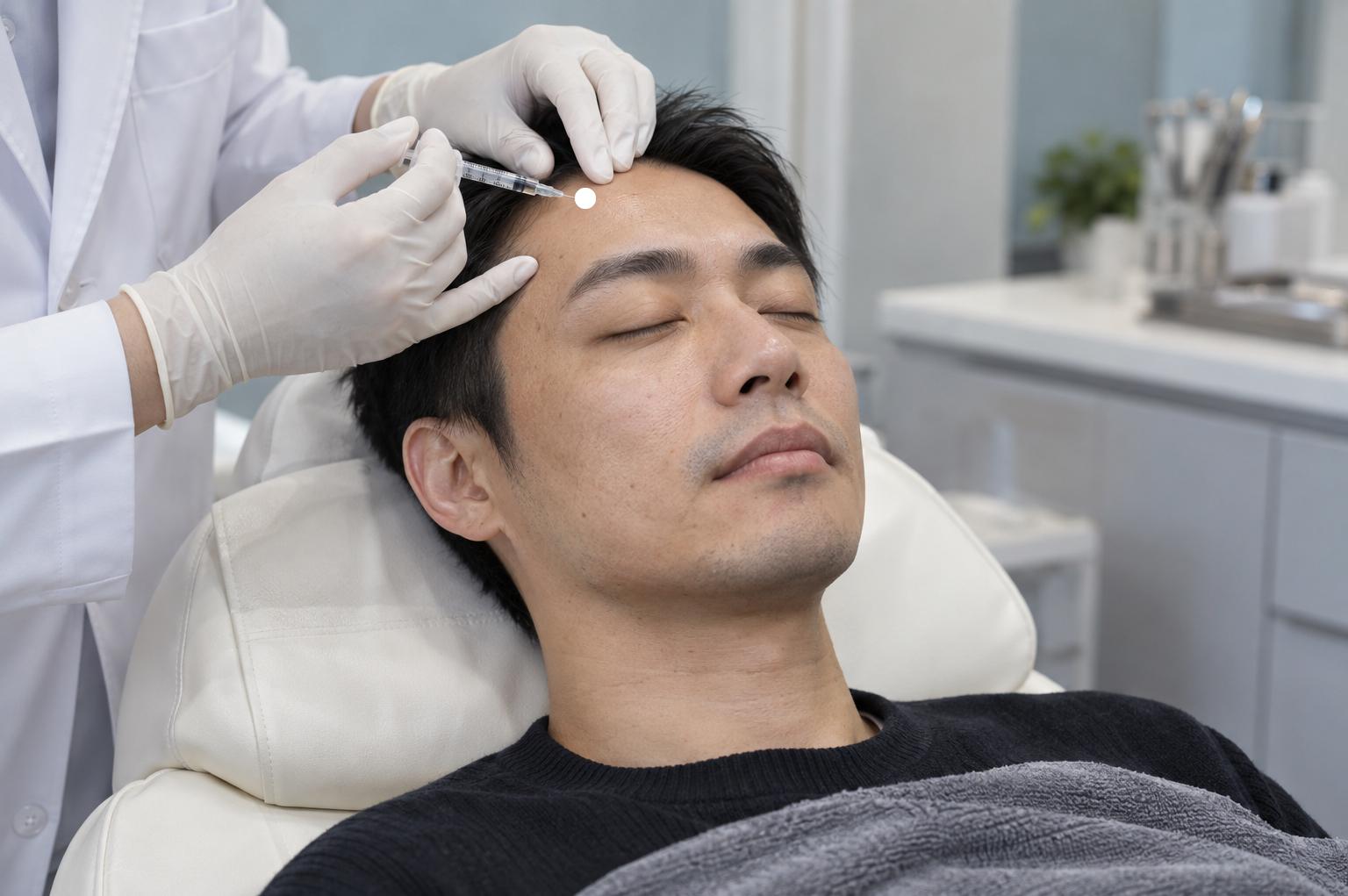
Botox treatments are a common cosmetic procedure that reduces dynamic wrinkles caused by facial movements by relaxing specific muscles. However, the appropriate injection techniques and key assessment factors vary depending on the treatment area, such as forehead lines, frown lines, and crow’s feet. How long does it take for Botox results to appear? And how long do they last? What are the potential side effects, and what precautions should be taken before and after the procedure?
Botox for Wrinkle Reduction: Table of Contents
What is Botox for wrinkle reduction? Which wrinkles are suitable for Botox treatment?
Botulinum toxin is a neurotoxic protein produced by Clostridium botulinum,Mayo Clinic in the United StatesIt is noted that when botulinum toxin is purified and injected into specific muscles, it temporarily blocks the release of acetylcholine from nerve endings, causing overly contracted muscles to relax and wrinkles to become less pronounced.
Botox was originally used for medical purposes to treat conditions such as blepharospasm, strabismus, abnormal muscle tone, and chronic migraines.U.S. FDA It was approved in 2002 for the treatment of glabellar lines, and subsequent approvals were granted for the outer corners of the eyes (crow’s feet) and forehead lines. In Taiwan, the Ministry of Health and Welfare’s Food and Drug Administration (TFDA) approves the indications for each brand. Before receiving injections, patients should confirm that the product being used is a legally approved item and that the procedure is performed by a qualified physician.
Differences Between Dynamic and Static Patterns
Wrinkles can generally be divided into two categories: dynamic and static. However, these two are not entirely distinct; if older adults have loose skin or long-standing dynamic wrinkles, these may gradually develop into static wrinkles.
| Causes | Features | Appropriate Course of Action | |
|---|---|---|---|
| Dynamic Patterns | Caused by muscle contractions during facial expressions such as speaking, smiling, and frowning | They are more noticeable when making facial expressions, but are shallower or less noticeable when the face is relaxed. | Botox has a noticeable effect. |
| Static Patterns | Collagen loss, skin aging, gravity, sun exposure, or the long-term accumulation of dynamic wrinkles | You can still see it even when your face is relaxed. | This may require a combination of fillers, laser treatments, radiofrequency, or ultrasound; a doctor will evaluate the appropriate approach. |
Types of Wrinkles Primarily Treated with Botox
Cleveland ClinicIt is noted that Botox primarily targets dynamic wrinkles caused by muscle contractions, including those on the forehead, between the eyebrows, and at the outer corners of the eyes. If wrinkles are deep enough to remain visible even when the face is relaxed, the improvement achievable with Botox alone is limited. Doctors often recommend combining it with other treatments, such as volume restoration, collagen stimulation, or phototherapy for the epidermis.
Where Can Botox Be Injected to Reduce Wrinkles? A Comprehensive Guide to Common Wrinkles
Headline
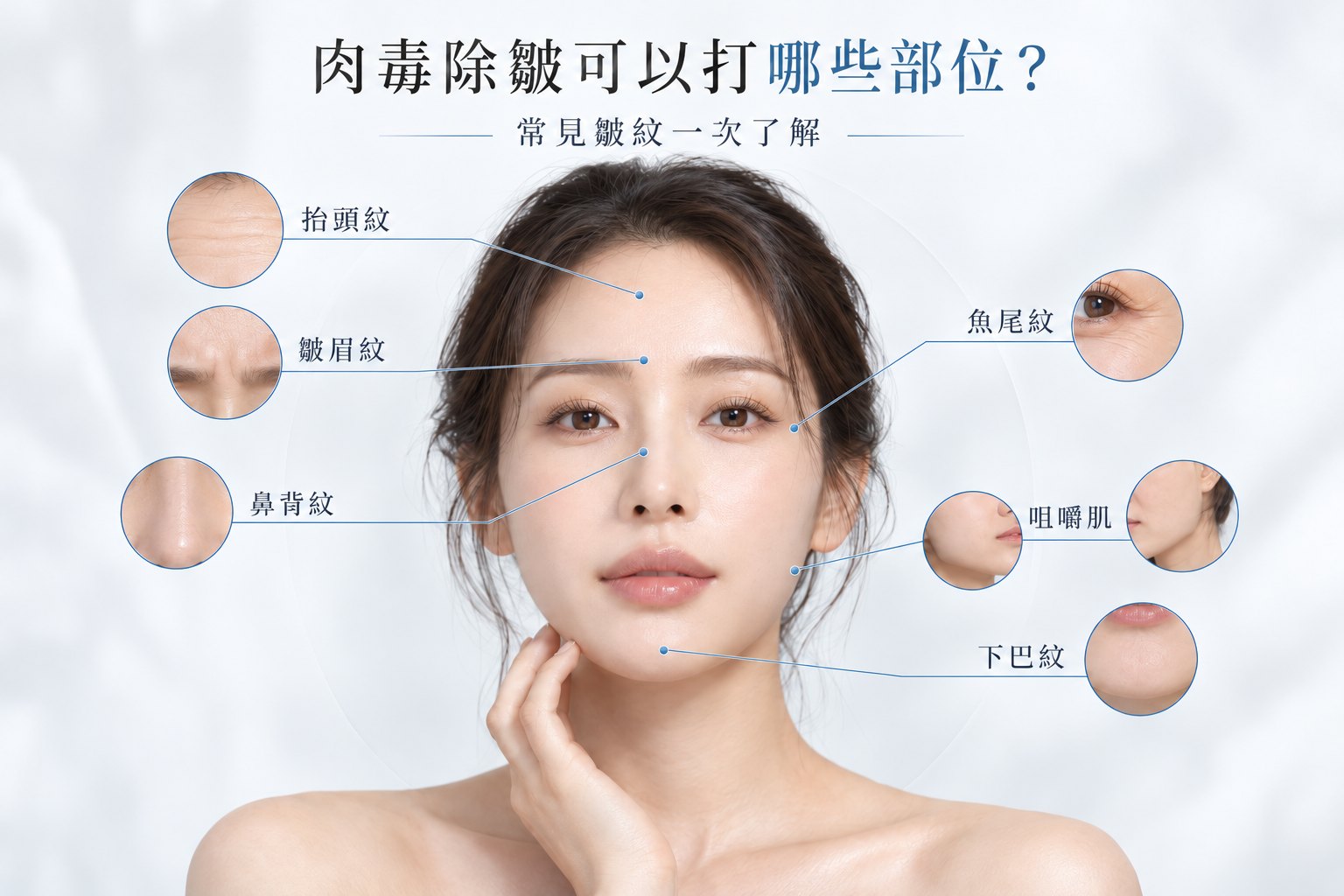
The most common areas for Botox injections are the forehead, between the eyebrows, and around the eyes. The specific injection sites, number of injection points, and dosage will be determined by your doctor based on your muscle structure, facial expressions, and expectations; there is no one-size-fits-all standard.
Forehead wrinkles are caused by the contraction of the frontalis muscle. The frontalis muscle is responsible for “raising the eyebrows,” so people who habitually arch their eyebrows, widen their eyes, or raise their eyebrows when speaking are particularly prone to developing forehead wrinkles.
However, if the frontalis muscle is relaxed excessively, it may lead to drooping eyebrows, heavy eyelids, or a stiff forehead. This area requires a conservative assessment based on the individual’s eyebrow shape, the degree of eyelid laxity, and muscle strength. Clinical data in the package insert also indicate that adverse reactions such as headaches and drooping eyebrows have occurred following treatment for forehead wrinkles.
Glabellar Lines / Frown Lines
This is caused by prolonged contraction of the corrugator and procerus muscles. Treatment focuses on relaxing the muscles to improve a stern or anxious facial expression. If the injection site is too low or off-target, the medication may spread to the levator palpebrae superioris muscle, causing temporary ptosis; clinically, there have also been a few cases of short-term headaches.
Crow's feet
Crow’s feet are typical dynamic wrinkles; when you smile, the orbicularis oculi muscle contracts, causing radial lines to form at the corners of the eyes. Appropriate use of Botox to relax this muscle can reduce dynamic wrinkles at the corners of the eyes. However, if the dosage or injection site is not properly controlled, it may affect the activity of surrounding muscles, leading to unnatural facial expressions, or cause double vision, dry eye syndrome, or lower eyelid laxity due to the spread of the medication.
Nose Lines
Also known as “bunny lines,” these are caused by the contraction of the nasalis muscle. They are commonly seen in people with expressive facial features or when they wrinkle their nose. It is important to note that excessive relaxation of the muscles between the eyebrows or around the eyes can sometimes cause the nasalis muscle to compensate for facial expressions, making these lines more prominent. During injection, care must be taken to avoid blood vessels to minimize the risk of bruising.
Chin Tattoos
Chin wrinkles are primarily caused by excessive contraction of the mentalis muscle. When speaking or pursing the lips, the chin takes on an uneven, “orange peel” appearance. Botox injections can help relax the chin muscles and smooth out the contours.
If the injection site is too high or too far to one side, the medication may spread to the lower lip muscles, causing a crooked mouth, asymmetrical lips, or difficulty closing the lips while speaking or eating.
How long does it take for Botox to reduce wrinkles? How long do the results last?
How long does it take for Botox to start working?
Botox doesn't take effect immediately after the injection.American Academy of Dermatology (AAD)It is noted that most people see results within about 3 to 7 days, with the most noticeable results appearing after 1 to 2 weeks;Mayo Clinic in the United StatesIt also notes that some people begin to notice results within 1 to 3 days, but it may take more than a week to see the full effects.
| Time Point | General Information (For Reference Only) |
|---|---|
| On the day of the injection | There may be slight redness or swelling, which usually subsides quickly. |
| Approximately 3 to 7 days | I'm starting to feel my muscles relax and the lines become less pronounced |
| About 1 to 2 weeks | As the results become more apparent, it’s a good time for a follow-up evaluation. |
| Approx. 3-6 months | Muscle activity is gradually returning, and the definition is slowly coming back. |
How long do the results last?
The effects of Botox are temporary. Generally speaking, the wrinkle-reducing effects on dynamic lines last approximately 3 to 6 months. However, this is only a general guideline; the actual duration of the effects varies depending on an individual’s muscle activity, metabolic rate, and the dosage administered, and not everyone will achieve the same results.
What factors might affect the duration?
- Muscle Mass and Mobility: For people with well-developed muscles and expressive facial movements, the effects of Botox may wear off more quickly.
- Injection Dose and Site: The dose and injection site affect the degree of relaxation as well as its duration.
- Individual Metabolism: Everyone’s metabolism and nerve recovery rates vary.
- Treatment Area: Muscles in different areas vary in size and frequency of use, so the duration of results also varies.
- Product Source and Administration Quality: Use only legitimate products, and ensure they are properly stored, diluted, and administered by a physician. Dosage units from different brands cannot be directly converted; the package insert specifically notes this.
Extended Reading:First time to get Botox, how to catch the budget so as not to lose money? Nabota Nabota Complete CP Value Analysis
What are the side effects of Botox for wrinkle reduction? Who should not use it?
Common postoperative reactions: localized redness and swelling, bruising, and temporary discomfort
Post-treatment reactions to Botox for wrinkle reduction are mostly mild and temporary. Common reactions include pain, swelling, or bruising at the injection site, headaches, flu-like symptoms, and a slightly stiff appearance. Among these, bruising and swelling are the most common; they can be relieved with ice packs and will gradually subside in about 3 to 4 days.
A 2021 article published inJournal of Plastic, Reconstructive, and Aesthetic SurgeryA study that synthesized 30 research papers involving a total of 17,352 cases of botulinum toxin injections for wrinkle reduction found that the probability of experiencing adverse symptoms after the procedure was approximately 16 percent. Among these, the incidence of bruising was 5%, the incidence of headaches was 3%, and facial nerve palsy at 2%.
In rare, severe cases, the toxin may spread beyond the injection site, potentially causing difficulty swallowing or breathing, or generalized muscle weakness. If any of the following symptoms occur after the injection, return to your doctor immediately or seek medical attention:
- Difficulty swallowing, difficulty breathing
- Obvious visual disturbances, double vision
- Generalized muscle weakness
- Severe allergic reactions, such as a widespread rash or wheezing
People Who Should Not Use Botox for Wrinkle Reduction
Vaccination is not recommended in the following situations, or requires careful evaluation by a physician:
- Allergy to botulinum toxin or any of the ingredients in the product
- Infection or skin inflammation at the injection site
- People with neuromuscular disorders, such as myasthenia gravis
- Women who are pregnant or breastfeeding: The health education pamphlet lists these as situations that require prior notification to a physician and careful evaluation.
- Currently taking medications that may affect neuromuscular transmission: for example, certain aminoglycoside antibiotics; the package insert warns that the effects of toxin may be enhanced when used in combination with these medications.
Pre- and Post-Treatment Guidelines for Botox Wrinkle Reduction
Preoperative Instructions
- Have a detailed discussion with your doctor: Provide your medical history, a list of medications you are currently taking (including traditional Chinese medicine, vitamins, and dietary supplements), and the results you hope to achieve.
- Discontinuation of Certain Medications and Supplements: If your doctor determines it is necessary after evaluation, you may need to stop taking anticoagulant medications (such as aspirin, ginkgo, vitamin E, deep-sea fish oil, etc.) one week before surgery to reduce the risk of postoperative bruising.
- Avoid undergoing the procedure if you are sick or have a weakened immune system: If you have a wound, an acute infection, or shingles at the injection site, or if you have a cold or a fever, discuss with your doctor whether to postpone the treatment.
- Avoid drinking alcohol the day before the procedure: Alcohol can increase blood flow, which raises the risk of postoperative bruising.
- Come to Your Appointment Without Makeup: Please do not wear makeup; this allows the doctor to observe your muscle movements and skin condition more easily.
Postoperative Care
- Avoid lying flat and massaging the area for several hours: Do not massage the injection site, lie flat, or engage in strenuous exercise for 4 to 6 hours after the injection.
- Avoid rubbing your face for about 24 hours: Rubbing may cause the medication to shift from its intended location; skincare routines such as facial massage can be postponed for one day.
- Ice Packs: If you experience discomfort in the early postoperative period, you may apply an ice pack to the affected area to help reduce redness, swelling, and pain.
- Avoid high temperatures and strenuous activities, such as saunas, hot springs, vigorous exercise, and prolonged sun exposure. Please follow your doctor’s instructions regarding the exact duration.
- Focus on gentle skincare: Avoid harsh skincare products and medical aesthetic treatments for now; consult your doctor about when it’s safe to resume using them.
- Pay attention to your body’s reactions: If you experience facial asymmetry, drooping eyelids, vision problems, or difficulty swallowing or breathing, return to your doctor or seek medical attention immediately.
- Follow up with your doctor as recommended to monitor your progress and determine whether a dose adjustment is necessary.
Arixin Clinic: Botox Wrinkle Reduction Case Studies
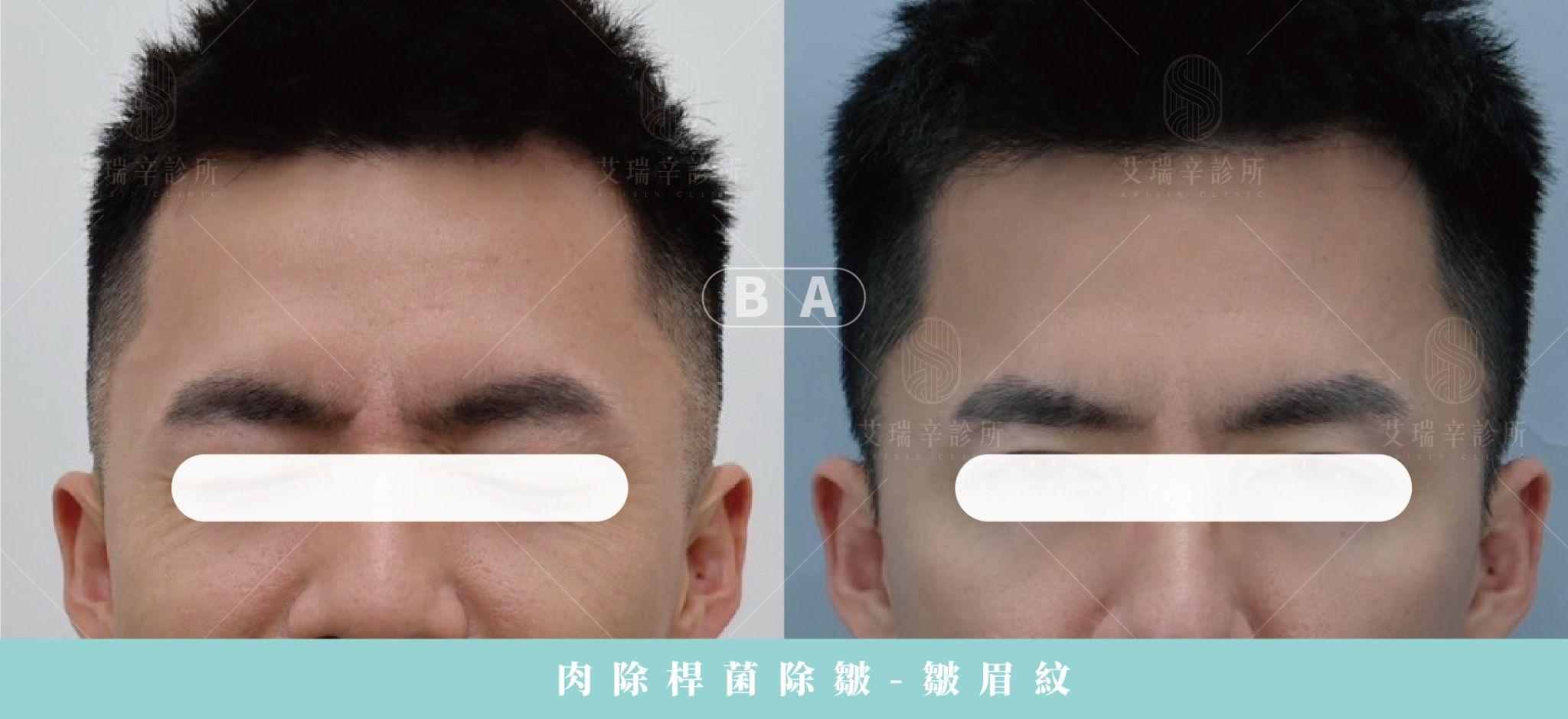
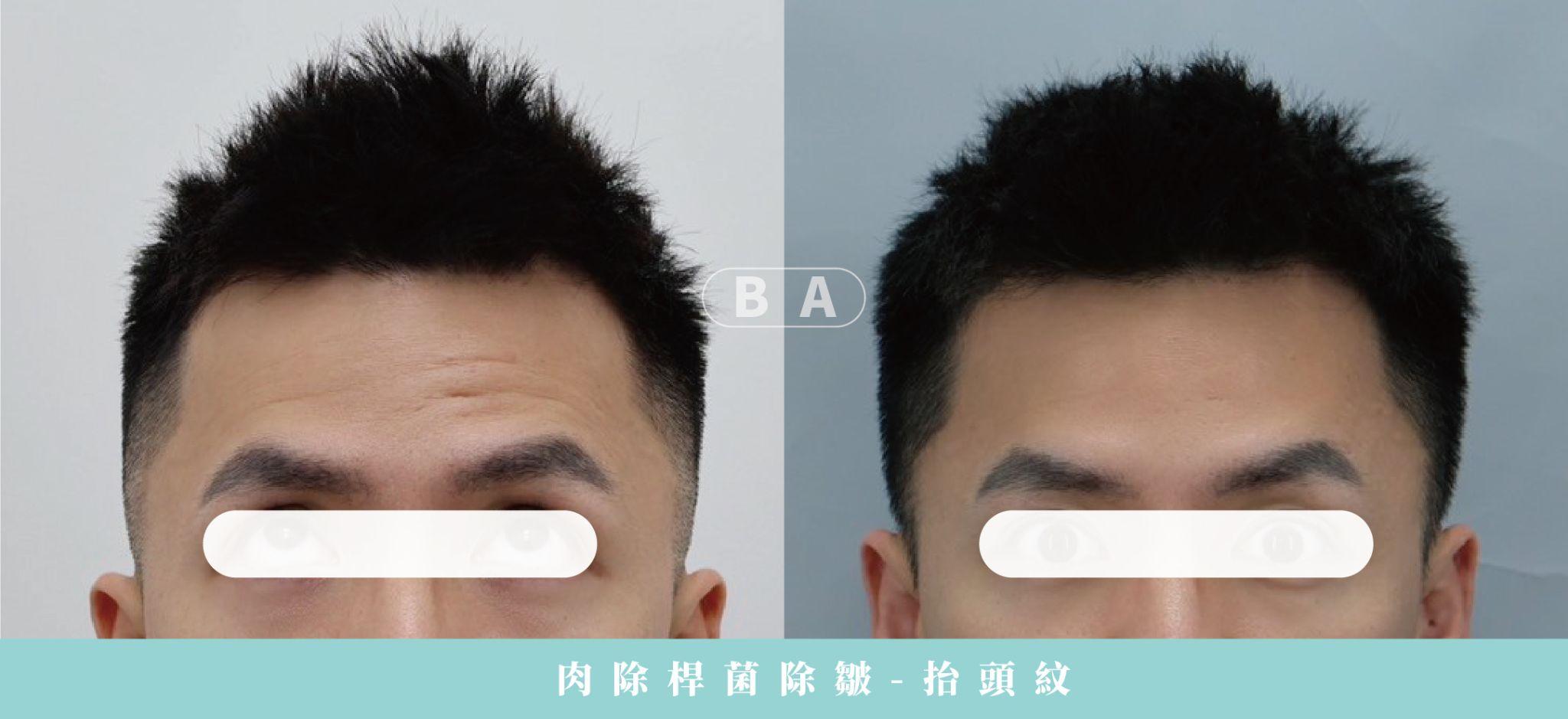
1. Customer Identification and Referral
The case involves an early childhood education teacher who works with young children every day. To capture the children’s attention and create a fun learning environment, she uses particularly expressive facial expressions and gestures when telling stories and leading activities. Over time, her forehead lines, frown lines, and crow’s feet appeared earlier than those of her peers. In particular, her frown lines often made her look stern and unapproachable—a look that didn’t match her usual lively classroom persona. Additionally, friends who had undergone Botox treatments reported natural-looking results, so I decided to schedule a consultation at Arixin Clinic to see if I could improve these lines that had been bothering me for so long.
2. Doctor's Diagnosis
During the consultation, the physician carefully observed the patient’s facial muscle movements while making expressions. After evaluation, it was determined that the patient’s forehead lines, frown lines, and crow’s feet were all “dynamic wrinkles” caused by excessive facial muscle activity, making them ideal candidates for treatment with Botox.
The doctor specifically noted that the brand of botulinum toxin (BOTOX) used in the treatment diffuses more slowly and offers high precision, making it suitable for treating wrinkles in delicate areas of the face. The doctor also emphasized that the dosage will be precisely adjusted based on the intensity of the patient’s facial muscle activity, with the goal of effectively relaxing the muscles while preserving natural expression lines, so that the patient can still maintain a natural and friendly appearance when interacting with children or making facial expressions.
3. Treatment Process
On the day of the treatment, the doctor re-evaluates the depth of the patient’s forehead lines, frown lines, and crow’s feet, as well as muscle activity, and precisely marks the injection sites and dosages. The injection process uses an ultra-fine needle, causing only a slight prickling sensation. The entire procedure takes about 10 to 15 minutes to complete and requires no additional recovery time; patients can return to their normal work and daily activities immediately afterward.
The doctor also reminded patients of postoperative precautions, including avoiding lying flat or on your stomach for 4 hours; and avoiding sun exposure and high-temperature environments, such as saunas and hot springs, for one week.
4. Results
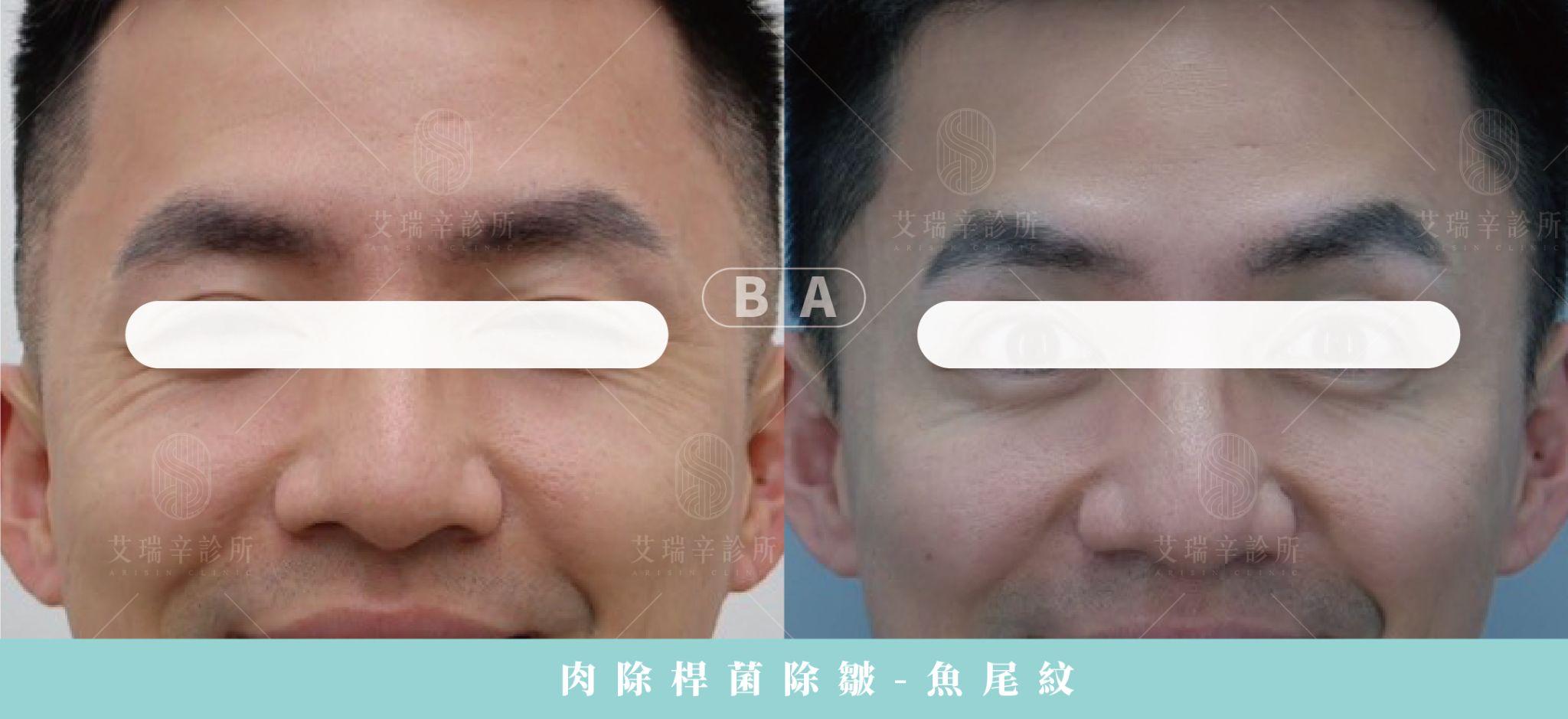
About 1 to 2 weeks after treatment, the patient noticed that the lines on her forehead, between her eyebrows, and at the corners of her eyes had become significantly smoother and less pronounced. In particular, after the frown lines—which had previously made her appear stern—were reduced, her overall complexion looked more approachable and vibrant.
Most importantly, after receiving Botox injections, his facial expressions remained lively and natural when interacting with children and telling stories, with absolutely no stiffness. Neither his colleagues nor the parents noticed that he had undergone a cosmetic procedure; they simply felt that his energy and overall well-being had improved significantly recently. The patient also plans to continue regular follow-up visits in the future to maintain his natural and refreshed appearance.
Botox for Wrinkle Reduction: Frequently Asked Questions (FAQ)
Does Botox for wrinkle reduction hurt?
Most people do not experience significant pain during the injection process. Botox injections are administered using very fine needles, so the pain is usually very mild—similar to a mosquito bite or a slight prickling sensation. If you are sensitive to pain, applying a cold compress or numbing cream before the procedure can help reduce discomfort during the injection. The entire injection procedure takes about 10 to 20 minutes to complete.
Will Botox injections for wrinkles make your face look stiff?
Having the injections administered by a qualified physician can reduce the risk of facial stiffness.Mayo ClinicIt is important to note that the purpose of Botox is to relax specific muscles; however, an excessive dose or incorrect injection site can result in a stiff or unnatural facial expression. Choose a qualified physician who is familiar with facial anatomy, and discuss your desired results in advance. If you feel the results are too stiff, it is recommended that you return for a follow-up visit to discuss this with your physician—do not attempt to correct it on your own.
How often can I get a Botox touch-up?
It is generally recommended to have a follow-up treatment every 3 to 6 months. Botox is naturally metabolized by the body over time. If you notice that muscle movement is gradually returning or dynamic lines are beginning to appear, you can schedule a follow-up visit so your doctor can assess whether another treatment is needed. Frequent or excessive treatments will not improve results; on the contrary, they may increase the risk of the body developing antibodies.
Since botulinum toxin is naturally metabolized by the body over time, once you notice that muscle movement is gradually returning and dynamic lines begin to appear slightly, you can schedule a follow-up visit for your doctor to assess whether a booster injection is needed. Frequent or excessive injections do not produce better results; on the contrary, they may increase the risk of the body developing antibodies.
Will wrinkles get worse after I stop getting Botox?
No. Botox simply temporarily relaxes the muscles that cause wrinkles. Once the effects of the treatment have completely worn off, muscle activity will simply return to its pre-treatment state; wrinkles will not become more severe than they were before treatment simply because you stop receiving injections.
What is the difference between Botox and hyaluronic acid for wrinkle reduction?
The mechanisms of action and indications for the two are completely different:
| botulinum toxin | Hyaluronic Acid (Filler) | |
|---|---|---|
| Primary Mechanism of Action | Muscle relaxation: Blocks nerve signals to the muscles, reducing muscle contraction. | Physical Filling: Using a gel-like substance to fill in depressions and increase tissue volume. |
| Applicable Texture Types | Dynamic lines (lines that appear only when making facial expressions, such as forehead lines, frown lines, and crow’s feet). | Static lines/indentations (deep lines that are present even when the face is at rest, such as nasolabial folds and marionette lines). |
| Time to See Results | Results begin to appear in about 3 to 7 days and are most noticeable after 1 to 2 weeks. | It takes effect immediately after administration. |
| Combination Therapy | If both dynamic wrinkles and depressions are present, the doctor may assess whether a combination of Botox and filler treatments is necessary, based on the cause of the wrinkles, the injection sites, and the patient’s overall condition. | |
How long after Botox can I get other cosmetic procedures?
- Lasers (such as picosecond lasers and intense pulsed light):
- Laser Treatment First, Then Botox: These can be administered on the same day (start with the laser treatment, then finish with the Botox injections).
- Botox First, Then Laser: It is recommended to wait 1–2 weeks between treatments to prevent the laser’s heat from affecting the absorption and stability of the Botox.
- Electrical Radiofrequency Lifting (Phoenix Radiofrequency, HIFU, etc.):
- When administering both treatments on the same day, the ultrasound treatment must be performed before the Botox injection.
- If you have already received Botox injections, it is recommended that you wait 2 to 4 weeks before undergoing the high-energy thermal therapy with ultrasound.
- Injectable Fillers (Hyaluronic Acid, Ellanse, Sculptra, etc.):
- On the same day, a specialist physician can perform the procedure in stages or on different areas.
- If the treatments are administered separately, it is recommended to wait 1 to 2 weeks between sessions, until the botulinum toxin has taken full effect and the skin has stabilized.
Recommended Aesthetic Clinics for Botox Wrinkle Reduction in Taichung | Arixin Clinic
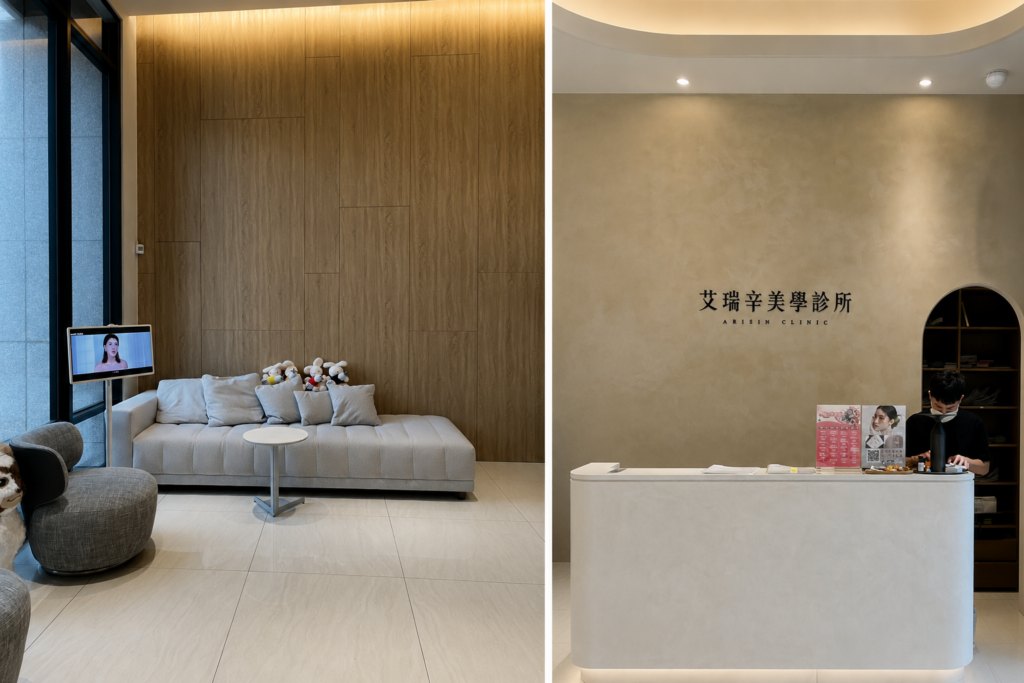
The results of Botox wrinkle treatment depend on the source of the product, the doctor’s assessment of the facial muscles, and the precise determination of dosage and injection sites. TaichungARISIN ClinicWe offer Botox wrinkle-reduction treatments, including Botox、NabotaThe doctor will evaluate the most suitable option based on your muscle activity, the type of muscle lines, and your expectations—there is no one-size-fits-all approach.
If you’d like to learn more about the recommended injection sites for Botox wrinkle reduction and treatment planning, please feel free toMake an Appointment at Arixin Clinic...to be assessed by a medical professional based on individual circumstances.