


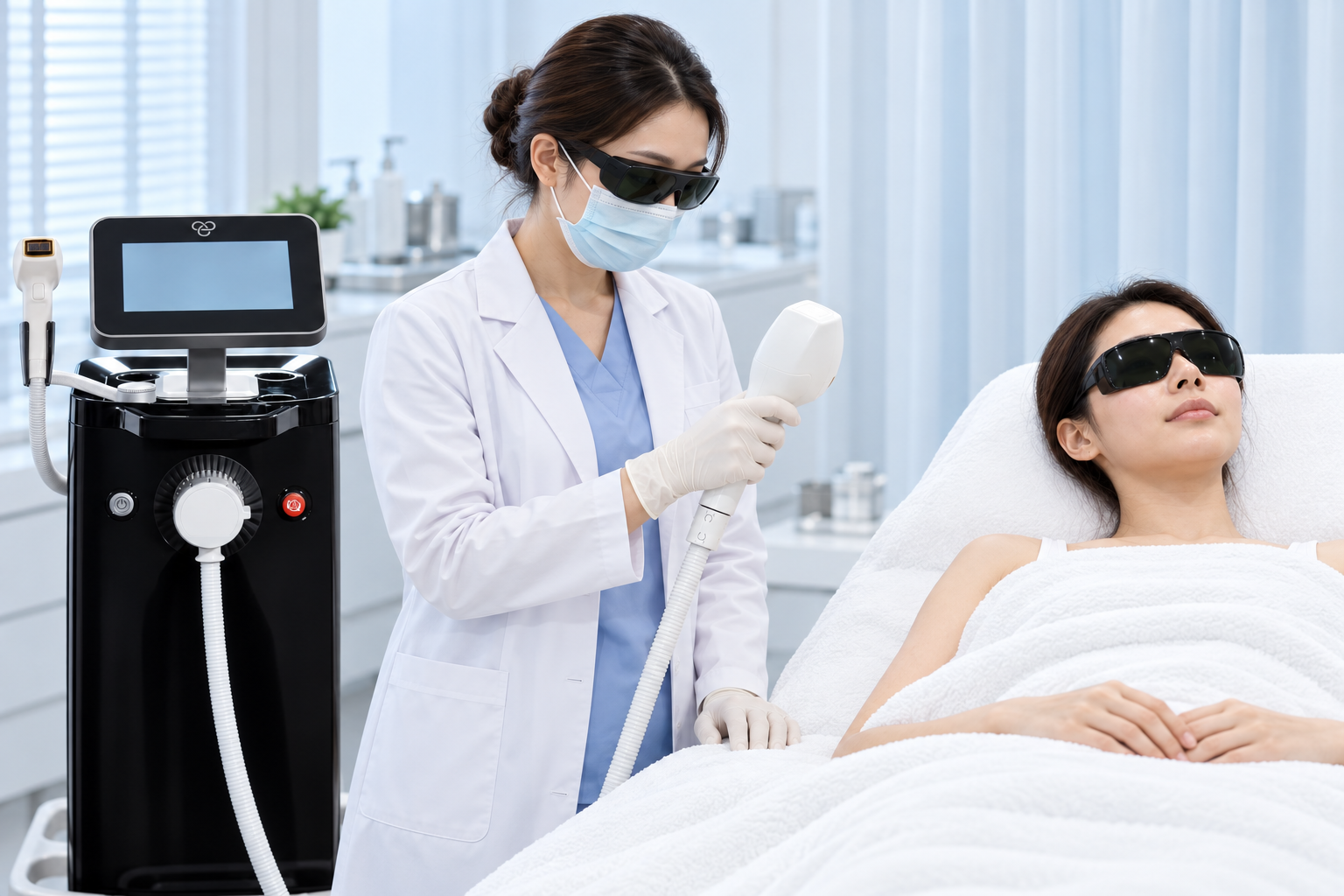
How do you choose a method for intimate area hair removal? In addition to the common VIO hair removal, there are also options such as razors, depilatory creams, waxing, Japanese-style hair removal, and laser hair removal. Each method differs in terms of how long the results last, the level of discomfort, cost, and the people for whom it’s suitable. Starting with the V, I, and O areas of the intimate region, this article summarizes the pros and cons as well as the price ranges of five common hair removal methods. It also compares laser hair removal systems such as Alexander, LightSheer, and Triton, providing a comprehensive guide to help you choose the right intimate hair removal method.
Intimate Area Hair Removal Catalog
Is it necessary to remove pubic hair? What are the benefits of hair removal?
The intimate area is covered by underwear, creating a naturally hot, humid, and sweaty environment. When body hair is thick, it can easily lead to bacterial growth, unpleasant odors, and even issues such as folliculitis. Therefore, aside from aesthetic considerations, intimate hair removal is actually closely related to daily hygiene and comfort.
Reduce the stuffiness caused by body hair and prevent sweat from sticking to the skin
Dense pubic hair can easily cause heat buildup or friction, leading to unpleasant odors, as well as redness, swelling, or folliculitis. Removing pubic hair reduces the amount of sweat and secretions that cling to the hair, making daily hygiene easier.
However, pubic hair itself is not a source of uncleanliness or infection, so there is no need to force yourself to remove it for the sake of “killing germs” or “preventing infection.” After hair removal, you should still maintain good hygiene habits and avoid excessive washing or the use of harsh cleansing products.
Reduce discomfort caused by stuffiness and friction
The genital area is less well-ventilated, and sweat and friction can occur during hot weather, physical activity, or exercise. For people with more body hair, the feeling of stuffiness or the sensation of hair rubbing against clothing may be more pronounced.
Reducing Intimate Odor
Unpleasant odors in the genital area are related to a variety of factors, including sweat, discharge, bacteria, hygiene practices, and infections. For example, the O-zone (the area around the anus) is prone to odors because it has a high concentration of sweat glands and tends to remain moist.
Moderate trimming or hair removal can make daily hygiene easier and help prevent secretions or menstrual blood from remaining on the hair. If an unpleasant odor persists, or if it is accompanied by itching, pain, or abnormal discharge, it is not recommended to rely solely on hair removal to resolve the issue; a doctor should be consulted to determine the cause.
It looks better in a bikini
After grooming the intimate area, the overall appearance looks cleaner and neater. Whether you're wearing tight-fitting underwear, a swimsuit, or even during intimate moments, it can reduce awkwardness and anxiety, which has a positive impact on both your appearance and self-confidence.
Improving Menstrual Comfort
During menstruation, women use sanitary pads, panty liners, or other menstrual products. Some women may find it difficult to clean up when menstrual blood sticks to their pubic hair. Removing pubic hair can reduce this buildup, making hygiene easier during menstruation, while also alleviating the stuffy, uncomfortable feeling in the genital area.
What are the areas for intimate hair removal?
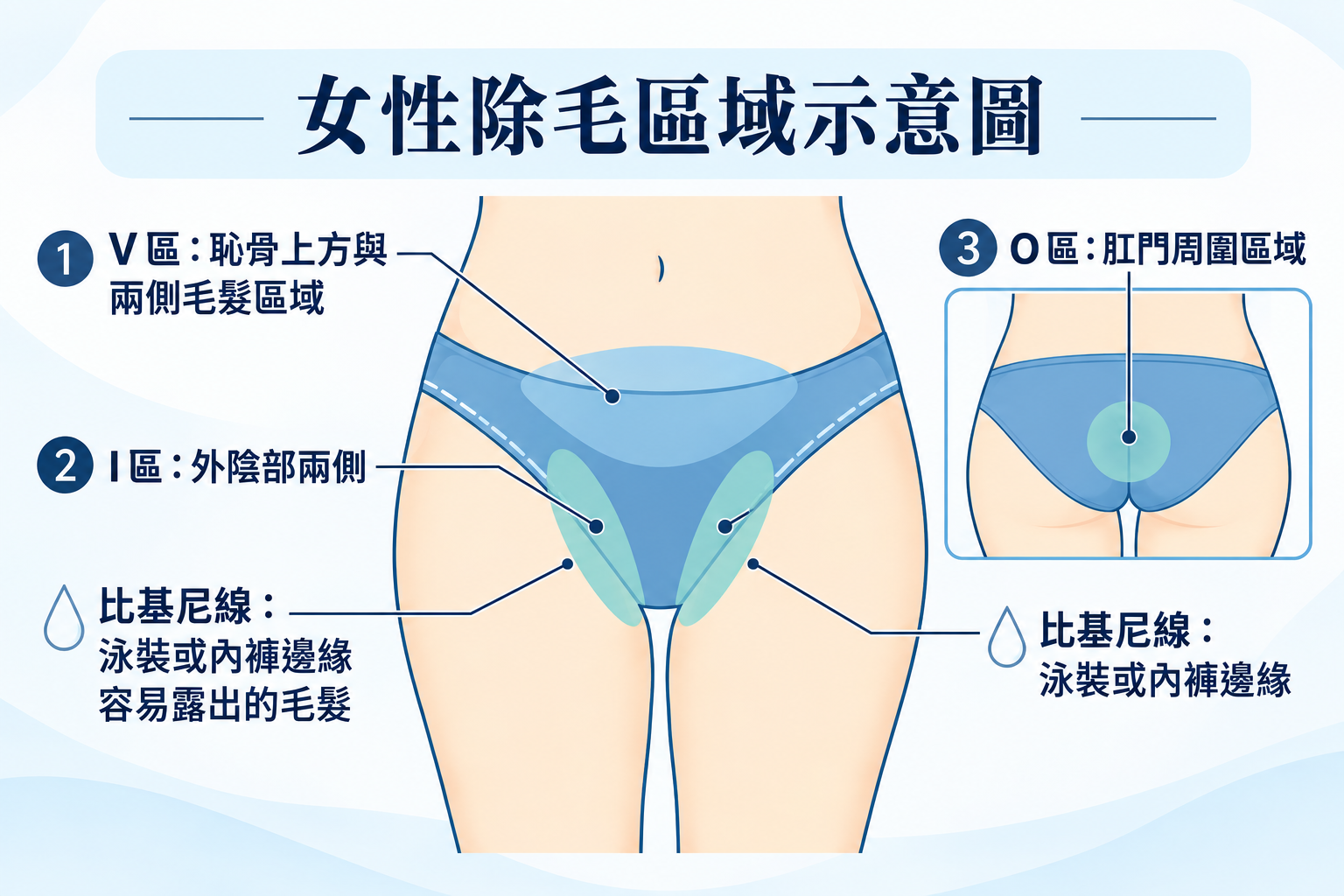
Intimate area hair removal is typically divided into three main areas based on anatomical location: the V, I, and O zones—commonly referred to as “VIO hair removal.” Depending on individual needs, you can choose to treat a single area or opt for a comprehensive VIO hair removal treatment plan.
Zone V: The hairy areas above and on either side of the pubic bone
The "V-zone" primarily refers to the area of body hair above and to the left and right of the pubic bone; it is also an area that is more likely to be exposed when wearing underwear or swimwear. Some treatment plans include the bikini line within the V-zone, but the actual definition depends on the clinic’s specific protocol.
Zone I: Both sides of the vulva
Area I covers the skin between the labia majora and labia minora; it is the most sensitive part of the intimate area, with thinner skin and a higher concentration of nerves. Hair removal in this area can help reduce friction and odor.
Zone O: The area around the anus
The O-zone is the circular area surrounding the outer rim of the anus. Because it has a high concentration of sweat glands and tends to become damp, hair removal in this area can help reduce bacterial growth and odor; it is also an area that many people choose to have treated at the same time.
Bikini line: Hair that tends to peek out from the edges of swimwear or underwear
The bikini line refers to the area of body hair that tends to peek out from the edges of a swimsuit or underwear; it is an extension of the V-zone. If you don’t want to undergo full VIO hair removal but simply wish to reduce visible hair, bikini line hair removal is a common option.
5 Methods for Intimate Area Hair Removal and a Price Comparison
Hair Removal Razor
Shaving is the simplest and most cost-effective method; it involves using a razor to remove hair from the skin's surface. Since the hair follicles remain intact, the hair will grow back, requiring regular maintenance.
- Duration: About 3 to 7 days; hair will start to grow back quickly.
- Price Range: The lowest cost—a single hair removal razor costs about 100–300 yuan and can be reused several times.
- Pros: Convenient, affordable, can be done at home, and no appointment is needed.
- Disadvantages: It can easily scratch the delicate skin in the intimate area; the hair is cut flat and feels prickly and stiff; and it can increase the risk of ingrown hairs and folliculitis due to the hair growing in random directions.
Hair Removal Cream
Hair removal cream works by using chemical ingredients to weaken the hair, making it brittle and easy to wipe away. Like shaving, it primarily removes hair from the skin's surface without damaging the hair follicles, so the results are temporary.
It is important to note that not all hair removal creams are suitable for use on the intimate area. Before use, check the product label for the recommended areas of application, and avoid contact with mucous membranes or broken skin.
- Duration: About one week.
- Price range: One tube of hair removal cream costs approximately 200–500 yuan.
- Advantages: No blades come into contact with the skin, it is easy to use, and it can treat larger areas.
- Disadvantages: The skin and mucous membranes in the intimate area are thinner and more sensitive, making them prone to irritation from the chemicals in hair removal creams, such as redness, itching, or allergic reactions. If you have sensitive skin, it is recommended that you perform a patch test on another area of your body before use.
Waxing
Waxing involves using wax to adhere to the hair and pull it out from the root; therefore, compared to shaving, the results last longer. However, since the skin in the bikini area is thinner and more sensitive, the tugging sensation and pain associated with waxing may be more intense.
- Duration: Lasts 2 to 4 weeks, which is longer than shaving or using hair removal cream
- Price Range: If you go to a professional beauty salon, a single session of intimate waxing typically costs between 800 and 2,000 yuan.
- Advantages: Because the hair is removed from the root, regrowth tends to be finer and softer. The results last longer than with shaving or depilatory creams, and long-term use can also help reduce hair density.
- Disadvantages: It can be painful when the hair is pulled out. Since the skin in the intimate area is delicate, improper technique can easily cause redness, swelling, bruising, or folliculitis; the hair must grow to a certain length before the procedure can be performed, so it cannot be done at any time.
Japanese-Style Hair Removal
Japanese-style hair removal, also known as “freeze-point hair removal,” “painless Japanese-style hair removal,” or “Japanese-style optical hair removal,” uses intense pulsed light (IPL). Its principle is similar to that of standard laser hair removal: both rely on the melanin in hair follicles absorbing light energy and converting it into heat to inhibit hair growth; However, the wavelength and optical energy of the pulsed light used in Japanese hair removal are significantly lower than those of medical-grade lasers, and the procedure is typically performed by trained estheticians.
- Duration: This is a semi-permanent hair removal method. Hair will grow back, but the rate of regrowth will gradually slow down and the hair will become finer. Regular maintenance treatments are required to maintain the results.
- Price range: Approximately 800–3,000 per session; multiple sessions (approximately 8–12) are required to see noticeable results.
- Advantages: The treatment is gentle and virtually painless, making it ideal for people who are particularly sensitive to pain or who want to gradually reduce their body hair; additionally, since it is considered a cosmetic procedure, it can be performed without visiting a medical facility.
- Disadvantages: It takes a large number of sessions to see results, and the total cost over time may not necessarily be cheaper than medical laser treatments. Additionally, since pubic hair is naturally coarser and thicker, and the area has higher levels of hormones and melanin, the process requires more patience and a larger budget.
Laser Hair Removal
Laser hair removal works by directing laser energy at a specific wavelength to target the melanin in hair follicles; after multiple sessions, the hair typically becomes gradually finer and less dense.
Since hair goes through different growth stages at different times, a single laser treatment cannot target all hair follicles at once; therefore, multiple sessions are typically required. The actual number of sessions needed depends on factors such as hair thickness, hair density, skin tone, treatment area, and individual response.
- Duration of Results: After completing the full course of treatment, you can achieve “permanent hair reduction.” It is generally recommended to undergo 6 to 8 sessions to achieve 70% to 90% hair removal. Afterward, 1 to 2 maintenance sessions per year are sufficient to maintain the results.
- Price Range: Depending on the clinic, location, and type of equipment, the cost of a single session of laser hair removal for the intimate area can vary significantly, ranging from approximately 2,000 to 15,000 yuan. The actual cost depends on the size of the treatment area, the treatment package, and the clinic’s pricing.
- Advantages: It offers the most long-lasting and consistent results. This device, certified by Taiwan’s Ministry of Health and Welfare and the U.S. FDA, achieves medical-grade results in the form of “permanent hair reduction.” When used with a cooling system, it is also significantly less painful than traditional waxing.
- Disadvantages: The procedure must be performed at a licensed medical facility following an evaluation by a physician, and the cost per session is relatively high. The hair growth cycle consists of the anagen (growth), catagen (regression), and telogen (resting) phases; only hair in the anagen phase can be removed during each session, so multiple sessions are required—it cannot be completed in a single visit.
| Hair removal method | Principles Behind the Method | Maintenance time | tenderness | Price Range per Transaction | Suitable Groups |
|---|---|---|---|---|---|
| Hair Removal Razor | Shave off surface hair | Approximately 3 to 7 days | Painless, but prone to scratches | 100–300 (tools) | People who need a quick fix and are on a tight budget |
| Hair Removal Cream | Chemical agents dissolve hair | About 1 week | Painless, but may cause an allergic reaction | 200–500 yuan | Non-sensitive skin, looking for a simple routine |
| Waxing | Remove Hair at the Root | 2 to 4 weeks | Medium to high | 800–2,000 yuan per session | Want it to last longer and be able to tolerate a brief moment of pain |
| Japanese-Style Hair Removal | Cosmetic-grade optical devices inhibit hair growth during the anagen phase | Semi-permanent makeup requires ongoing maintenance. | 低 | 800–3,000 yuan per session | People who are afraid of pain and want to reduce body hair gradually |
| Laser Hair Removal | Medical-grade lasers destroy hair follicles | Permanent Hair Reduction | Low to medium (with cooling system) | 2,000–15,000 yuan per session | People who want long-term, stable hair removal and are looking for efficiency |
What are some common laser hair removal machines for the intimate area?
Common devices used for laser hair removal in the intimate area include the Alexandrite laser, the LightSheer 3rd Generation Vacuum Hair Removal system, and the Triton laser. Different devices vary in wavelength, energy delivery methods, cooling, and auxiliary technologies; their actual suitability also depends on skin tone, hair thickness, and the physician’s assessment.
Alexander
The Alexandrite laser operates at a wavelength of 755 nm and is currently one of the most effective options for hair removal in terms of melanin absorption. Its energy penetrates precisely to the deep layers of the hair follicle, providing a rapid and direct response to thick, dark hair.
Some models feature a dual-wavelength design. The 755 nm wavelength is selectively absorbed by melanin and is more effective for hair removal on fair to yellowish skin tones; the 1064 nm wavelength, on the other hand, is less selectively absorbed by melanin and is less likely to cause hyperpigmentation in people with darker skin tones.
The advantages of the Alexandrite laser include fast hair removal and minimal discomfort, making it particularly suitable for large treatment areas; however, its effectiveness is limited for people with darker skin tones and lighter hair (such as blond or white hair), because the lack of melanin in the hair follicles makes it difficult for the laser energy to focus effectively.
Most clinics use a DCD cooling system, which sprays a mist of coolant onto the skin before the laser is fired to protect the epidermis, reduce pain, and lower the risk of burns. Each treatment can remove approximately 20–30% of hair. A complete course of treatment is recommended to consist of 6–8 sessions or more. The first few treatments should be spaced about one month apart; once hair growth slows down, the interval can be extended to once every 1.5–2 months.
LightSheer 3rd Generation Vacuum Hair Removal
LightSheer uses an 800-nm diode laser wavelength combined with vacuum probe suction technology to lift the epidermis, bringing the hair closer to the energy source so that the laser energy can act more directly on the hair follicles. The large spot size, combined with gentle energy levels, effectively destroys hair follicles without damaging surrounding tissue, making it a relatively comfortable option for those who are “sensitive to pain.”
Another key feature of LightSheer is its 400-millisecond pulse duration, which allows for more precise treatment of fine hair—a challenge for conventional laser hair removal. The vacuum suction mechanism also speeds up the treatment process, Large areas (such as the back and legs) and intimate areas are treated in layers, with a single session typically completed in about 15 minutes, balancing effectiveness with convenience.
Because LightSheer causes minimal discomfort and can treat fine hair, it is well-suited for areas such as the bikini line, where hair follicles are densely distributed, the hair is fine and soft, and the skin is highly sensitive.
Triton Hair Removal
The most distinctive feature of the Triton hair removal laser is its “multi-wavelength laser” design, which combines two of the most popular hair removal wavelengths on the market: the “755 nm Alexandrite laser” and the “810 nm diode laser.”
Traditional single-wavelength lasers can only target hair in the anagen phase, whereas the Poseidon hair removal system emits dual wavelengths of 755 nm and 810 nm simultaneously, effectively treating both superficial, fine, soft hair and deep hair follicles simultaneously, delivering excellent results for hair of varying thicknesses and colors.
Since the 810 nm wavelength falls between 755 nm and 1064 nm, it strikes a balance between safety and hair removal efficiency, making Triton particularly suitable for people with darker skin tones, those with finer, softer hair, or those who wish to remove hair from multiple areas at once. It can also effectively treat fine and light-colored hair that is typically difficult to remove.
The Triton hair removal laser also features “3P Heat Dissipation and Cooling Technology” (pre-cooling, parallel cooling, and post-cooling), which maintains normal skin temperature before, during, and after treatment, reducing discomfort—a feature that makes it particularly popular for sensitive areas such as the intimate region.
Triton recommends undergoing treatment once every 4 to 6 weeks. A full course of treatment consists of approximately 6 to 8 sessions. After 5 to 6 sessions, you can achieve 80% to 90% permanent hair removal, and thereafter, 1 to 2 maintenance sessions per year are sufficient.
| Project | Alexandria Laser | LightSheer Vacuum Hair Removal | Triton Poseidon Hair Removal |
|---|---|---|---|
| Wavelength Type | Single wavelength: 755 nm (some models feature dual wavelengths: 755 + 1064 nm) | Single-wavelength 800 nm diode | Dual Wavelengths: 755 nm + 810 nm |
| Suitable for skin color | Slightly white to slightly yellow | Wider coverage, including fine hair treatment | All skin tones, including darker skin tones |
| Suitable for hair | Dark, thick, black hair works best. | Fine, soft hair; sensitive hair in the intimate area | Suitable for hair of all thicknesses and shades |
| tenderness | Low (with DCD cooling system) | Low (vacuum suction + gentle energy) | Extremely low (3P Triple Cooling Technology) |
| recovery period | Mild redness and swelling for about 2 to 3 days | Short-term; most can resume normal activities | Short, cooling technology reduces redness |
| Recommended Number of Treatments | 6 to 8 times or more | Based on the treatment area, multiple sessions are recommended for the intimate area. | 6 to 8 sessions; 5 to 6 sessions can achieve 80 to 90 percent of the desired results |
A Quick Reminder from Arixin:The three models have slightly different focuses when it comes to actual use in the intimate area. The Alexander Laser is suitable for people with fair skin and coarse, dark hair; LightSheer Vacuum Hair Removal has advantages in treating fine, soft hair in the intimate area and reducing pain; Triton hair removal, with its multi-wavelength design, offers the greatest flexibility and is suitable for individuals with more complex skin tones and hair types, or those who wish to treat multiple areas in a single session. The actual choice should be determined by a professional physician after evaluating the individual’s skin condition and hair characteristics.
Preparation and Aftercare for Laser Hair Removal in the Intimate Area
Preparing for Intimate Area Hair Removal
- Shave the hair yourself 2 days in advance: Two days before your laser hair removal session, we recommend shaving the surface hair yourself with a razor so that the new hair roots that have emerged become the target of the laser treatment, which can also enhance the treatment’s effectiveness. However, do not shave the hair completely, as this may prevent the hair from absorbing the laser energy.
- Avoid UV Exposure: Avoid exposing the genital area to sunlight before your treatment, as tanned skin increases the risks and discomfort associated with laser treatment.
- Avoid Your Period: We recommend avoiding hair removal during your period to reduce the risk of infection and enhance your comfort during the treatment.
- Keep the area clean and dry: Before your treatment, keep your intimate area clean and avoid using irritating cleansers.
Aftercare and Precautions Following Laser Hair Removal in the Intimate Area
- Warmth and Redness Are Normal: Localized warmth and redness on the day of treatment are usually normal reactions; you can apply an ice pack to relieve any discomfort.
- Avoid wearing clothing that is too tight: Do not wear tight pants after surgery to prevent friction on the area where hair was removed. We recommend choosing breathable, loose-fitting underwear to keep the area dry.
- Enhance Moisturizing and Repair: Since the skin is more sensitive after surgery, you should focus on moisturizing and repairing it, and avoid using cleansers that contain alcohol or irritating ingredients.
- Avoid scratching or rubbing: If you experience mild redness or itching, apply an ice pack to relieve the symptoms. Do not scratch the area, as this may increase the risk of folliculitis and hyperpigmentation.
- Avoid strenuous exercise and hot baths for a short time: For 1 to 2 days after surgery, avoid strenuous exercise, saunas, hot baths, and other activities that increase local heat and friction.
- Sun Protection: If the treated area is near a spot that is easily exposed to the sun, you should take extra precautions to protect your skin from the sun and avoid UV exposure, which can irritate skin that has just undergone treatment.
Frequently Asked Questions About Intimate Area Hair Removal
How long do the results of laser hair removal in the intimate area last?
Laser hair removal does not result in permanent hair removal after just one session. Because hair has different growth cycles, multiple laser sessions are required to gradually treat hair at various stages of growth.
A complete intimate area hair removal treatment typically requires 6 to 8 sessions, spaced 4 to 6 weeks apart. After completing 5 to 6 full treatment cycles, you can achieve 80% to 90% long-term hair reduction, and thereafter, only 1 to 2 maintenance sessions per year are needed to sustain the results.
Does laser hair removal in the intimate area hurt a lot?
Generally speaking, the procedure is relatively painless. Most modern laser hair removal devices are equipped with a cooling system that cools the skin before, during, and after treatment, thereby reducing discomfort. Most people describe the sensation during treatment as similar to a rubber band lightly snapping against the skin, which is generally tolerable.
Some clinics also offer numbing cream to further reduce discomfort during treatment. Compared to the sudden pain of waxing, the laser hair removal process is relatively comfortable.
Who Should Not Undergo Laser Hair Removal for the Intimate Area?
The following groups of people must inform their doctor in advance before undergoing intimate area hair removal so that the doctor can conduct a thorough evaluation:
Pregnant women
Has a skin condition (such as eczema, psoriasis, etc.)
Currently taking photosensitive medications
If you have an autoimmune disease, it is recommended that you consult a doctor first.
Prone to Keloids
If you've recently been in the sun or if your skin is currently sensitive or inflamed
Insufficient hair pigmentation
Why is it not recommended for pregnant women to remove pubic hair? Although there is no definitive medical evidence that laser light directly affects the fetus, pregnancy hormones can make the skin very sensitive, and the pain from laser treatment may trigger uterine contractions. Additionally, since the body is under greater strain during pregnancy, most doctors recommend waiting until after childbirth to undergo hair removal.
How much does laser hair removal for the intimate area cost?
Prices for laser hair removal in the intimate area vary widely. Depending on the clinic, location, type of equipment, and treatment package, the cost per session ranges from approximately 2,000 to 15,000 yuan. When making your choice, it is recommended that you not only compare the price per session but also consider the type of laser device, the physician’s experience, the number of sessions included in the treatment package, and the details of the after-sales warranty. Only then can you accurately assess the overall value of the treatment.
How should I care for my intimate area after laser hair removal?
After intimate area hair removal, keep the area clean and dry, avoid wearing tight-fitting underwear, and focus on moisturizing and soothing the skin. Avoid strenuous exercise, taking baths, and scratching the treated area for 1 to 2 days after the procedure. If redness, swelling, or discomfort persists, return to the clinic as soon as possible to consult your doctor.
Recommended Laser Hair Removal for Intimate Areas in Taichung | Arixin Clinic
The skin in the intimate area is delicate and sensitive, so the safety and comfort of hair removal treatments are especially important. Arixin Clinic has introduced LightSheer 3rd Generation Vacuum Hair Removal與 Triton Hair RemovalUsing medical-grade laser equipment, our professional physicians tailor the most suitable VIO hair removal treatment plan based on your individual skin type, hair characteristics, and sensitivity. They also provide comprehensive pre- and post-treatment health education and skincare advice to ensure that every session delivers both effective results and a comfortable experience.
If you’re looking to manage your intimate area hair, start by considering your specific needs—decide whether you want to treat the bikini line, the V-zone, or the full VIO area—and then compare different hair removal methods and laser devices. If you’ve decided to undergo intimate area hair removal treatment, we invite you to contact Arixin Clinic for a consultation. Our professional team will work with you to find the hair removal solution that best suits your needs.