



Even though your acne has cleared up, why won’t the pitted scars and red marks on your face fade? That’s because acne scars result from damage to deep tissue, and it’s hard to see results with at-home skincare alone.ARISIN ClinicAn in-depth look at the most popular medical aesthetic treatments for acne scars in Taichung, including picosecond laser, fractional laser, CO₂ fractional laser, subcutaneous peeling, and PLT Cryotherapy. We compare the effectiveness, costs, and recovery times of each treatment to help you effectively tackle stubborn acne scars and regain your confident, radiant glow!
Articles
Is medical aesthetics necessary for acne scars? What are the limits of at-home skincare?
Many people believe that acne scars will fade with time, or that using expensive skincare products will smooth them out. In reality, once acne scars have formed, it’s difficult to fade or improve them with skincare products alone.
How Acne Scars Form: Why Don’t Acne Scars Go Away on Their Own?
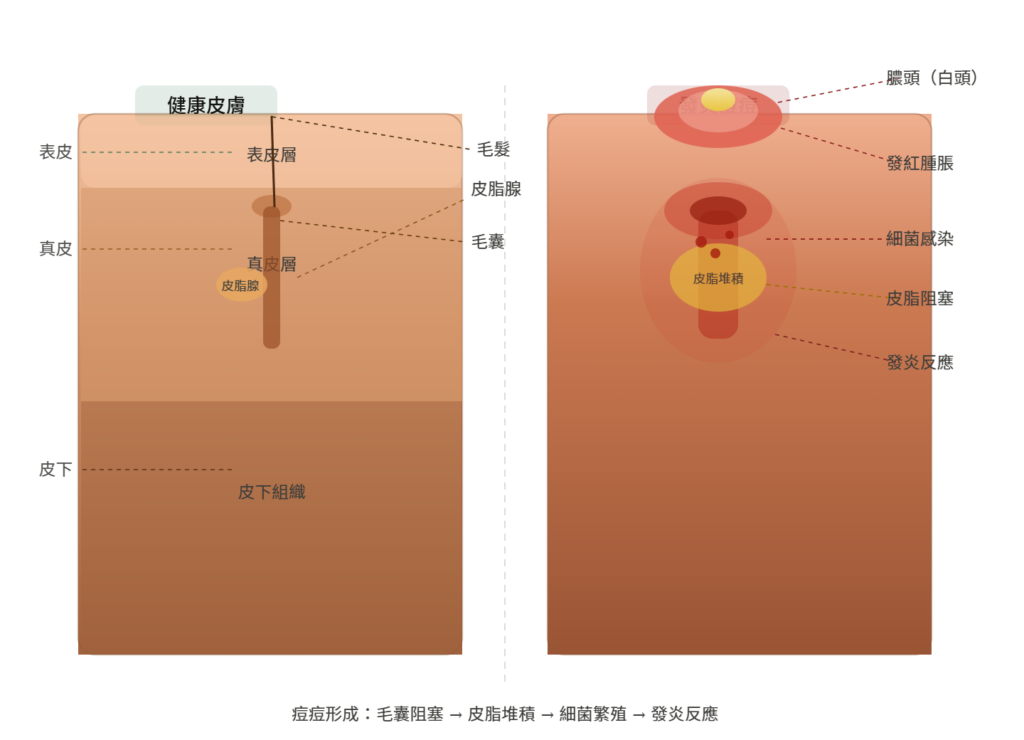
Acne is a skin condition characterized by infection and inflammation. When acne becomes severely inflamed, or when the dermis is damaged due to physical pressure, acne scars may form.Cleveland Clinic和American Academy of DermatologyHere are 4 factors that contribute to acne scars:
- Deep Inflammation: Nodular or cystic acne can damage the deeper layers of the skin and break down collagen, preventing the skin from healing properly.
- The body’s healing response: When the skin becomes inflamed, it attempts to heal itself. However, the inflammatory phase breaks down collagen, which can lead to depressed scars; if the healing response is too vigorous, it may result in raised acne scars.
- Popping Pimples: Squeezing or popping a pimple too hard can cause more severe damage and inflammation, significantly increasing the likelihood of permanent scarring.
- Delayed Treatment: The longer you wait to treat acne, the longer the inflammatory response will persist, and the more severe the damage to the skin tissue will be.
Looking at the underlying causes, it’s clear that acne scars don’t fade on their own because they are a structural issue rather than a temporary injury.
At-Home Skincare vs. Medical Aesthetics: What’s the Difference in Results?
At-home skincare and medical aesthetic treatments follow completely different approaches to treating acne scars; the key difference lies in depth and precision:
| Home Care | Treatments | |
| depth of action (physics) | Stratum corneum | The dermis and even deeper layers |
| Mechanism | Accelerates skin cell turnover and reduces pigmentation | Destructive remodeling. Inducing collagen regeneration through thermal or physical damage. |
| Dent Repair | Virtually ineffective | It can cut through fiber bundles and fill in depressions. |
| Improvement Rate | It will take several months or even several years | Results are seen relatively quickly; improvement is usually noticeable after 3 to 6 sessions. |
Is Earlier Treatment Better? The Optimal Time to Treat Acne Scars
If you want to avoid acne scars, seeking treatment and controlling inflammation as soon as acne appears can help prevent scars from forming later on. However, if you already have acne scars, it’s recommended that you seek treatment as soon as possible.
- Optimal Period: Within 3 to 6 months after the inflammation has subsided. At this time, the skin’s capillaries are still active, its repair capacity is strong, and collagen remodeling is most efficient.
- Red Acne Scar Stage: If you undergo dye laser or Radiofrequency (RF) treatment while the acne scars are still red, you can reduce the likelihood of them later developing into permanent indented scars.
As time passes, scar tissue gradually becomes fibrotic and hardens; if treatment is delayed until that point, stronger energy levels or more treatment sessions will be required to achieve the desired results.
A Comprehensive Guide to the Different Types of Acne Scars
The type of acne scar is directly related to the treatment method. Generally speaking, acne scars can be classified into atrophic scars, hypertrophic scars, and hyperpigmented scars.
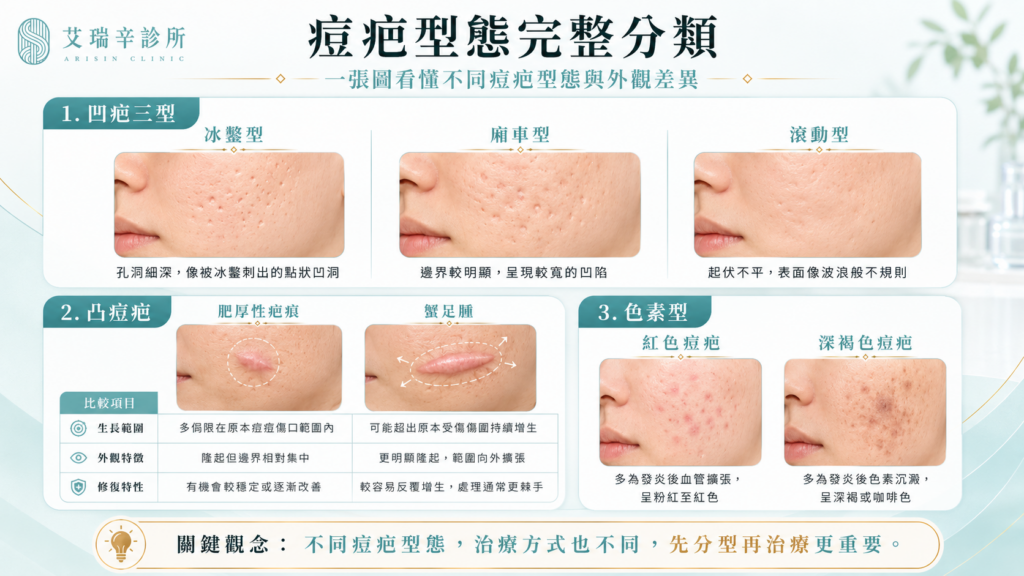
Dents (chisel-type, van-type, rolling-type)
- Ice-pick scars: Ice-pick scars are the most common type of depressed scars. They have a narrow opening (less than 2 mm in diameter) but are very deep and V-shaped.
- Box-shaped: Distinctly defined edges; larger in area than ice-pick-shaped acne scars; with a relatively flat and wide base.
- Rolling Acne Scars: These scars have indistinct borders and resemble the undulating motion of ocean waves. Rolling acne scars are unique in that, in addition to collagen loss caused by inflammation, they are also formed when tough fibrous bands beneath the skin pull the epidermis downward. These scars cast distinct shadows under light and require subcutaneous release to improve their appearance.
Raised Scars (Hypertrophic Scars, Keloids)
In contrast to scars, this is a raised area of tissue formed due to excessive collagen production resulting from the skin’s overreaction during the healing process.
- Hypertrophic scars: The raised area is confined to the original site of the acne lesion; it is usually reddish in color and firm to the touch, and may shrink slightly over time.
- Keloid Scars: For people prone to keloids, raised acne scars will extend beyond the size of the original pimple, spread outward, and are unlikely to shrink over time.
Pigmented Acne Scars (Red, Dark Brown)
Strictly speaking, hyperpigmented acne scars are not actually acne scars; rather, they are a post-inflammatory skin reaction and pigmentation.
- Red acne scars: These occur because when acne becomes inflamed, the body forms many new capillaries to repair tissue and fight bacteria. If these capillaries do not disappear once the inflammation subsides, red acne scars form.
- Dark brown acne scars: After the skin becomes inflamed, the cells are stimulated to produce more melanin as a protective response; when this pigment settles, it forms dark brown acne scars.
Dark brown acne scars look like dark spots and may gradually fade over time as the skin sheds dead skin cells; using acid-based skincare products or picosecond laser treatments can speed up the healing process.
Introduction to Acne Scar Aesthetic Treatments at Taichung Arixin Clinic
Depending on the type of acne scar, doctors will use different energy-based devices or techniques for treatment. The following is a summary of the current mainstream treatment options.
[Core Content: Accurate Comparison Tables] To help you do your homework quickly, we've compiled a list of the differences between current mainstream lasers:
- Picosecond Laser:
- Advantages: Short recovery period and low heat damage.
- Suitable: Pigmented acne scars (red and black marks), minor concave scars.
- Fractional Laser:
- Principle: Non-vaporizing dot matrix technology.
- Suitable: Medium to shallow scar revision.
- UP Laser (UltraPulse):
- Advantages: The energy reaches deep into the dermis and cuts through the deep fibrous tissue.
- Suitable: Severe ice chiseled and van-type dents.
[Doctor's Advice Acne scar treatment is often not a "one-machine" solution, and usually requires a combination of treatments planned by a physician based on the type of scar (e.g., degree of fibrosis, depth of depression) in order to achieve the best results. 。
Fractional Laser: Suitable for Pitted Scars
- Principle: By utilizing fractional photothermal therapy, thousands of microscopic thermal lesions are created on the skin to activate the skin’s self-healing ability and stimulate collagen reorganization.
- Suitable for the following scar types: boxcar scars, rolling scars, and rough skin.
- Recovery period: Approximately 5–7 days, during which you may experience redness, swelling, and fine, pinpoint scabs.
- Number of sessions: We recommend 4 to 6 sessions per course of treatment.
picosecond lasers: The Top Choice for Treating Pigmented Acne Scars

- Principle: Utilizes extremely short pulse durations to generate a photomechanical effect, shattering pigment into a dust-like state; when combined with the honeycomb or lens mode, it produces the LIOB cavitation effect to induce collagen regeneration.
- Suitable for: Dark brown acne scars (PIH), mild indented scars, and enlarged pores.
- Recovery time is approximately 3–5 days, and the redness and swelling subside quickly.
- Number of sessions: 3 to 6 sessions are recommended, depending on the depth of the pigmentation.
Carbon Dioxide Fractional Laser: Deeply Reshaping the Skin’s Structure
- Principle: The laser beam is converted into countless tiny points of energy that are precisely delivered into the dermis. By creating micrometer-scale lesions, this process stimulates fibroblasts to produce large amounts of collagen, which fills in the damaged, sunken areas from the inside out and restores a smooth skin texture.
- Suitable for the following scar types: severe depressed scars, ice-pick scars, and boxcar scars.
- Recovery period: Approximately 7–14 days. Be sure to strictly protect your skin from the sun and keep it moisturized to prevent hyperpigmentation.
- Number of sessions: 3 to 5 sessions are recommended, with longer intervals between each session.
Collagen Stimulant: Promotes Collagen Regeneration
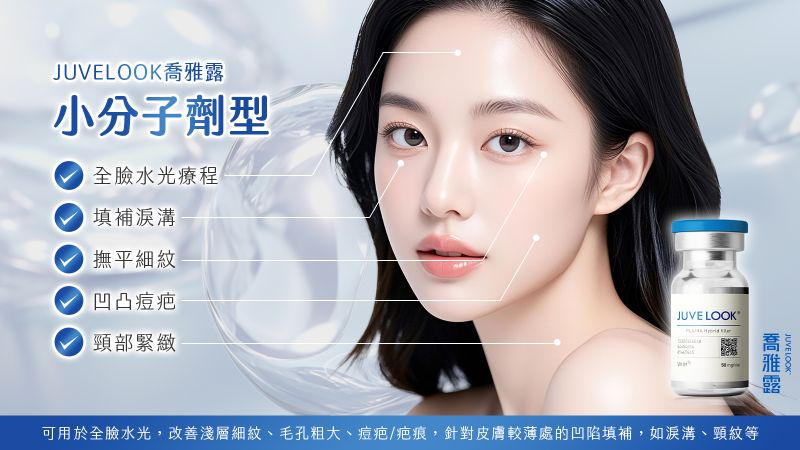
- Principle: Injections of ingredients that stimulate collagen regeneration—such as poly-L-lactic acid (Sculptra), polycaprolactone (Ellanse), and poly-D-lactic acid (AestheFill, Juvederm)—directly induce the synthesis and regeneration of the body’s own collagen in sunken areas.
- Suitable for: All types of depressed scars and large areas of skin depression.
- Recovery period: About 1–2 days; there may be some slight bruising.
- Number of sessions: 2–3 sessions are recommended; the effects are cumulative.
Microneedle Pen:Minimally Invasive Physical Restoration
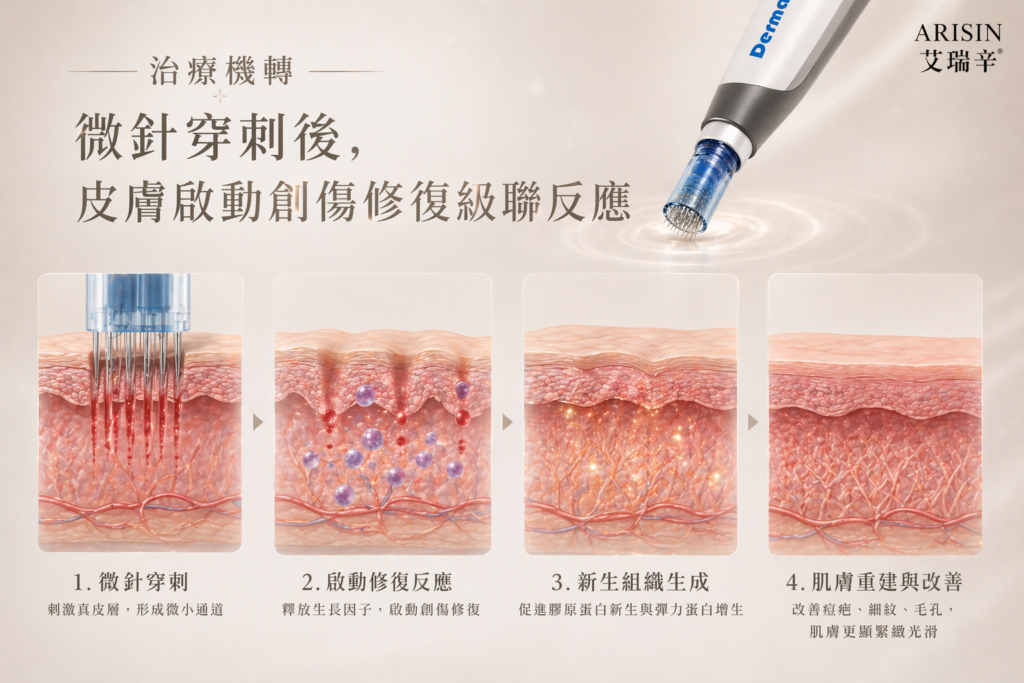
- Principle: Microneedles are used to create tiny wounds in sunken areas, stimulating skin tissue regeneration and promoting the production of collagen and elastin.
- Suitable for: Superficial indentations or people whose scars heal more slowly
- Recovery period: Approximately 1–3 days; however, if the treatment involves deeper or more severe indented scars, minor scabbing may occur, and the recovery period may be extended to about 1 week.
- Number of sessions: 4 to 6 sessions are recommended.
PLT Cryostats:Autologous Growth Factor Therapy
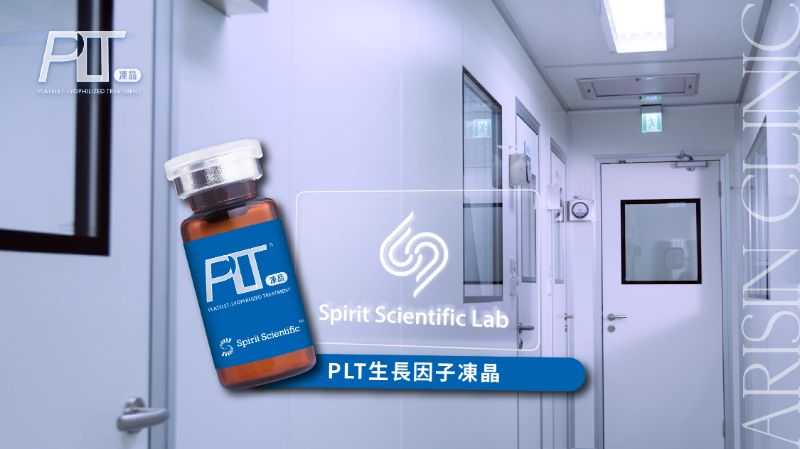
- Principle: High-concentration platelets are extracted from the patient’s own blood and processed into a freeze-dried powder, which is rich in various growth factors that aid in skin repair.
- Suitable for: Depressed acne scars; individuals with slower natural healing; this treatment is also often combined with picosecond, fractional, or UP lasers to treat depressed acne scars.
- Recovery period: Approximately 3–7 days; there may be some bruising and swelling.
- Number of sessions: 2 to 3 sessions are recommended.
Subcision: For Rolling Scars
- Principle: Using a special needle, the deep fibrous bands beneath the skin that pull on the epidermis are severed, allowing the indentations to naturally spring back.
- Suitable for: Rolling scars. Rolling scars are characterized by numerous downward-pulling fiber bundles beneath the skin. The standard treatment for rolling scars involves subcutaneous dissection to sever these fiber bundles.
- Recovery period: Approximately 3–7 days; noticeable bruising or swelling may occur at the treatment site.
- Number of sessions: 3 to 4 sessions are recommended.
TCA Cross Chemical Reconstruction: Specifically for Ice-Chisel-Type Scars
- Principle: High-concentration trichloroacetic acid (TCA) is precisely applied to deep pits, cauterizing the local skin and promoting skin cell regeneration.
- Suitable for: Ice-chisel-type depressed scars
- Recovery period: A small, dark scab will form at the injection site and fall off in about 7 to 10 days.
- Number of sessions: We recommend 3 to 5 sessions, with a one-month interval between each session to allow for tissue repair.
How does Taichung Arixin Medical Aesthetics Clinic treat acne scars?
Acne scar treatment is not about solving a single problem, but rather a process involving tissue breakdown, skin repair, and regeneration. Successful treatment relies not only on equipment, but also on accurate diagnosis and a comprehensive treatment strategy.
The doctors at Arixin Clinic will conduct a thorough assessment of your acne scar type, skin tolerance, acceptable recovery time, and budget to create a personalized treatment plan.
Comparison of Acne Scar Aesthetic Treatments at Taichung Arixin
There are many ways to treat acne scars, but the approach varies depending on the type of scar. At Arixin Clinic, you can receive the most appropriate treatment plan.
| Treatment Plan | Suitable for Scar Types | effect | recovery period | Number of recommendations | Price Range (Per Visit) |
| Shuttle Laser | Cab-style, rolling-style, rough texture | Activate Self-Healing and Collagen Remodeling | 5–7 days | 4–6 times | 3,000–8,000 yuan |
| picosecond lasers | Dark brown acne scars, mild indentations, enlarged pores | Pigment Fragmentation, Vacuolar Proliferation | 3–5 days | 3–6 times | 5,000–10,000 yuan |
| Carbon Dioxide Array | Deep Pits, Ice-Pick Scars, Boxcar Scars | Deep-Tissue Remodeling, Vaporization of Damaged Tissue | 7–14 days | 3–5 times | 6,000–15,000 yuan |
| Collagen Booster | Various indentations and large-area depressions | Stimulate the long-term growth of endogenous collagen | 1–2 days | 2–3 times | 15,000–35,000 yuan |
| Microneedle Pen | People with shallow cavities and slow healing | Minimally invasive and promotes tissue regeneration | 1–7 days | 4–6 times | 8,000–12,000 yuan |
| PLT Cryostats | Those with scars or who need enhanced repair | Powerful Repair with Autologous Growth Factors | 3–7 days | 2–3 times | 15,000–25,000 yuan |
| Subcutaneous Dissection | Rolling-type indentations | Cut the fiber bundles to allow the indentation to spring back | 3–7 days | 3–4 times | 5,000–8,000 yuan |
| TCA Chemical Reconstruction | Chisel-like indentations | Local cauterization promotes cell regeneration | 7–10 days | 3–5 times | 5,000–8,000 yuan |
Single Treatment vs. Combination Treatment: Why Do Combined Treatments Work Better?
Most people have more than one type of acne scar, so doctors generally recommend a combination treatment—for example, first using subcutaneous excision to sever the fibrous bands, followed by a CO₂ fractional laser to smooth the skin’s surface, and then applying PLT cryo-crystals to accelerate healing.
Recommended Treatment Pathways for Different Scar Types and Severities
- Pigment-Based (Non-Invasive): Focuses on color and refinement
- Recommended Treatment Path: Picosecond Laser ➔ Medical-Grade Skin Whitening Infusion
- Note: The goal is to break down melanin and, combined with a skin-brightening treatment, this is very effective for dark brown acne scars.
- Mild to Moderate Acne Scars: Focus on Collagen Stimulation
- Recommended Treatment Path: Microneedling or Fractional Laser ➔ PLT Cryopreservation
- Description: Suitable for shallow-bed vans. This treatment triggers the skin’s natural healing process through minimal thermal damage and, combined with autologous growth factors, helps the skin regenerate on its own.
- Severe Rolling-Type Scars: Focus on Structural Release
- Recommended Procedure: Subcutaneous Dissection ➔ Collagen Stimulator
- Note: First, the downward-pulling fiber bundles are severed, and then the space is filled with a tissue-regenerating agent.
Complete Guide to Acne Scar Aesthetic Treatments at Taichung Arixin Clinic
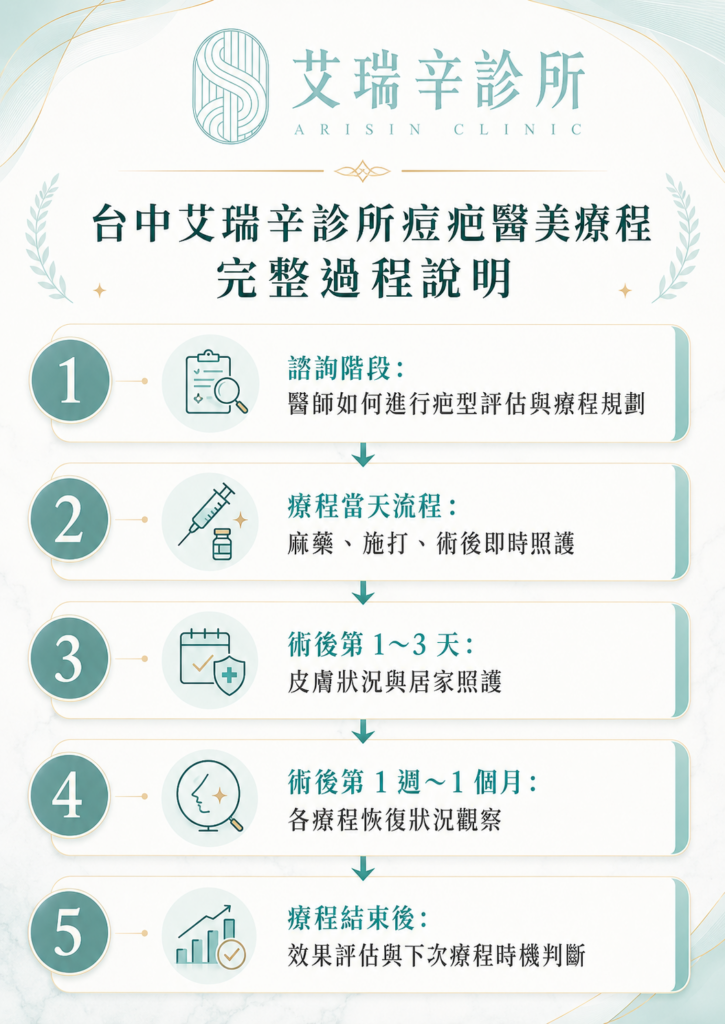
Once you understand the different types of treatments, it’s just as important to familiarize yourself with the procedures at Arixin Clinic and the post-treatment care. Professional treatment isn’t just about the few dozen minutes of the procedure itself—it encompasses everything from the pre-treatment consultation to post-treatment education.
Consultation Phase: How Doctors Assess Scar Types and Plan Treatment Regimens
The doctor will examine acne scars from various angles and use different methods to assess them; for example, they may gently manipulate the skin to determine whether there are tough fibrous bands beneath the scar. Finally, based on the type of acne scar, the recovery period you can accommodate given your work and personal life, and your budget, the doctor will recommend the most appropriate treatment plan.
Procedure Day Schedule: Anesthesia, Injection, Immediate Post-Procedure Care
We recommend coming without makeup on the day of the session. The entire process usually takes about 1.5 to 2 hours:
- Facial Cleansing: Remove any dust, makeup, or oil left on the face to prevent infection.
- Application of Anesthetic Cream (20–40 minutes): An anesthetic cream is applied before the procedure to reduce discomfort during the procedure. Once applied, you must wait 30 minutes for it to take effect.
- Starting the Treatment: The doctor will begin treatment according to the treatment plan established during the consultation. If laser treatment is used, you may feel a sharp, hot sensation similar to a rubber band snapping against your skin during the procedure.
- Immediate Post-Procedure Care: After the injection is complete, a nurse will help apply an ice pack and apply antibiotic ointment to protect the injection site.
Days 1–3 After Surgery: Skin Condition and Key Points for Home Care
- Common reactions: Visible redness, mild swelling, or a feeling of dryness or tightness at the injection site.
- Key Nursing Considerations:
- Cleansing: Avoid rubbing your face vigorously when washing it. We also recommend temporarily stopping the use of facial cleanser and simply washing with water.
- Ointment: Apply the antibiotic ointment regularly as directed by your doctor to prevent infection.
- Cooling: If your face feels hot or uncomfortable, you can apply a cold compress as needed.
- Avoid high-temperature environments: If you’ve had picosecond or fractional laser treatments, it’s recommended that you avoid high-temperature environments such as saunas and hot springs for the time being.
Week 1 to 1 Month Post-Surgery: Comparison of Recovery Progress Across Treatment Courses
During the critical recovery period from 1 week to 1 month after treatment, the progress varies significantly among different procedures. The following examples illustrate this using picosecond lasers, fractional lasers, microneedling pens, and collagen-stimulating agents:
| picosecond lasers | Shuttle Laser | Microneedle Pen | Collagen Booster | |
| Days 1–3 | Redness, Heat | Burning Sensation and Redness | Redness and Slight Bleeding | Puncture marks, bruises, or localized swelling |
| Days 4–7 | The redness is starting to fade | The redness is starting to fade and scabs are forming | Mild redness, a slight tingling sensation; some people may experience flaking | Swelling Resolution Period |
| Week 2 | The pigmentation has started to fade, and my skin feels smoother, | Once the scab has fallen off, pink new skin appears. | The rough texture of the skin has completely disappeared, and the treatment has entered a stable phase. | Visual lag. As the initial moisture is absorbed, the sunken appearance may temporarily return; this is normal. |
| Month 1 | The stabilization phase. Initial collagen regeneration has occurred, and skin texture has improved. | Deep-Tissue Remodeling Phase. Heat-induced collagen is released in large quantities, and the edges of the indentations begin to soften and smooth out. | Structural Optimization Phase. The most noticeable improvements are seen in shallow pits and pores. | As the body’s own collagen begins to regenerate, the sunken areas regain their natural firmness. |
After the Treatment: Evaluating Results and Determining the Timing of the Next Session
Acne scar treatments do not show significant improvement after just one session, so doctors typically schedule follow-up appointments and outline a treatment plan to ensure the final results meet expectations.
- First Postoperative Evaluation: 1 to 3 months after surgery. The doctor will assess your recovery and any changes following the first treatment session.
- Determining the timing of the next treatment: The skin needs sufficient time to rest and recover, so treatments should not be scheduled too frequently.
- Picosecond Laser: We recommend waiting 4 to 6 weeks between treatments. Wait until the melanin has been metabolized and the skin barrier has returned to normal before undergoing the next treatment.
- Fractional Laser: We recommend waiting at least one month between treatments. Allow your skin to rest fully and wait until your skin condition has stabilized before resuming treatment.
- Microneedling Pen: Recommended interval: 4 to 8 weeks. Depending on how quickly the skin heals, wait until the redness on the epidermis has completely subsided before undergoing the next treatment.
- Collagen-stimulating agents: Wait 1 to 3 months between treatments. Observe the results of the previous treatment to avoid excessive layering, which can cause unnatural bulges.
Real-Life Case Studies of Acne Scar Aesthetic Treatments at Taichung Arixin Clinic
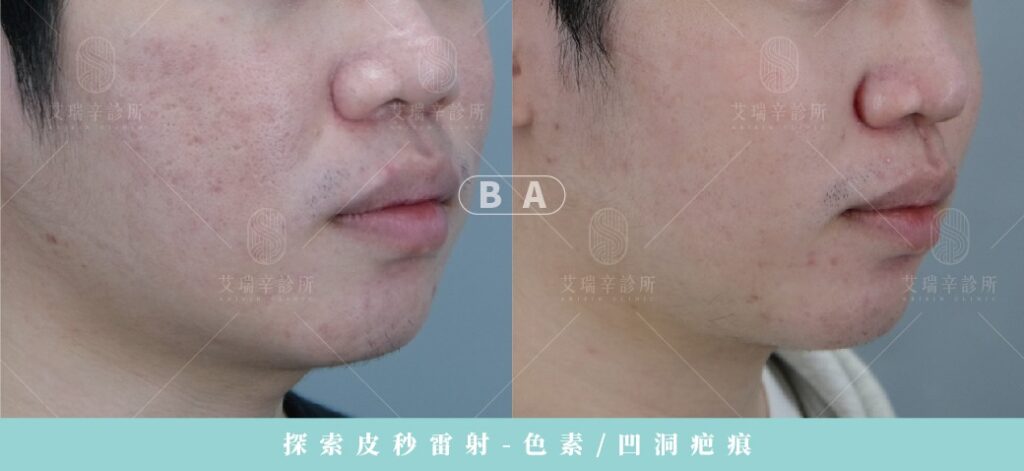
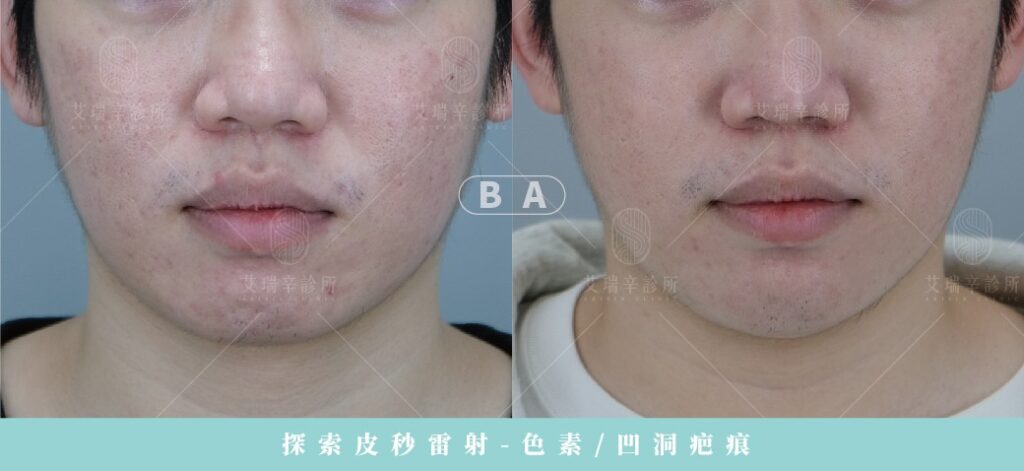
I. De-identified Customer Information
- Patient Background: 32-year-old male (Mr. Zeng)
- Skin Concerns: I have long been troubled by enlarged pores and visible acne scars.
- Medical History: During adolescence, improper squeezing of acne led to indented acne scars of varying depths on the face. The patient lacks confidence in their appearance and hopes to improve their skin condition through professional medical aesthetics.
II. Physician’s Professional Judgment and Assessment
Following a detailed in-office consultation and skin examination by the doctor, it was determined that Mr. Zeng’s skin condition was a combination of issues:
- Acne Scar Types: Includes multiple “carriage-type” and “ice-chisel-type” acne scars; some areas of the epidermis are indented due to tension from fibrotic tissue.
- Current Skin Condition: Noticeably enlarged pores, excessive oil production, and uneven skin tone caused by pigmentation.
III. Customized Treatment Plans
Doctors adopt a "comprehensive precision treatment" strategy to address skin issues at different levels in stages:
IV. Treatment Outcomes and Progress
- Discovery PICO: Use picosecond laser technology to improve overall skin texture and reduce uneven pigmentation.
- Refix Super Lenses (Multifocal Lenses): Specifically designed to target localized, deep acne scars, these lenses utilize the LIOB effect (optical breakdown effect) to create cavitation beneath the skin, stimulating new collagen production to fill in indentations.
- Subcision Combined with PLT Growth Factors: For deep acne scars with severe fibrosis, the physician uses physical subcision to gently stretch the fibrous tissue in the epidermis while simultaneously introducing PLT cryopreserved crystals to accelerate healing and optimize tissue regeneration.
- Microneedling: Helps stimulate collagen production, refines pores, and shortens the recovery period.
- Treatment Plan: We anticipate a course of 3–5 combined treatment sessions (subject to adjustment based on the condition of the restoration).
- Return to Current Status: After a series of treatments, Mr. Zeng’s skin tone has visibly brightened, the edges of his previously sunken, boxcar-type acne scars have become less defined and smoother, and the appearance of his pores has significantly improved. The client reported that when looking in the mirror now, the visual unevenness has greatly diminished, and he is very satisfied with the progress of his treatment.
Extended Reading:What Is a Picosecond Laser? How Does It Differ from the Honeycomb Picosecond Laser? A Comprehensive Guide to Post-Treatment Care
Key Considerations When Choosing a Medical Aesthetics Clinic for Acne Scars in Taichung
The medical aesthetics market in Taichung is highly competitive, with a wide array of advertising slogans, but treating acne scars is a precise process that places significant demands on a doctor’s experience and the clinic’s equipment. To avoid spending a lot of money without seeing results, here are four key criteria to consider when choosing a clinic.
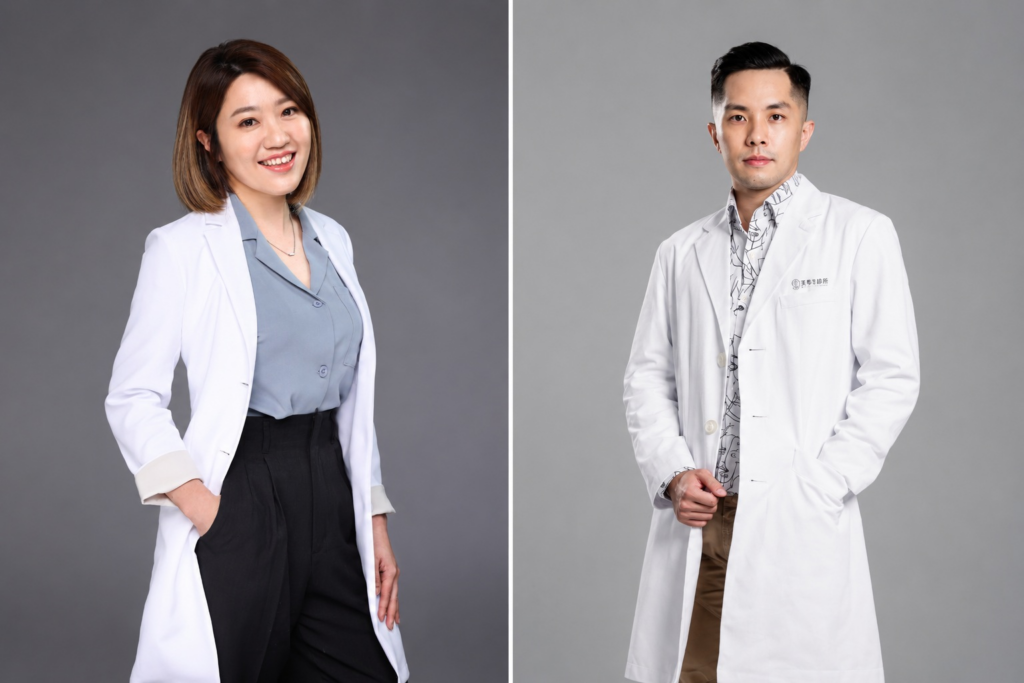
Physician Qualifications and Specialized Experience in Acne Scar Treatment
A doctor’s assessment of the type of scar is the first step toward successful treatment. Doctors don’t just look at the surface; they can also determine the extent and depth of tissue fibrosis through palpation.
ARISIN ClinicThe medical team has a solid medical background and technical expertise, with extensive experience in treating all types of complex acne scars using a variety of procedures, ranging from laser treatments and collagen-stimulating agents to subcutaneous peeling.
Is the treatment facility fully equipped?
There are many different types of acne scars, and if a clinic claims to be able to solve all problems using just a single picosecond laser, the results are often limited. ARISIN ClinicWe offer picosecond lasers for pigmentation treatment, PLT cryotherapy, various collagen-stimulating agents, microneedling pens, and more. We also provide other procedures such as chemical peels and subcutaneous peeling, offering a comprehensive solution for acne scars.
Is the consultation process comprehensive: Does it include scar assessment and a customized treatment plan?
Specialized clinics will set phased treatment goals based on the patient’s budget and recovery time requirements; for example, the first phase focuses on addressing tension, while the second phase addresses smoothness.
ARISIN Clinic"Diagnosis first, treatment plan second." During the consultation, the physician will carefully map and label different scar types—such as ice-chisel, boxcar, and rolling scars—and discuss recovery needs with the patient to develop a comprehensive, multi-modal treatment plan.
Are postoperative follow-up and care services adequate?
Most acne scar treatments involve minimally invasive or high-energy procedures. If post-treatment reactions (such as redness, swelling, or scabbing) are not managed properly, they can actually lead to hyperpigmentation. Therefore, it’s a good idea to ask in advance whether you can contact the clinic at any time for questions or concerns regarding post-treatment care, such as sudden redness or swelling.
在ARISIN Clinic...offers the ultimate post-procedure care, including professional medical-grade restorative treatments, which can be combined with PLT cryocrystals to accelerate healing. Arixin has a comprehensive system for real-time consultations and post-procedure follow-ups to ensure that your skin receives the most professional care at every stage of the regeneration process.
Post-Treatment Care and Precautions for Acne Scar Cosmetic Procedures
Aesthetic medical procedures are just the beginning of the process of breaking down and rebuilding; proper post-treatment care is the key to maximizing the effectiveness of these treatments. If post-treatment care is inadequate, it will not only prolong the recovery period but may also lead to hyperpigmentation, inflammation, and even significantly diminish the results of these expensive procedures.
Key Care Steps for the First 72 Hours After Laser Treatment
- Cleaning and Care: Use a mild cleaning product, and do not scrub vigorously when washing.
- Keep Your Skin Moisturized: If you’re undergoing laser treatment for acne scars, your skin will tend to be drier after the procedure, so it’s important to keep it well-moisturized. Use a simple, fragrance-free moisturizer. For extra hydration, choose one that contains vitamin B5, urea, or ceramides.
- Relieving Redness and Heat: If your face feels hot, you can apply an ice pack or a damp compress for 10 to 20 minutes at a time.
Why sunscreen is the most important thing to do after surgery?
- Preventing Post-Inflammatory Hyperpigmentation: After laser treatment, the skin is in an inflamed state, and melanocytes are highly sensitive at this time. If exposed to UV rays, they will secrete large amounts of melanin to protect the skin, causing the acne scars—which were the target of the treatment—to become darker than before.
- Preventing Damage to Newly Formed Collagen: UVA rays in sunlight can penetrate the dermis and damage newly formed collagen. If you don’t use sunscreen properly, it’s like treating the skin while simultaneously damaging it.
It is recommended to use sun protection for the first 3 days after surgery. When going outside, you can use an umbrella, wear a hat, and wear a mask, and you can also use a physical sunscreen containing titanium dioxide or zinc oxide.
What behaviors discount healing?
- Picking at scabs with your fingers: The dark, flaky scabs produced by fractional or CO₂ lasers must be allowed to fall off naturally. Removing them prematurely will forcibly strip away immature new tissue, which is highly likely to leave new scars or cause erythema.
- Use of Skin-Lightening and Acid-Based Products: Avoid using skincare products containing vitamin C, mandelic acid, salicylic acid, or retinol for 2 weeks after the procedure. These ingredients can irritate damaged skin and trigger contact dermatitis.
- Frequent exposure to high-temperature environments: Avoid hot springs, saunas, steam rooms, or hot yoga for one week. The accumulation of heat can exacerbate vasodilation, leading to prolonged redness or even inflammation.
- Tobacco, Alcohol, and Spicy Foods: Nicotine causes blood vessels to constrict, reduces blood oxygen levels, and slows down the healing process; alcohol and spicy foods, on the other hand, promote blood vessel dilation, which can exacerbate redness, swelling, and discomfort.
- Staying up late and having an irregular sleep schedule. Your body needs adequate sleep to recover, so be sure to get plenty of rest after surgery.
Frequently Asked Questions FAQ
Where in Taichung can I get cosmetic treatments for acne scars? How do I choose a clinic?
Given the abundance of medical beauty clinics in Taichung, we recommend using the following three criteria to make your decision:
.A Doctor’s Diagnostic Experience:Acne scar treatment relies heavily on the doctor’s accurate assessment of the “scar type.” It is recommended to choose a doctor who performs a physical examination, can clearly explain combination therapy, and can develop a treatment plan.
.Diversity of Equipment: Since acne scars often come in various forms, clinics that have multiple types of devices—such as picosecond, fractional laser, or CO₂ fractional lasers—as well as collagen-stimulating agents available are better able to provide comprehensive treatment plans.
.Post-operative care: Confirm whether the clinic provides comprehensive post-operative sedation and follow-up protocols, and whether it has the professional expertise to address side effects such as hyperpigmentation or allergic reactions.
How many sessions of medical aesthetic treatment are needed to see results for acne scars?
Cosmetic treatments for acne scars don’t yield results after just one session. Take laser treatment as an example: it’s usually recommended to undergo 3 to 6 sessions, with about 1 to 2 months between each treatment.
Will I still get pimples after the treatment?
It’s possible. Cosmetic procedures treat existing scars; they cannot prevent future breakouts. If acne continues to develop after scar treatment, it is recommended to combine the treatment with oral or topical medications. Otherwise, if new acne is not treated properly, it will lead to the formation of new scars, causing the treatment to lag behind the rate at which new scars are forming.
What is the difference between acne scars and acne marks? Are they treated the same way?
.Acne scars: These are classified as “pigment-related” issues and include red telangiectasia or brown pigmentation. The surface is flat, and treatment primarily involves picosecond lasers or dye lasers.
.Acne Scars: This is a “structural” issue, encompassing both depressed and raised acne scars. The presence of acne scars indicates that the dermis has been damaged; improvement requires treatments such as fractional laser, CO₂ laser, subcutaneous peeling, or collagen-stimulating agents—which involve breaking down the damaged tissue and promoting regeneration.
How much should I budget for aesthetic treatments for acne scars in Taichung?
The cost of acne scar treatment depends on the severity of the scars and the desired results:
.Basic Maintenance Treatment (Picosecond / Superficial Fractional): Approximately 5,000 to 10,000 yuan per session.
.Deep Repair Treatment (Combined Therapy): Approximately 12,000 to 20,000 yuan or more per session (includes subcutaneous peeling, microneedling pen, and PLT cryopreserved crystals).
If you want to see significant improvement, we recommend setting aside 50,000 to 80,000 yuan for a course of 3 to 5 combined treatments, which will be more effective and cost-effective than a single, more expensive treatment.
Taichung Acne Scar Aesthetic Medicine Experts: Let Arixin Clinic Create a Customized Treatment Plan Just for You
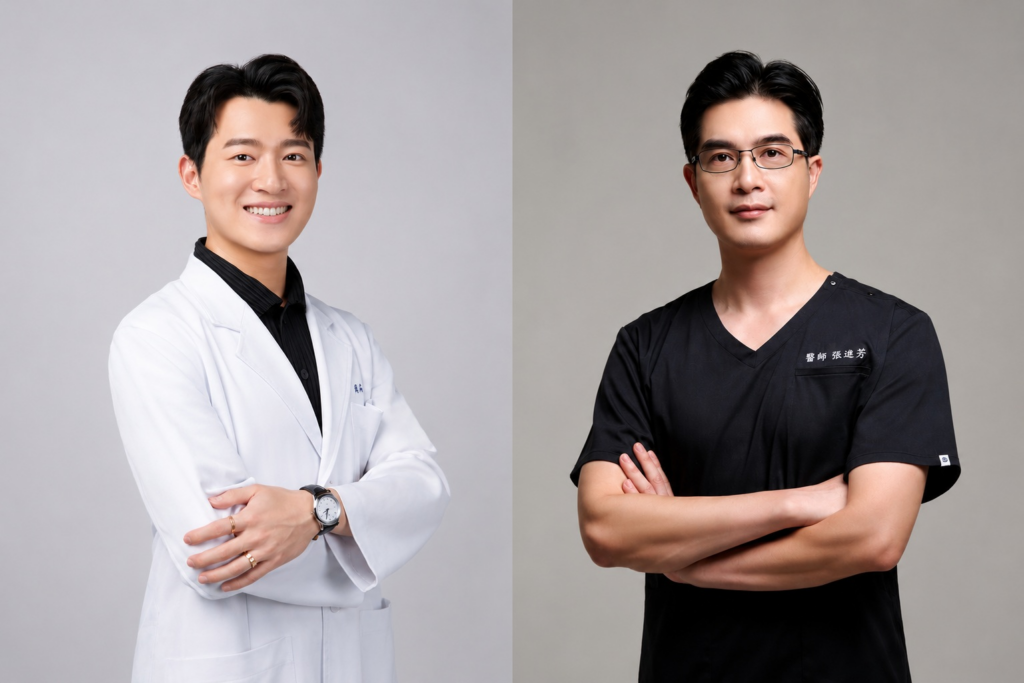
Let yesterday’s scars become a smooth new chapter today. At Taichung Arixin Clinic, we deeply understand the struggles behind every inch of acne scarring. Through in-depth, one-on-one evaluations by our professional physicians, we develop precise, customized treatment plans that break down fibrosis at its root and rebuild collagen. Don’t let hesitation hold back your confidence any longer. Click the link below now to schedule a professional consultation, and let Arixin help you restore your skin’s original purity and smoothness.
Extended Reading:
What to do if your face is sagging? Causes, ways to determine and all-around improvement strategies