




Want to know what to do about sagging face? With age and collagen loss, sagging face, deep lines and blurred jawline have become a problem for many people. Aresin Clinic analyzes the causes of sagging and how to determine it, and provides a full range of improvement strategies from home care, anti-aging diets to medical treatments, to help you fight gravity and regain a firm silhouette!
Articles
Is Your Face Really Sagging? How to Determine for Yourself

As we age, the loss of collagen and relaxation of the fascial layer of the skin is an inevitable physiological process, and the facial lines gradually lose their support, which can be easily assessed at home.
Mirror Test: Heads Up vs. Heads Down
Sit upright, look at yourself in the mirror and observe your wrinkles and jawline; then place the mirror on your lap and look down in the mirror. If, when you look down, you see that the flesh on the sides of your cheeks is obviously "falling" forward, or even changing the original contour of your face, it means that the ligaments supporting the tissues have begun to loosen and sag.
Common Prolapse Alerts
In addition to looking at the flesh of the cheeks, you can also look at the finer lines and wrinkles of the face, for example:
- Deepening of wrinkles: These are not just wrinkles, but depressions formed on the sides of the nose due to the sagging of the malar muscle.
- The end of the eye is pulled down: the eyes feel depressed, the double eyelid crease becomes narrower, and even the end of the eye appears inverted triangle.
- Square face: This is also known as the "corners of the mouth", which will make the originally smooth jawline disappear and make the whole person look heavier.
Sagging vs Oedema: How to Differentiate Between the Two
Sagging and swelling are two completely different states:
- Dropsy or Edema: Another synonym for edema is water retention, which is mostly related to work and rest, diet, or diseases that affect the body's ability to get rid of excess water. If it is caused by work, rest or diet, the swelling is usually greatest in the morning and will subside in the afternoon.
- Sagging: Sagging is the loss of tissue support. No matter what you eat, drink, or whether you get enough sleep, the lines or sagging tissue will be there.
At what age does the face begin to sag?
One of the causes of facial sagging is the loss of collagen, which leads to a loss of support for the facial tissues. Current research confirms that collagen synthesis declines with age, for example, in a study published in the journalThe American Journal of PathologyThe study noted that collagen type 1 synthesis decreases as well, with 80 year olds synthesizing 75% less collagen type 1 than 18-29 year olds.

Collagen Loss Timeline
JournalNatureAccording to the "The Skin's Collagen Production", the amount of collagen produced in the skin decreases by approximately 1% to 1.5% per year as we age, but there are a few points at which this decrease is particularly noticeable:
- Age 25 (turning point): collagen loss is greater than production, skin elasticity decreases slightly, and repair is slower after a late night.
- 35 years old (watershed): the support of the fascia (SMAS) is weakened, slight wrinkles begin to appear, and the lines of the face no longer feel firm.
- Age 45 (Accelerated): Hormonal changes and fat shrinkage shift sagging from "lines" to "lumps", with the jawline blurring being the most noticeable.
Why is the age of sagging earlier in modern times?
In the past, it was thought that the face would not begin to sag until the age of 40 or 50, but clinically it has been found that many people in their 20s and 30s begin to sag.
In addition to common causes such as staying up late, stressful life and lack of sun protection, there is another reason that is often overlooked: the use of 3C products.
Modern people are the typical "head-down people". Maintaining the posture of looking down at the 3C for a long time will cause the neck muscles to contract for a long time, creating a downward pull and pulling the flesh of the face downward, coupled with prolonged exposure to the blue light of the screen and sleep deprivation, the number of cases of "early aging droop" in their 20s has been increasing.
Since blue light penetrates the skin more than UV light, there is a growing body of research confirming that 3C's of blue light ages the skin, such as the 2023 study in theJournal of Cosmetic DermatologyAccording to research, blue light accelerates skin aging, destroys collagen and causes skin pigmentation.
What are the causes of sagging face?
Facial sagging is not caused by a single factor, but is the result of changes in skin tissue, fat distribution and bone structure over time. Overall, the causes of facial sagging include internal, external and lifestyle habits.
Internal factors
1. Collagen Loss: Collagen is a key tissue that supports the cheeks; when collagen is lost, the cheeks sag.
2. Fat displacement: When we are young, fat is in the right places (such as the apple muscles), but as we age and the tissues’ ability to support the fat diminishes, the fat tends to sag down toward the corners of the mouth.
3. Bone Atrophy: As we age, the facial bones undergo slight resorption, causing the supporting structure to shrink, which makes the skin appear saggy and droopy.
JournalAesthetic Plastic SurgeryAccording to an article in the journal, bones in certain areas of the face resorb with age, most notably in the midface, maxillae, orbital rims, and anterior mandibular region.
external factor
4. Ultraviolet (UV) rays: This is the primary cause of “photoaging.” UV rays break down collagen and lead to collagen loss.
5. Sleeping Position: A long-term habit of sleeping on your side can deepen nasolabial folds on one side of the face.
6. Facial Habits: Frequently pursing your lips, pouting, frowning, or laughing too exaggeratedly can all pull or compress facial tissues, accelerating sagging in those areas.
Lifestyle habits accelerate sagging
7. Smoking: Smoking causes blood vessels to constrict, reducing the supply of oxygen and nutrients to the face, which, over time, accelerates the aging of facial skin.
8. High-sugar diet: Refined sugar binds to proteins in the body, triggering the “glycation process” (AGEs), which causes collagen structures to break down and become brittle, ultimately leading to skin aging and sagging.
9. Gravity and “Phone-Head” Syndrome: On average, people today spend more than 3 hours a day looking down at their phones. This causes the platysma muscle in the neck to remain in a shortened state over the long term. This downward pull “drags” the tissues along the jawline downward, leading to a double chin at a young age.
10. Rapid Weight Loss and Extreme Dieting: Many people try to lose weight quickly to look better, only to find that while they’ve lost weight, their faces have sagged. This is because the plumpness of the face depends not only on collagen but also on fat. When a large amount of fat is lost in a short period of time, the skin—which was previously supported by that fat—sags like a deflated balloon. Without enough time to contract, it has no choice but to droop downward.
11. Staying Up Late and Lack of Sleep: Deep sleep helps the skin repair itself, but staying up late or getting insufficient sleep causes stress hormones to rise, which not only prevents tissue repair but also breaks down collagen.
Types and areas of sagging face
Sagging of the face can be categorized into the eye area, the cheeks (midface) and the jaw, with the eye area being the earliest to develop. Below is a brief summary of the three common types of facial sagging and the areas affected.
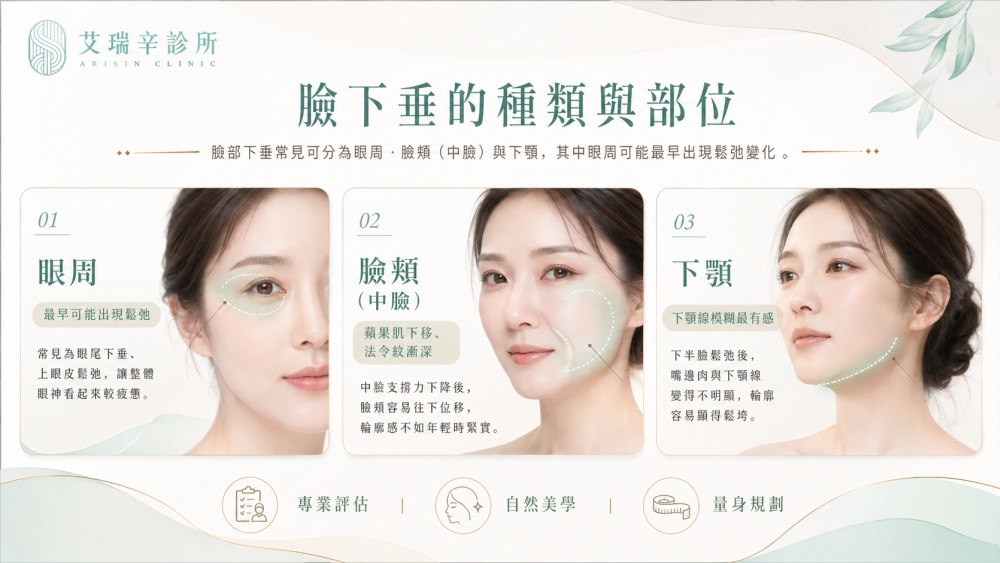
sagging around the eyes
The skin around the eyes is the thinnest part of the face, so it is the first to begin to age and sag, such as loose eyelids and the appearance of bags and tear troughs. With the loss of the supporting structure, the end of the eye may droop and form a "triangle eye". This not only makes you look depressed, but also affects your vision in severe cases, causing you to habitually raise your eyebrows, which in turn leads to the deepening of headlines.
Tear troughs and bags under the eyes are formed when the orbicularis oculi muscle and the inferior orbital septum are loose and unable to support the fat, which then protrudes to form bags under the eyes; at the same time, the tissue below is lost to form a concave tear trough. The shadows created by these two areas will make you look tired and old.
Sagging cheeks
The apple muscle, which was full and high in muscle and fat when young, will be displaced downward due to ligament laxity caused by aging, making the center of the face look flat and dull, and even adding two more pieces of sagging cheeks, which will deepen the appearance of wrinkles.
Droopy jawline
When the cheek tissues continue to slide down to the bottom corner of the mouth, it will form two deep lines like a puppet's mouth; and the original contour of the jaw will also become rounded and fuzzy due to the accumulation of loose tissues, coupled with the effect of gravity and the accumulation of soft tissues under the chin, even if the body is not fat, it will become a visual double chin.
Overview of ways to improve sagging face
Facing sagging face improvement methods include medical aesthetics and daily maintenance, choosing the method that suits your degree of sagging, in order to effectively lock the contour line, so that the skin regains firmness and elasticity.
Home Self-Maintenance
The core of daily care is to prevent sagging and prevent it from getting worse, such as sun protection, using anti-aging ingredients (e.g., Alcohols, peptides) to strengthen epidermal support, and using facial massage to enhance circulation, metabolize waste, and assist in lifting the facial lines.
Treatments
If the face already has obvious lines, marionette lines, or a blurred jawline, then it is necessary to improve the appearance of the face with aesthetic treatments, such as the use of heat to help collagen contraction and firming, the use of sonic focus energy to lift the fascia and promote collagen regeneration, or the use of submerged threads to lift sagging skin and stimulate collagen growth.
Extended Reading:The Complete Guide to Sagging Face Lifting: How to Choose between Sonic, Electrolysis, Threading, Botox, Hyaluronic Acid, and Collagen Needles?
Diet and Nutritional Supplements
The skin needs adequate nutrients to maintain its regenerative capacity and elasticity. Supplementation with key ingredients for collagen synthesis includes protein, vitamin C, and other nutrients and foods that help the body fight oxidation, such as fresh fruits and vegetables.
Another often overlooked is foods that are good for gut bacteria, such as fruits and vegetables, fermented foods (yogurt, yogurt, miso), and so on, because studies have found that well-nourished gut bacteria can help slow skin aging, which is called the "gut-skin axis" 2025 published in the journalCosmeticsStudies have found that intestinal problems can lead to skin aging and inflammation, and that supplementing with probiotics or prebiotics (foods for intestinal bacteria) can also help maintain healthy skin.
How to take care of sagging face?
In order to combat sagging face, apart from medical treatment, daily maintenance is also very important. Apart from slowing down the sagging, if the maintenance is not done properly, the effect of medical treatment may be greatly reduced.

Facial Massage Techniques
Massage from the inside out and from the bottom up. We recommend using a lotion to increase lubrication:
- Jawline: Push gently from the tip of the chin along the edge of the bone toward the earlobe.
- Cheeks: Slide from the sides of the nose along the underside of the cheekbone towards the front of the ear (towards the temple).
- Neck: Push up from the collarbone behind the ear to relax the wide neck muscles that pull the face down.
The Importance and Proper Use of Sunscreen
Sun protection is the first and most important step in the fight against aging. UVA (ultraviolet radiation) penetrates into the dermis and destroys collagen and elastin fibers. The key to using sunscreen is:
- Use a sufficient amount: at least a ten-dollar coin-sized amount is needed for the whole face.
- Frequency: Reapply every 2 hours for outdoor activities; even indoors, apply in the morning if there is a window or strong light.
- Total Defense: Don't forget that the jawline extends to the neck, which is the area most prone to flaccid breaks.
The effect of sleeping position and pillow choice on sagging
Sleeping on your back is best, because sleeping on your side will squeeze out lines and wrinkles around the eyes; pillows should not be too soft, if you sleep with your head sunk too deep, it will cause the neck to tilt forward and compress the jaw tissue.
The height of the pillow is such that when lying flat, the neck is in line with the spine. Too high a height can lead to a crowded chin, while too low a height can cause the face to tilt back.
Recommended Ingredients for Sagging Face
Sagging face care ingredients include collagen to strengthen the skin's internal support, peptides to help lift, and nutrients to help the skin with antioxidants and anti-aging.
Promotes collagen production (Vitamin C, Alcohol)
Collagen is the key to support the face, vitamin C is an important raw material for synthesizing collagen, and also has a whitening effect; A alcohol is absorbed and converted into A acid, which can stimulate the regeneration of collagen, but sun exposure during the daytime may make the skin more sensitive, so many people will grasp the principle of "C in the morning and A in the evening" to take care of the skin.
Firming and Lifting Ingredients (Peptide, DMAE)
- Peptides: There are many types of peptides, such as hexapeptide, which is known as a botulinum toxin-like extract that relaxes over-contracted dynamic muscles, and tripeptide, which sends signals to the skin to repair itself.
- DMAE (Dimethylaminoethanol): DMAE helps to firm the skin and sharpen the contours of the face, and was published in 2005 in the journalAmerican Journal of Clinical DermatologyThe article explains that DMAE is a precursor to acetylcholine, which enhances muscle tone, and that a randomized clinical study demonstrated that daily use of 3%'s DMAE gel for 16 weeks reduced fine lines around the forehead and eyes, and improved skin aging.
Antioxidant and anti-glycation ingredients (nicotinamide, resveratrol)
- Niacinamide (Vitamin B3): Niacinamide is a useful ingredient in skin care that strengthens the barrier, fights inflammation, and more importantly, inhibits glycation and prevents collagen from becoming brittle and yellow.
- Resveratrol: Resveratrol is a powerful antioxidant that neutralizes free radicals from the environment and reduces damage to skin tissue from UV rays and air pollution.
What can I eat to help improve my sagging face?
Although food cannot produce an immediate physical lift like a medical procedure, by eating enough of certain nutrients, it can protect existing collagen from being destroyed and provide the raw materials needed for skin repair and structural tissue synthesis.
Foods that boost collagen
Although the collagen you eat is broken down into amino acids and may not be 100% targeted to replenish your face, it is absolutely essential to provide adequate raw materials.
- Pork skin, fish skin, chicken skin: These collagen-rich foods can provide abundant glycosaminic acid and proline, of which fish skin is easier to be absorbed and utilized because of its finer molecular structure.
- Other high-protein foods: Synthesizing collagen requires a variety of different amino acids, so it's important to consume a variety of protein foods, so animal proteins and plant proteins (soybeans, soybeans) can be eaten in abundance as well.
Antioxidant Diet
Antioxidants neutralize free radicals in the body and prevent collagen damage:
- Berries (blueberries, strawberries): rich in anthocyanins, can protect elastic fibers, maintain skin firmness.
- Tea: The catechins in tea have anti-inflammatory effects and can slow down cellular aging.
- Dark vegetables, such as spinach and collard greens, contain vitamin A and lutein, which strengthen skin defenses.
Diets to avoid
- High-sugar diet: Sugar binds with collagen to produce "glycation," which causes collagen to become brittle, yellow, and lose its support.
- High Salt Diet: Eating too much salt will cause swelling of the face. Repeated swelling and receding over a long period of time will overstretch the tissues and accelerate skin laxity.
- Alcohol: Alcohol depletes the body of vitamins B complex and C and causes dehydration. People who drink alcohol for a long period of time have lackluster skin that is prone to sagging.examineIt has also been shown that people who drink more than 8 glasses of wine per week (e.g., 8 cans of 330 to 350 c.c. beer or 8 cups of 125 c.c. red/white wine) experience an increase in bags under the eyes, marionette lines, and loss of tissue in the midface.
What is the best way to treat sagging face?
The key to choosing the right treatment for a sagging face is to "treat the right problem". Sagging can be caused by laxity of the skin layer, displacement of fat, or loss of support of the deep fascial layer, so it is important to be fully evaluated by your physician.
Mild sagging: Electrolysis, Botox
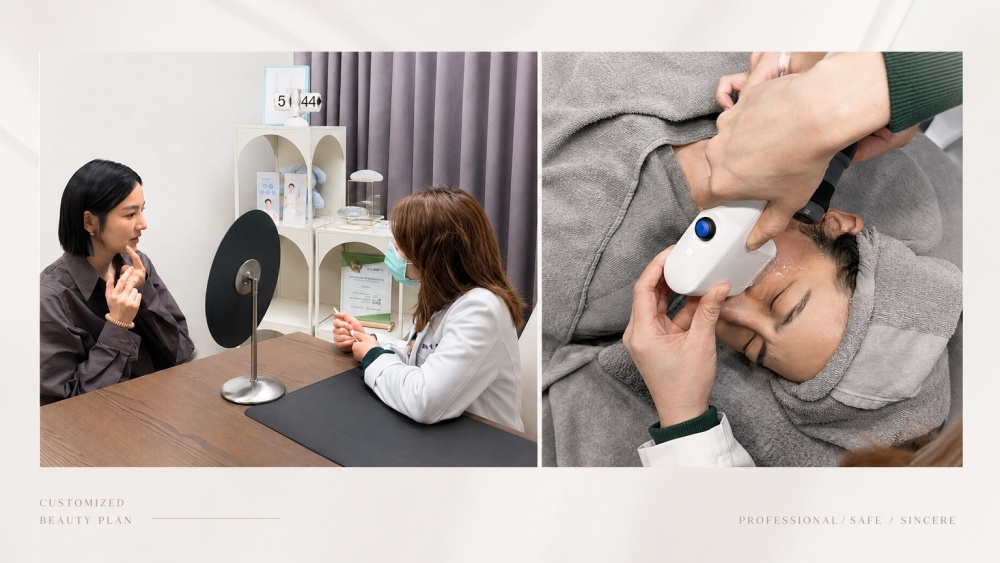
If you feel that your face is looser than before, or if you feel that the texture of your skin has deteriorated when you look in the mirror, this is a superficial and medium skin problem.
- Electrolysis: Through the heat generated by radio waves, the dermis and subcutaneous tissues are "volumetrically heated", which can stimulate collagen contraction and proliferation to tighten the skin, smooth fine lines, reduce pores, and tighten the contours.
- Botox: Relaxes dynamic downward pulling muscles (e.g. neck muscles, corners of the mouth). As the downward pull disappears, the upward lifting muscles will take over, and visually the face line will naturally lift.
Moderate Sagging: Sonic, Threading, Injectionsfiller

If you notice that your cheeks are sagging, your lines are slowly appearing, or your jawline is blurred, it means that the fascia is not holding up.
- Sonic Lift: The use of high-energy focused ultrasound (HIFU), directly on the fascial layer (SMAS), point heating, can make the whole piece of fascia contraction, lifting, non-invasive treatment, lifting the deep tissue of the main force.
- Thread Lift: This is a minimally invasive procedure, suitable for those who want "immediate results". Using medical grade absorbable wires with barbs, the displaced fat pads are directly hooked and lifted back to their original position, and at the same time, there is also the effect of promoting collagen regeneration.
- Injectable Fillers: Often times sagging is due to collagen loss, so injections of hyaluronic acid or collagen boosters such as Sculptra, Peter Peter Ellansé, AestheFill, Juvelook, etc. can help to re-tension the skin and reduce sagging.
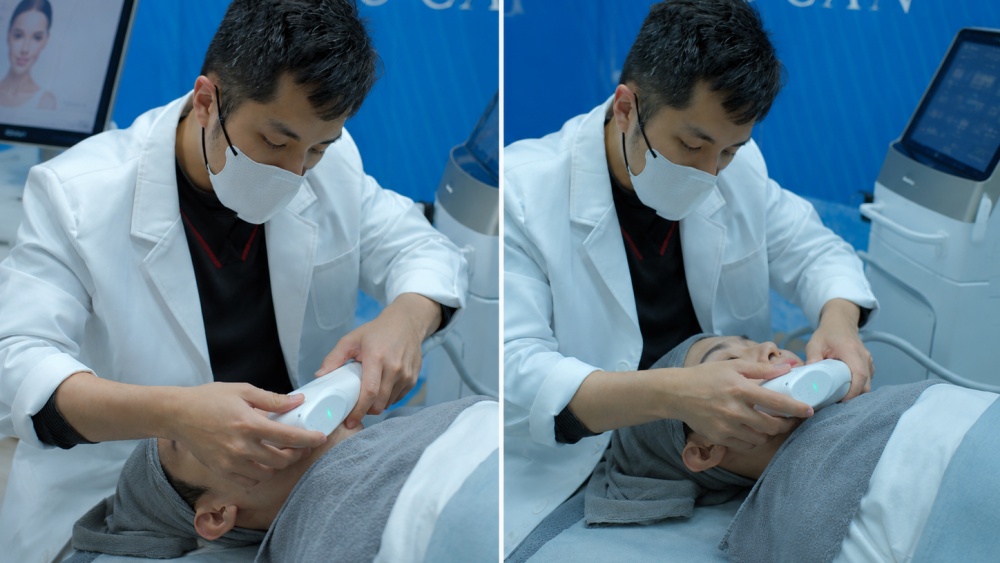
Visible Relaxation Preferred: Complex Treatment Programs
When laxity is already very visible, along with loose skin, sagging and hollowing of the face, a single aesthetic treatment may not be effective.
- Combination treatment: It may be paired with the golden combination of "Electro + Sonic", with the Electro tightening the epidermis and the Sonic lifting the deeper layers.
- Support Reconstruction: If sagging is accompanied by hollowing, such as in the 夫妻宮, or cheeks, it is recommended to use a collagen booster (e.g. Sulphuric Acid) or hyaluronic acid. Rebuilding the lost support structure before lifting, the effect will be natural and long-lasting.
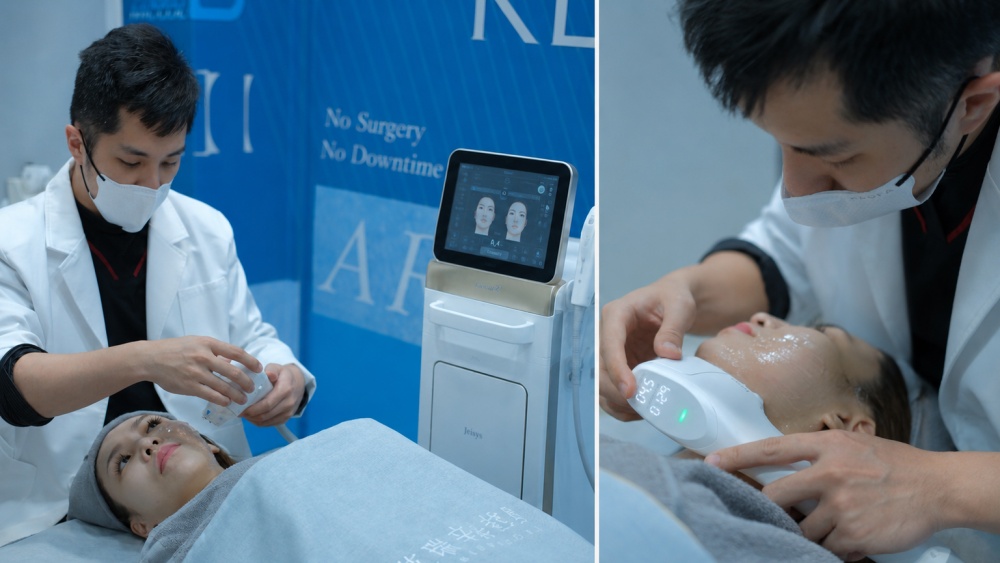
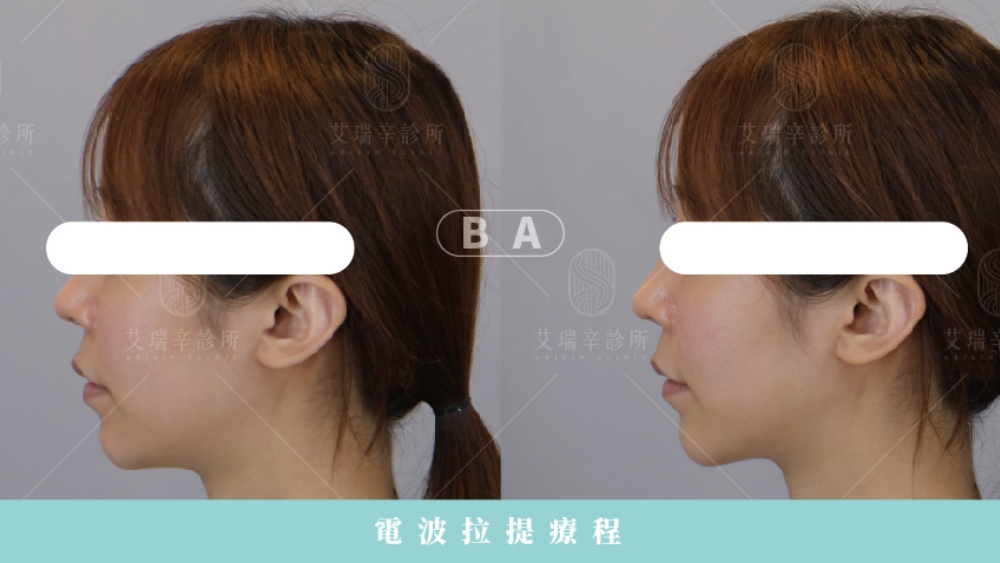
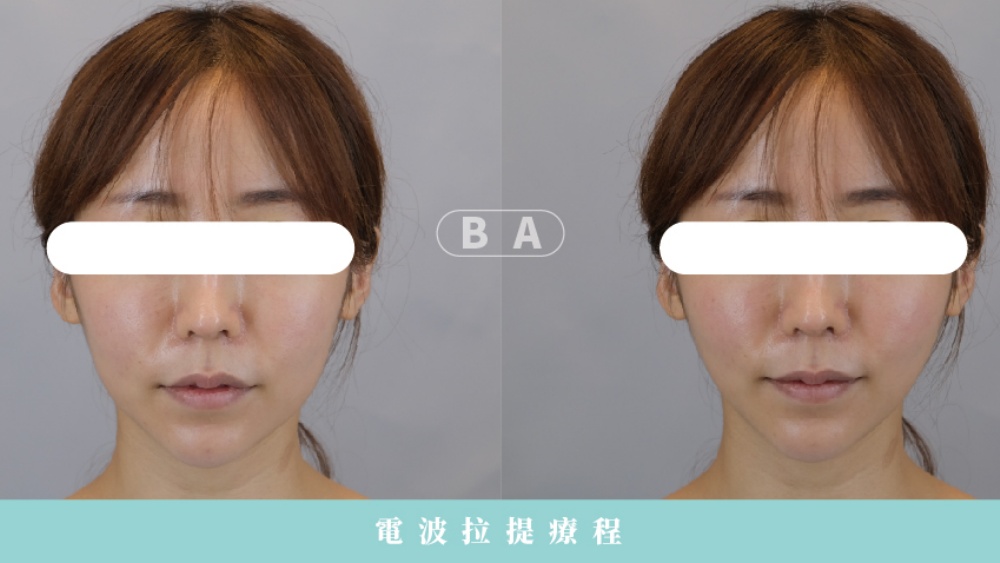
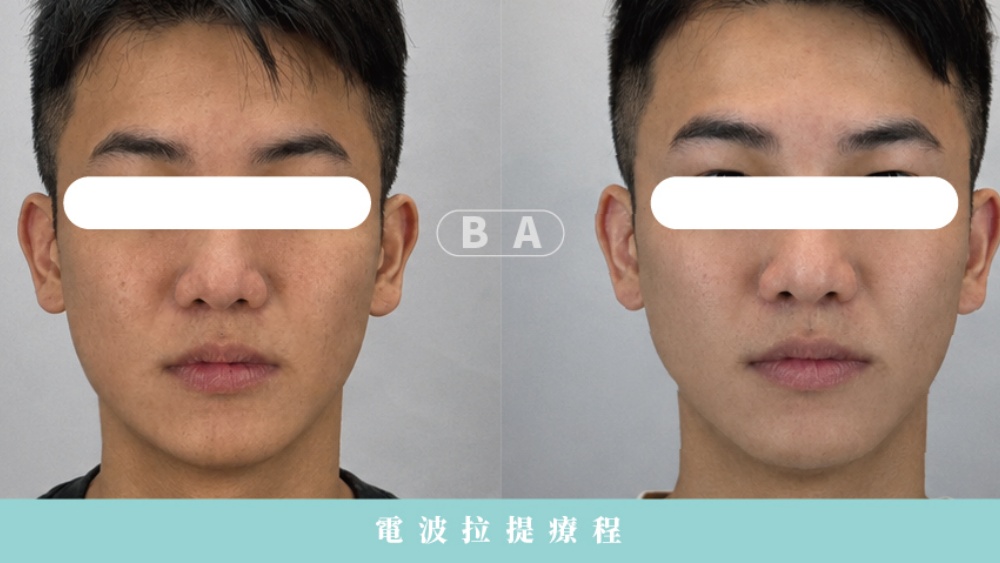
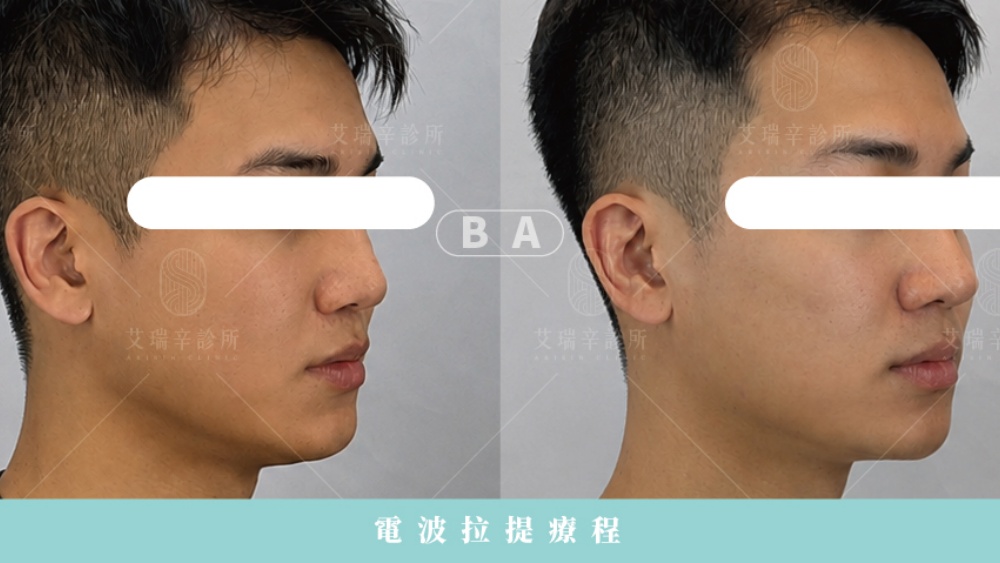
Case Study of Sagging Facial Improvement at Irisin Clinic 10Be
In a non-invasive procedure for sagging face10 THERMA is a medical aesthetic treatment that has attracted attention in recent years, using the unipolar radiofrequency (RF) technology produced by TENTECH in Korea.Through volumetric heating of the deep dermis, it stimulates collagen tightening and rejuvenation, helping to improve facial laxity, blurred jawline, and visible lines. Sopexa's Main FeaturesIntelligent adjustment when not locked與7-Stage Cooling TechnologyIt can be cooled before, during and after the energy output to minimize the risk of heat pain and burns. For users who want to tighten the jawline, lift the eye area and improve facial laxity, but are concerned about the pain of traditional radio waves or the recovery period of buried wires, it provides a new option with higher comfort, shorter recovery period and better safety.
Treatment Description:10 THERMA Shobei Radio|Tenfold Radio
MINT Lift|Mystic Lift Line
MINT LiftIt is a highly discussed thread in recent years, and is particularly suitable for treating the thicker, gravity-induced facial tissues of Asians, which tend to sag, with features that include:
- Integral Molding Technology: Traditional wire is cut to make the barbs, which can lead to thinning of the wire diameter and breakage of the wire after the operation, MINT Lift adopts a "patented compression molding process" to mold the barbs and the wire body in one piece, which provides the wire with higher tensile strength and support, and is less prone to breakage or displacement.
- 360-degree spiral distribution: The barbs are distributed in a 360-degree spiral on the line, which can grasp and fix the loose fat tissue in a comprehensive and three-dimensional way, and have a more even lifting effect on the "corners of the mouth" and the "jawline".
- Internationally Certified Safe: MINT Lift is a globally approved thread for use in "mid-face lift surgery", and is composed of absorbable PDO (polydioxinone), which is extremely safe.
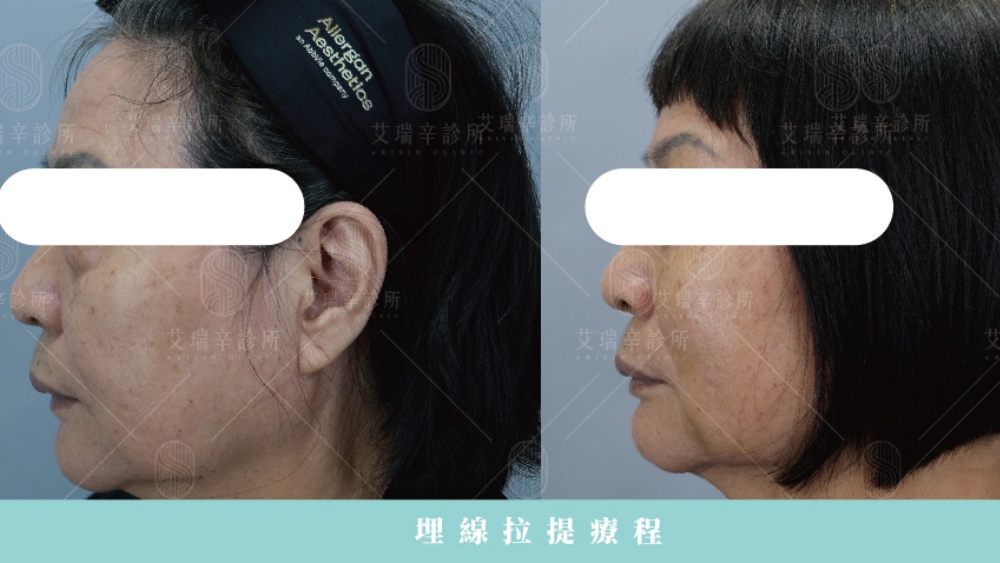
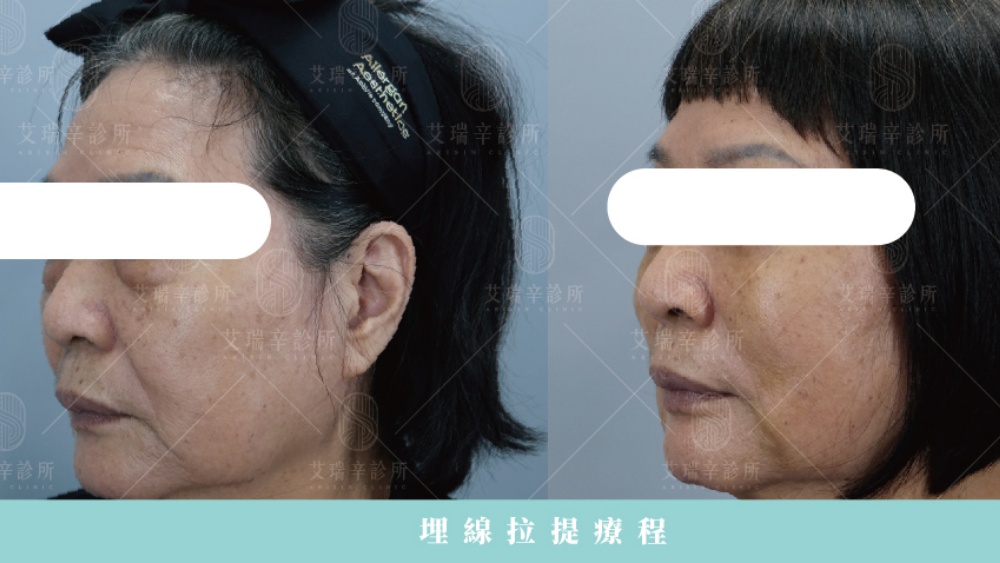
Overall, MINT Lift is very effective for the jawline, lifting the flesh around the mouth, and improving deep lines and marionette lines, etc. Moreover, as the threads are slowly absorbed into the body, they will continue to stimulate the production of collagen in the surrounding tissues, so that even after the threads have been metabolized, the skin's firmness and elasticity can be maintained for a certain period of time.
Treatment Description:MINT Lift|Mystic Lift Line
Hyaluronic Acid & Collagen Booster
Hyaluronic acid and collagen booster are the two mainstream injectable choices in medical micropigmentation. Although both can improve sagging and hollowing of the face, the logic is different: one is an "instant filler" and the other is a "self-growth activator":
- Hyaluronic Acid: Physical filler, injected directly into depressions or areas that need to be shaped, such as the root of the hill and the chin, can directly support the lost volume.
- Collagen Boosters: Common ingredients include Poly-L-Lactic Acid (PLLA), Poly-Double-Lactic Acid (PDLLA), etc. These ingredients are not simply fillers, but are injected thick to stimulate collagen regeneration for a more natural effect. Some collagen boosters are also combined with hyaluronic acid, such asVIVABELLAThe combination of Hyaluronic Acid and Polydicyclic Lactic Acid provides immediate filler support and long term stimulation of collagen growth.
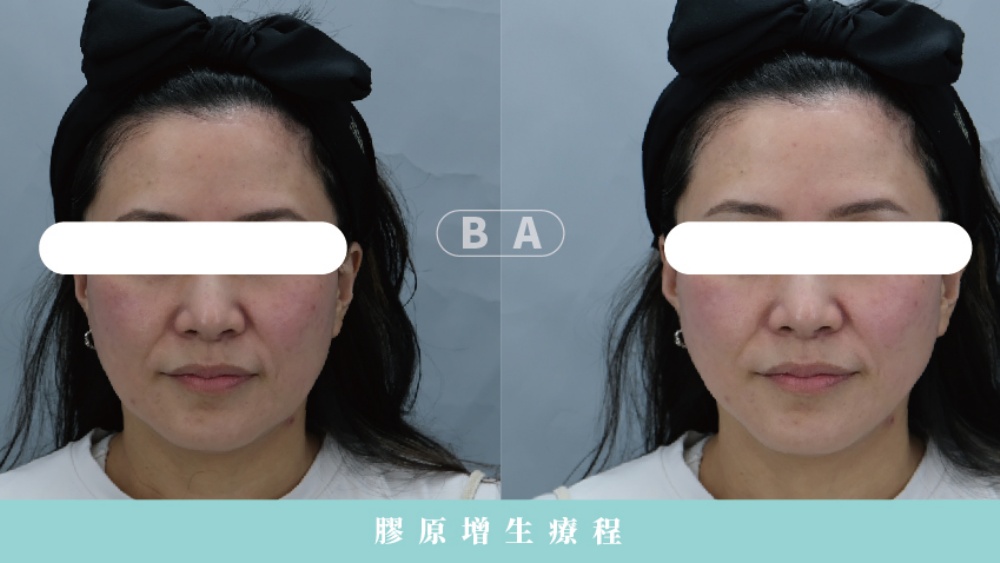
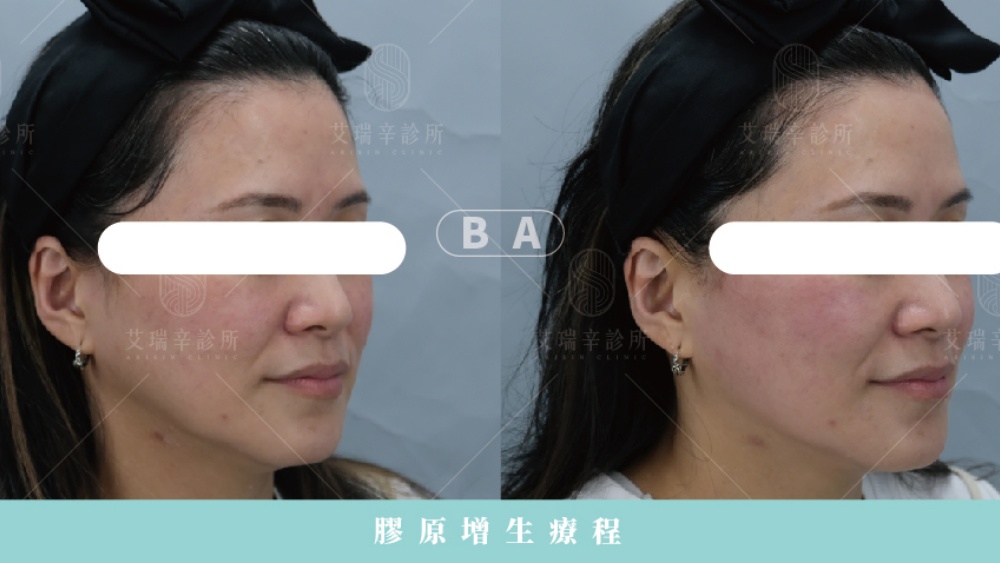
Treatment Description:Collagen proliferation、Hyaluronic acid filler
Sagging Facial Improvement Treatment Complete Procedure Description
Understanding the complete process of pre-operative counseling and post-operative recovery before undergoing aesthetic treatments can effectively reduce anxiety and ensure that the expected results are in line with the actual results.
Consultation Stage: How Doctors Evaluate the Extent and Location of Ptosis
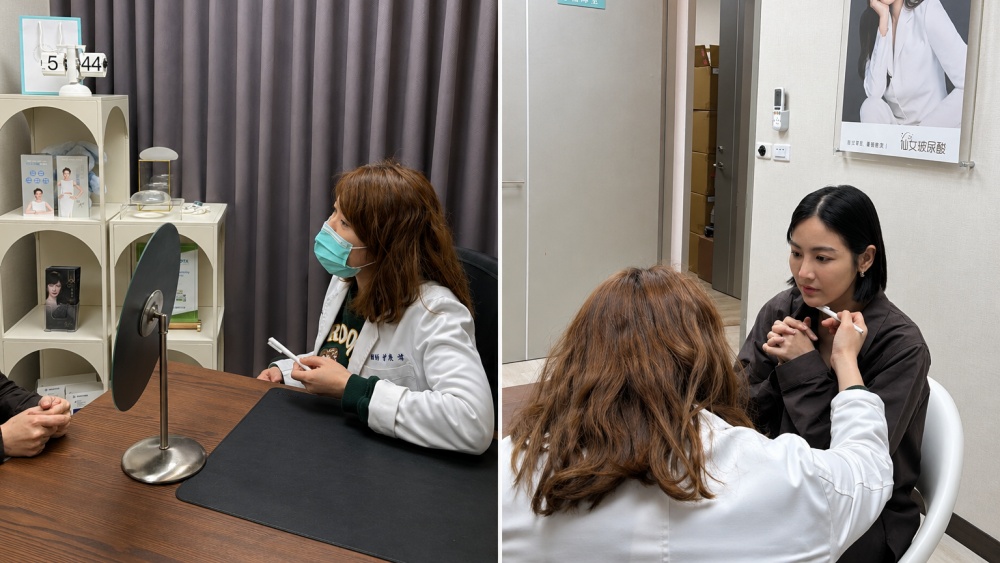
During the consultation, the doctor is not just looking at your face, but is also making a comprehensive dynamic and static assessment:
- Understanding skin elasticity: The surgeon will gently push on the facial tissues to test the skin's elasticity and determine whether the condition is simple skin loosening or tissue displacement.
- Dynamic observation: The doctor will ask you to make expressions such as laughing and skimming to observe the strength of the pull-down muscles and to confirm whether it is necessary to combine with Botox relaxation.
- Evaluate the support points: Check for hollows in the temples and apple muscles, which determine whether a simple lift or simultaneous fillers are needed.
Day-of-treatment process: how long it takes from check-in to check-out
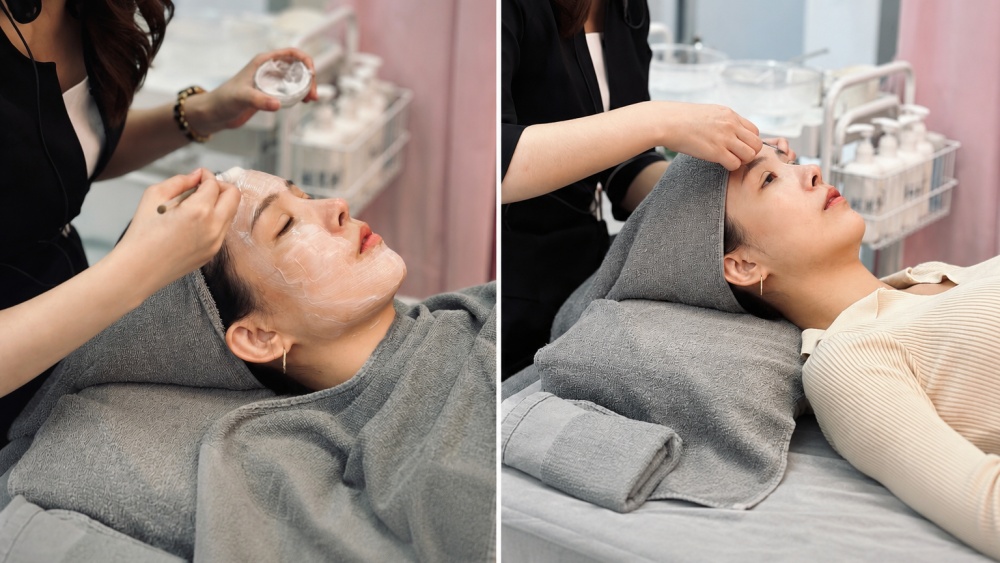
For example, it is recommended to allow 2 to 3 hours for the most common type of electro-acoustic treatment:
- Cleaning and Photographing (20 minutes): Documentation of the original pre-operative condition is the most important benchmark for evaluating the post-operative result.
- Numbing and Preparation (30-40 minutes): To enhance comfort, the nurse will apply a numbing agent to the skin.
- Physician's treatment (40-90 minutes): Depending on the number of rounds and the range, the more rounds and the wider the range, the longer the treatment time.
- Post-operative calming (20~30 minutes): After the operation, the nurse will help you with simple moisturizing and ice packs to relieve the heat sensation.
Day 1-3: Skin Condition and Care Highlights
The skin will be slightly inflamed during this time, but this is the key to kick-starting your self-healing process.
- Skin Condition: There may be some slight swelling, slight pain and swelling when pressed (more noticeable with sound waves), or the skin may feel hot to the touch.
- Care focus: to do a good job of moisturizing and sunscreen, while avoiding the use of acid-containing or exfoliating products, and do not immediately go to the three warm or hot springs, so as to avoid overstimulation.
1st week to 1 month after surgery: Tightness change and recovery process
During this time, the edema will subside, the skin condition will begin to stabilize, collagen will begin to grow, and the skin will begin to feel firmer.
At the end of the treatment: When will the effect be most visible? Do I need to do additional work?
The effect of the treatment will reach its peak in 3 to 6 months, when you will find that your face feels firmer when you wash it and your contour lines become clearer. Generally speaking, the effect of ultrasound can last for 1 to 1.5 years, but it is not recommended to wait until the effect has completely faded to have the treatment done again. It is recommended to have regular maintenance every year to keep the skin in the best condition, which is more time-saving and natural than starting the treatment again after the face has sagged.
How to prevent sagging face?
If you don't want your face to sag, you should start at a younger age. If you start taking care of your face in your 20's and 30's, you'll be able to save more energy than if your face starts to sag in your 40's and 50's.
Preventive Habits to Start in Your 20s and 30s
The 20's and 30's are the prime years to fight sagging:
- 20's Focus: Maintain metabolism and regularity. This is a time of great resilience, so the focus is on not overdoing the damage. Avoid late nights and overeating, a stable endocrine environment is the friendliest way to help collagen synthesis.
- 30 years old: Anti-aging stage. Collagen loss starts to accelerate at this time, so it is recommended to use products containing A-alcohol or peptides, as well as massage to relax the deep muscles and lift the face.
Sunscreen + Antioxidant Daily Establishment
If you want to prevent aging and sagging of the face, sunscreen is indispensable. Sunscreen is not something to be applied only when there is sunlight, but as long as you are outdoors, you should apply sunscreen to protect your skin. Diet and nutrients can focus on ingredients and nutrients that help collagen synthesis and antioxidants, such as vitamin C, A-alcohol, anthocyanins, polyphenols and so on.
Avoid NG behaviors that accelerate sagging
- Habitual bowing: When you look down at your cell phone for a long time, your neck muscles will be in a state of contraction for a long time, which will produce a downward traction force, directly pulling down your jawline.
- Frequent eye rubbing and makeup removal: The skin around the eyes is extremely thin, and repeated rubbing and wiping can lead to fine lines, sagging eyelids and puffiness.
- Eating too much refined sugar: Eating too many sweets can cause a "glycation reaction" that makes collagen brittle and hard.
- Suddenly fat and thin: the body weight fluctuations will repeatedly support the skin, shrinking the skin, and over time the skin will lose elasticity, and can never return to the firm state.
Sagging Face FAQ
Can sagging face be completely recovered?
It is very difficult. Currently, medical aesthetics can visually reverse ageing and improve and delay sagging, such as radio waves, sound waves or buried threads, which can allow displaced tissues to return to a relatively young position, increase skin thickness, and look more refreshed and firmer than their actual age, but aging is an irreversible physiological process, and it is impossible to reverse ageing and return to the state of 20 years old.
Which is better, home care or aesthetic?
The two are complementary. Aesthetic treatments are like one-time major maintenance, while home care is a daily maintenance. Without aesthetic treatments, it is difficult to deal with obvious sagging problems; without daily maintenance, the effects of aesthetic treatments will be lost very quickly.
Do boys have droopy faces too?
Yes, and it can be worse. Men's skin is usually thicker and has less fat, and in the early stages it may look older than women's. But once it starts to sag, the resulting lines and blurring of the jawline are usually very noticeable because of the greater weight of the skin. But once it starts to sag, the resulting lines and jawline blurring are usually very noticeable due to the heavier weight of the skin. In addition, men are more neglectful of sun protection, which can lead to early onset of photoaging.
At what age should I start preparing for sagging face improvement?
The earlier the better. Starting from the 20s to develop the habit of sun protection, 30 years of age, collagen loss is greater than synthesis, in addition to daily maintenance, you can also consider non-invasive medical aesthetics to maintain the skin condition, do not wait until the face is already sagging to deal with, and then need to be much more complex and costly treatments.
Is sagging of the face related to "orthodontics" or "missing teeth"?
It is very relevant. The soft tissues of the face are supported by the skeleton. If the gums shrink due to missing teeth, or if the skeleton's support changes due to tooth extraction during orthodontic treatment, the skin will lose its original support and become saggy.
Make an appointment today for a professional evaluation at Aresin Clinic to improve sagging and restore a youthful contour!

As we age and lose collagen, the contours of the face gradually sag, making the overall complexion look tired and aged.
Aresin Clinic provides professional and detailed personalized assessment services, in-depth analysis of facial structure, aging and needs, tailored to plan the most suitable improvement program, to help you restore a firm, natural and three-dimensional youthful contour.
Make an appointment today for a professional evaluation at Aresin Clinic, and let our team of doctors work with you to restore your confidence and youthfulness.
Extended Reading: