

Are you troubled by persistent indentations and red marks that won’t fade? Arixin Clinic provides an in-depth analysis of the six major laser principles—picosecond, fractional, UP, CO2, dye, and erbium-yttrium-aluminum-garnet (Er:YAG) lasers, along with the latest pricing trends in Taichung, key post-treatment care tips, and combined treatment pathways. Our professional physicians will guide you in choosing the right clinic and developing a personalized combined scar treatment plan to help you regain your confidence!
Articles
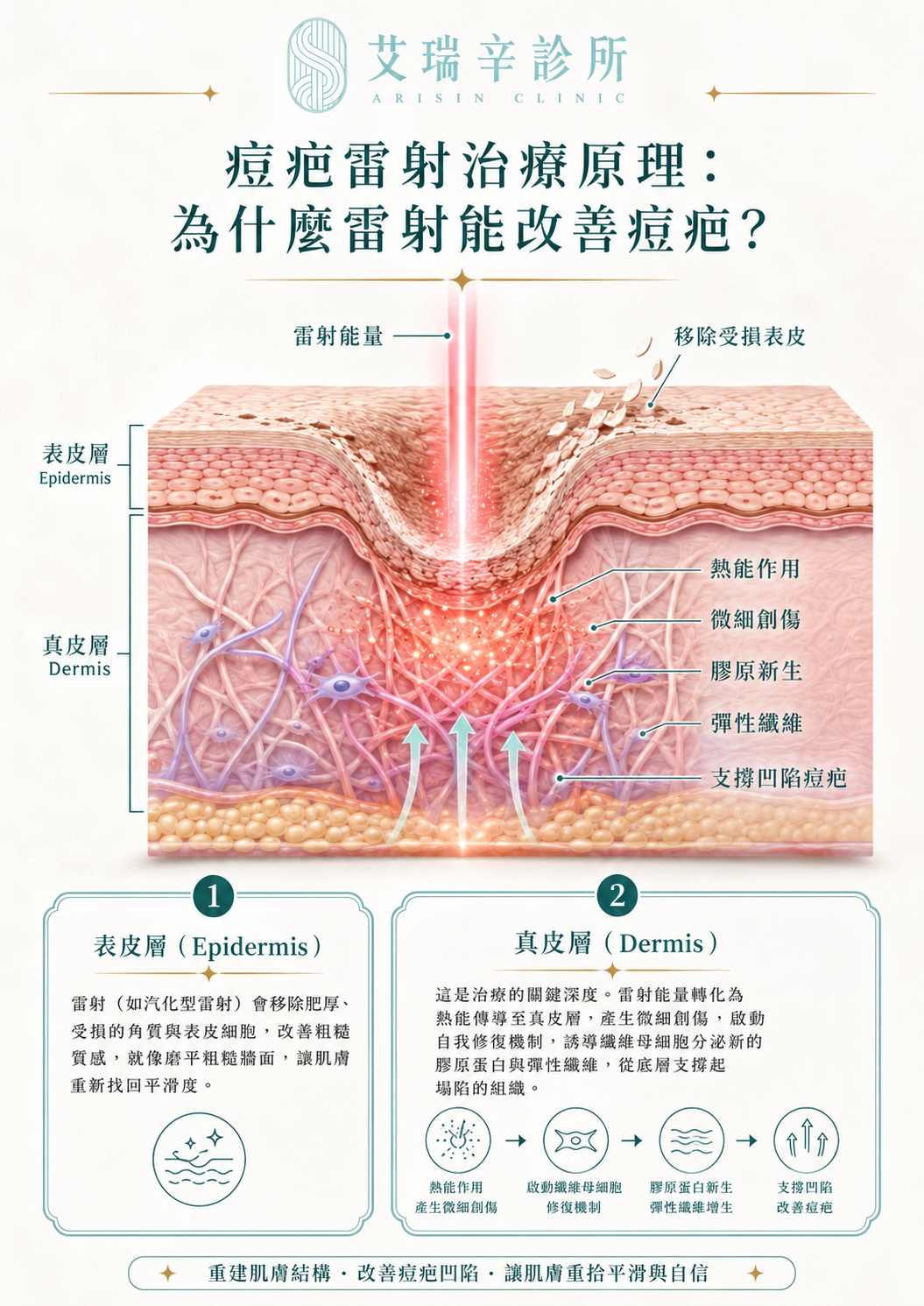
The Principles of Laser Treatment for Acne Scars: Why Can Lasers Improve Acne Scars?
Lasers can treat acne scars because their energy removes the damaged outer layer of skin while simultaneously promoting the production of new collagen.
How Lasers Affect Different Layers of the Skin
Unlike applying ointments to the skin’s surface, laser energy not only acts on the skin’s surface but also penetrates beneath it to stimulate collagen regeneration:
- Epidermis:Lasers (such as ablative lasers) remove thickened, damaged keratin and epidermal cells, addressing rough texture. This is similar to sanding down a rough wall, allowing the skin to regain its smoothness.
- Dermis:This is the key depth for treatment. Laser energy is converted into thermal energy and conducted into the dermis, creating microscopic injuries. These micro-injuries activate the body’s self-repair mechanisms, inducing fibroblasts to secrete large amounts of new collagen and elastic fibers, which provide underlying support for sagging tissue.
Differences in the Mechanisms of Laser Treatment for Atrophic Scars and Pigmented Scars
Although both depressed scars and hyperpigmented scars are referred to as “acne scars,” depressed scars involve structural damage, while hyperpigmented scars result from pigment deposition; the underlying principles of laser treatment for the two are completely different:
- Depressed Scars (Atrophic Scars):The goal is to help the tissue regenerate. When laser energy penetrates the subcutaneous layer, it creates numerous microscopic wounds, prompting the skin to activate its repair mechanisms and stimulate collagen production in the resulting spaces, thereby filling in the depressions from the bottom up.
- Pigmented Scars:The goal is to break down and accelerate the metabolism of pigmented scars. Pigmented acne scars can be categorized as “red acne scars” and “dark brown acne scars.” A study published in *The Journal of Clinical and Aesthetic Dermatology* indicates that red acne scars, also known as “post-inflammatory erythema,” are associated with dilation of capillaries resulting from post-inflammatory wound healing; dark brown acne scars, on the other hand, are “post-inflammatory hyperpigmentation,” which occurs because acne releases inflammatory factors during the inflammatory process, stimulating melanocytes to produce large amounts of melanin as a self-protective mechanism.
Therefore, to treat pigmented scars, you need to target the microvasculature and the pigment:
- Red Acne Scars:Specific laser energy is absorbed by hemoglobin, causing dilated capillaries to coagulate or constrict, thereby reducing redness.
- Dark brown acne scars:The laser's energy shatters large clusters of pigment into fine particles, allowing the body to metabolize them more effectively.
Laser vs. Non-Laser Treatments: When Is Laser the Best Choice?
In addition to laser treatments, common acne scar treatments include chemical peels, microneedling, and subcutaneous peeling. Laser treatment is typically the preferred option in the following three situations:
Moderate to Severe Depressed Acne Scars
For deeper ice-pick or boxcar acne scars, laser energy can be precisely adjusted to control the depth, offering greater capacity to remodel deep tissues than non-invasive treatments. The American Academy of Dermatology also notes that for deeper acne scars, doctors typically recommend laser treatment as the first-line option, followed by dermal fillers as a supplementary treatment.
There are several types of acne scars
If you have pigmentation, acne scars, and enlarged pores on your face at the same time, a combination treatment is needed—that is, a treatment that combines laser therapy, injections, or surgery. In practice, we sometimes start with laser treatment to assess the skin’s post-treatment response before developing a plan for the next session.
Pigmented acne scars that won't fade
Red acne scars are caused by dilated capillaries and may gradually fade over time; however, if they persist for more than six months without fading, laser treatment can help them fade quickly.
Dark acne scars are the result of melanin deposition. While some topical acid-based skincare products can help, they take a long time to lighten the scars; however, picosecond laser treatment can quickly break down melanin, leading to much faster improvement.
How can you determine what type of acne scar you have?
Based on the characteristics of the various types of acne scars mentioned above, you can easily determine which type of acne scar you have on your face.
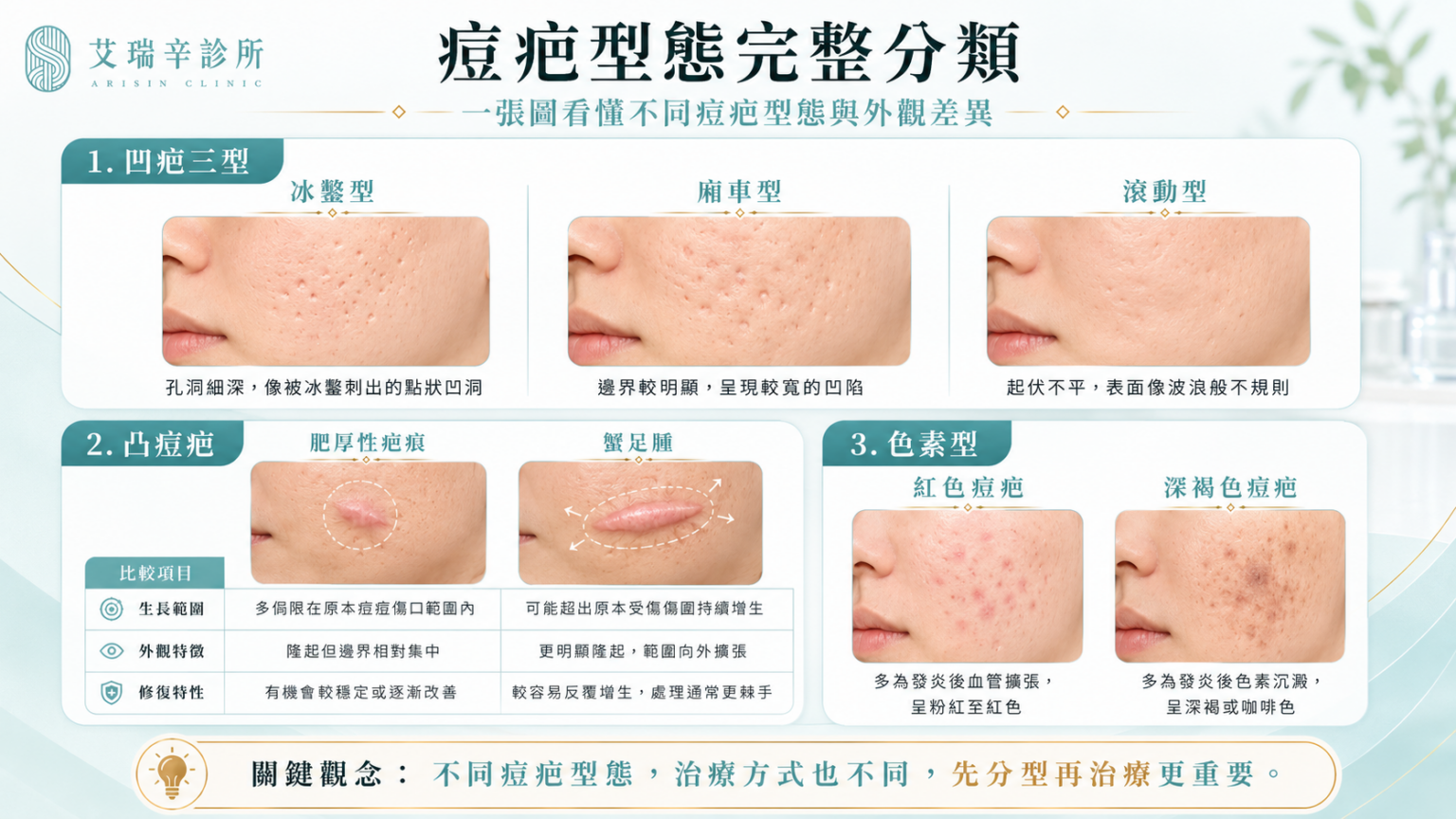
Pigmented Acne Scars
Red Acne Scars:
- Appearance: Pink or dark red in color.
- Test Method: Gently press with your finger; the color will temporarily turn white, then turn red again when you release your finger.
Black Acne Scars:
- Appearance: Light brown, coffee-colored, or black.
- Test Method: There is no noticeable change in color when pressed.
Pitted Acne Scars
- Ice Pick Type:The opening is narrow and extremely deep; it looks as if it had been pierced by an ice pick.
- Van Models:The edges are sharply defined, like marks left by fingernails.
- Scrolling Type:Rising and falling like waves.
Raised Acne Scars
- Hypertrophic Scars:The area is limited to where the pimple originally appeared.
- Keloid:The scar tissue spreads outward, extending beyond the original area of the pimple.
However, most people have a combination of acne scars—for example, they may have different types of depressed acne scars on their face at the same time, or they may have both depressed and hyperpigmented acne scars. So, if you’re unsure what type of acne scars you have, you can visit Arixin Clinic, where professional doctors will provide an accurate assessment based on texture and appearance.
What types of scars are suitable for laser treatment?
Laser treatment is not a cure-all; it is most effective for treating uneven pigmentation and superficial tissue reconstruction. The doctor will determine whether laser treatment is appropriate based on the depth of the scar, the sharpness of its edges, and whether it is accompanied by redness or swelling.
Scar Types Best Suited for Laser Treatment: Pigmented Scars, Superficial Atrophic Scars
- Pigmented Acne Scars:Red acne scars caused by telangiectasia can be treated with dye lasers or intense pulsed light (IPL); melanin deposits can be treated with picosecond lasers, which can precisely break up melanin clusters.
- Shallow Scars:If the scar has indistinct edges and is not very deep, the thermal energy generated by picosecond or fractional lasers can effectively stimulate the production of collagen beneath the skin, helping to fill in the indentations.
Laser Treatments Combined with Other Procedures: Deep Ice-Chisel Type, Raised Scars
- Deep-Ice Drill Type:This type of scar has a small opening but is extremely deep, so a collagen-stimulating agent is sometimes needed to achieve the desired results.
- Scars:Hypertrophic scars result from excessive collagen proliferation, so the treatment goal is to inhibit this proliferation. Dye lasers can destroy blood vessels, preventing the continued delivery of nutrients and oxygen to the acne scars, and can be combined with steroid injections to suppress fibroblast activity.
Mixed Acne Scars: When to Combine Laser Treatment with Other Procedures
- Subcutaneous Dissection + Laser:For depressed scars caused by deep fibrous bands—particularly rolling acne scars—the first step is to physically sever the downward-pulling fibers, followed by laser treatment to stimulate tissue regeneration. This approach results in the fastest recovery of the depressed area.
- TCA Local Chemical Peel + Laser:For ice-pick acne scars, high-concentration trichloroacetic acid (TCA) is sometimes applied precisely to the bottom of the pits to stimulate deep repair, followed by full-face laser treatment to improve overall skin texture.
- Topical/Oral Medications + Laser Treatment:If you still have inflamed acne on your face, you should first use medication to control the inflammation. Undergoing laser treatment during the late inflammatory stage, when scars are just beginning to form, is the optimal time to prevent the development of permanent, deep pitted scars.
Fractional Laser: Smoothing Rough Skin and Repairing Severe Acne Scars and Pits
At the core of fractional laser technology is fractional photothermolysis. Unlike traditional lasers, which ablate the entire epidermis, fractional lasers emit countless microscopic energy beams as fine as a strand of hair, creating a pattern of tiny holes in the skin.
Principle of Fractional Laser: Non-ablative Fractional Technology
- Precise Heat Conduction:The energy penetrates the epidermis, generating a thermal effect in the dermis that induces collagen reorganization.
- Preserving Healthy Tissue:Between each small thermal effect zone, a large amount of intact skin tissue remains. This undamaged tissue acts as a bridge, facilitating the migration of growth factors, stem cells, and healthy cells, thereby accelerating wound healing.
Suitable for: Fractional laser treatment can be used for all types of scars, including depressed scars.
Fractional laser treatment is particularly suitable for treating scars that have caused structural damage but have not yet penetrated deep into the subcutaneous tissue:
- Indentations:Whether it’s a box-shaped acne scar with relatively sharp edges and a flat base, the micro-needling treatment can soften the edges and fill in the indentation from the bottom; or if it’s a deeper, ice-chiseled-type acne scar, the micro-needling’s energy can penetrate deep into the skin to help it regenerate.
- Enlarged Pores and Fine Lines:In addition to treating acne scars, fractional laser therapy is also commonly used to reduce enlarged pores caused by long-term inflammation and improve the texture of damaged skin.
Number of Treatments, Recovery Period, and Duration of Results
The effects of fractional laser treatment are cumulative; results are usually not achieved in a single session.
| Recommended Number of Treatments | We recommend 3 to 6 treatment sessions, spaced approximately 4 to 8 weeks apart. |
| Recovery Period Status | There will be a period of mild redness and swelling for about 3 to 5 days after the procedure. This will be followed by the formation of fine, sand-like scabs, which will fall off naturally within about a week. |
| Time to See Results | Collagen regeneration takes time, and the best results are usually most noticeable 3 to 6 months after treatment. |
| Duration | The filled-in indentations result from the proliferation of the body’s own tissue, and the results are typically permanent. However, the skin naturally loses collagen as it ages, so daily skincare remains very important. |
Reference Prices for Fractional Laser Treatments in Taichung
For localized treatment, fractional laser treatments cost approximately 5,000 to 8,000 yuan; for a full-face treatment, the cost ranges from approximately 15,000 to 35,000 yuan.
Honeycomb Picosecond Laser: Improves Pigmentation and Superficial Scars
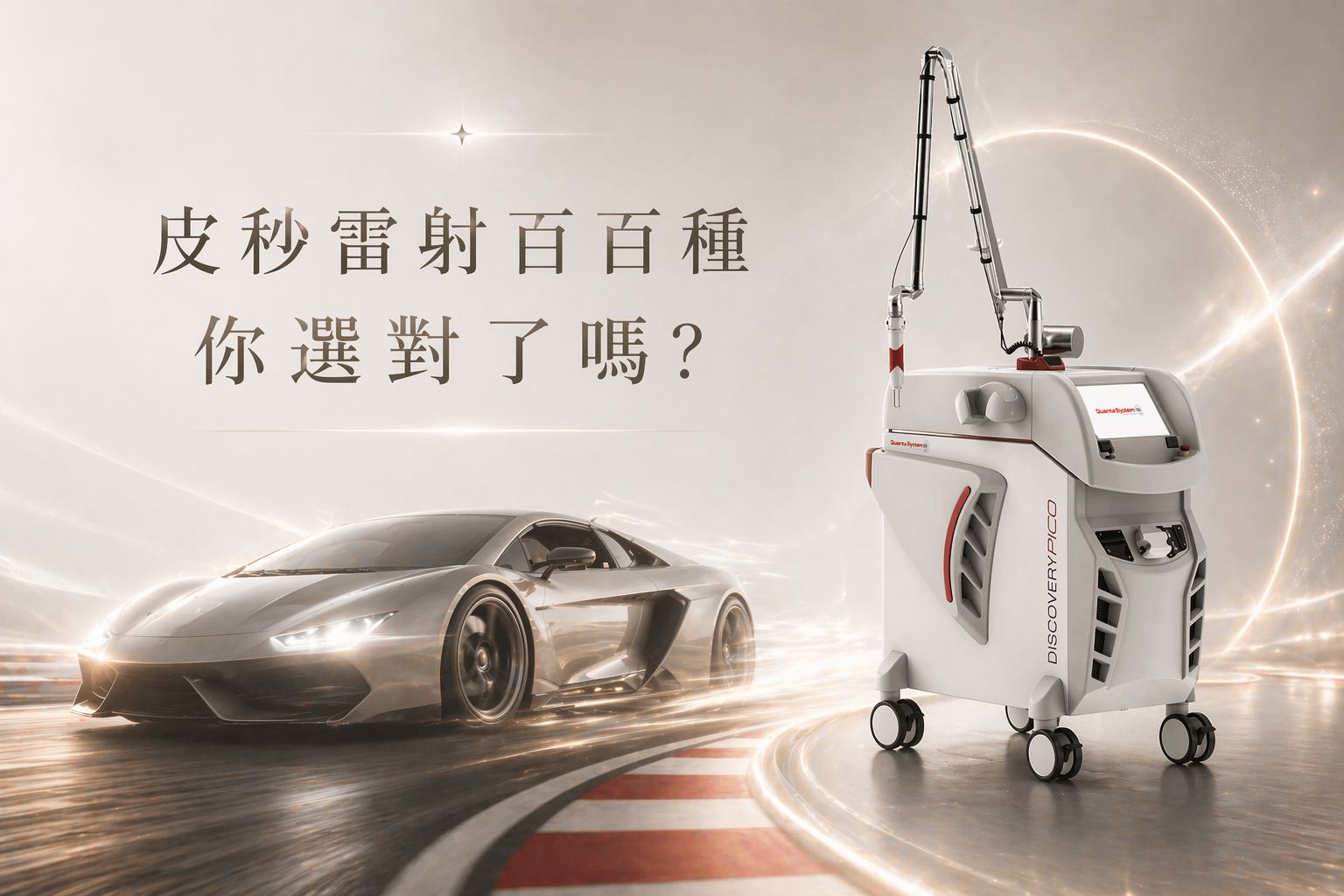
The advantage of picosecond lasers is that they reduce the laser pulse duration to “picoseconds”—a unit of time much shorter than the microseconds used in traditional lasers. Combined with the photomechanical effect, this allows for greater precision and reduced thermal damage when treating acne scars.
How Picosecond Lasers Work: How Ultra-Short Pulses Break Down Pigment
Traditional lasers primarily rely on thermal energy to ablate melanin, whereas picosecond lasers, due to their extremely short pulse duration, generate a powerful pressure shockwave before the energy can be converted into heat and damage surrounding tissue. This shatters the melanin clusters, making it easier for phagocytes to engulf and metabolize them, resulting in much faster pigment lightening compared to traditional lasers.
Suitable for: Depressed scars, hyperpigmented acne scars, and red acne marks—the top choice
- Indentations:Picosecond lasers are equipped with special lenses, such as honeycomb lenses, which enable them to induce the “laser-induced cavitation effect (LIOB)” in the dermis. This stimulates collagen production without damaging the epidermis, thereby smoothing out depressions.
- Pigmented Acne:Picosecond lasers break down melanin, allowing the body to metabolize it more quickly; as for red acne scars, the picosecond laser alters the structure of the damaged dermis, and once the body repairs itself, the skin becomes healthier, which indirectly improves the appearance of red acne scars.
Picosecond vs. Fractional: The Most Common Questions Comparing the Two
Picosecond and fractional lasers are two types of lasers commonly used to treat acne scars, but these two methods differ in terms of recovery time and pain levels:
| picosecond lasers | Shuttle Laser | |
|---|---|---|
| principle | Optical Shock Wave Effect | Photothermal Effect |
| Key Features | Breaks down pigmentation, shrinks pores, and treats shallow scars | Tissue Reconstruction, Suitable for Most Deep and Shallow Scars |
| restoration period | Mild redness may last for about 1 to 3 days; scabbing usually does not occur. | After about 5 to 7 days, a fine scab will form. |
| compassion | It's a mild sensation, like a rubber band snapping. | Stronger |
| Advantages | Small postoperative incisions, minimal risk of hyperpigmentation, and refined results | Strong deep-layer regeneration capabilities; more effective on indented scars |
| Disadvantages | Results are slower for deep, severe scars | The recovery period is relatively long |
Reference Prices for Picosecond Laser Treatments in Taichung
The cost of a single picosecond laser treatment ranges from approximately 3,000 to 12,000 yuan. For deep acne scars that require the use of a special honeycomb lens, the price is often higher, averaging between 8,000 and 15,000 yuan or more per session.
Picosecond Laser Treatment Cases at Taichung Arixin Clinic
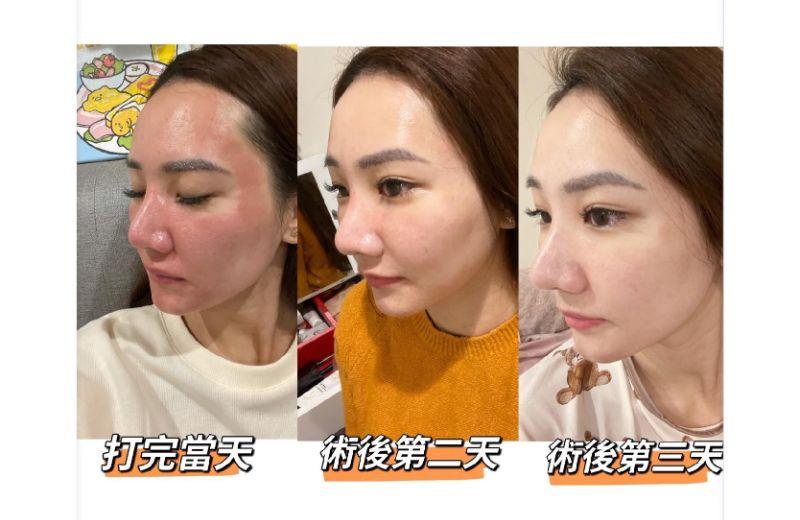
Even those with sensitive skin can undergo picosecond laser treatment! People with sensitive skin often worry that picosecond laser treatment will make their skin even more sensitive, but as long as their skin is in a stable condition before the procedure, those with sensitive skin can give it a try. If you’re interested in picosecond laser treatment but aren’t sure if it’s right for you, consult Arixin Clinic in Taichung. Our doctors will not only provide a comprehensive consultation but also offer detailed information on how to stabilize your skin—so even if you have sensitive skin, you can still undergo the treatment!
CO₂ Fractional Laser: Treatment for Deep Pitted Acne Scars and Reconstruction of Resistant Tissue
Carbon dioxide fractional laser treatment can vaporize hardened acne scars and stimulate collagen production in the skin. A 2025 retrospective analysis published in the journal *Life* on the use of CO₂ fractional lasers to treat acne scars found that the appearance of scars improved by 30% to 70% in most patients, confirming that CO₂ fractional laser therapy is an effective treatment for acne scars.
Principle of CO2 Fractional Laser: Vaporization-Based Skin Resurfacing
Carbon dioxide lasers operate at a wavelength of 10,600 nm; when absorbed by water in the skin, the laser energy causes vaporization and generates high temperatures, which destroy and remove damaged tissue structures. In addition to removing tissue, the heat generated penetrates deep into the dermis, causing lax collagen fibers to contract immediately and stimulating collagen production.
Suitable for: Deep, fibrotic atrophic scars; severe scar remodeling
Carbon dioxide laser treatment is an effective method for treating severe depressed acne scars, particularly boxcar and ice-pick scars:
- Deep-body type:A carbon dioxide laser used in fractional mode can smooth out edges and stimulate muscle contraction, reducing the appearance of unevenness.
- Severely fibrotic tissue:For acne scars that feel hard to the touch, the thermal energy from a carbon dioxide laser can break down the stiff fibrous tissue.
- Scars:For hypertrophic scars, keloids, or raised acne scars, the carbon dioxide laser can vaporize and remove excess tissue.
Explanation of the Number of Treatment Sessions, Recovery Period, and Time Off Work
Carbon dioxide lasers deliver higher energy levels, and the recovery period may be the longest among all laser treatments, requiring particularly careful postoperative care.
- Number of sessions:Depending on the severity of the scar, 3 to 5 sessions are typically required, with a recommended interval of 2 to 3 months between each session to allow the skin sufficient time to repair the hyperplasia.
- Recovery Process:
- Days 1–2: Severe sensation of swelling and heat, discharge of tissue fluid, or slight bleeding.
- Days 3–7: Scabbing begins, and the entire face is covered with fine, small black dots.
- Days 7–10: The scab falls off naturally, revealing pink new skin.
- Recommendations for the Shutdown Period:We recommend setting aside 5 to 7 days to rest at home, as the surgical wound must be kept clean and wearing makeup is not recommended. Additionally, CO₂ laser treatments carry a higher risk of hyperpigmentation, so strict physical sun protection is required.
Taichung CO2 Laser Cost Guide
- Localized treatment (e.g., both cheeks): Approximately 4,000 to 8,000 yuan
- Full-Face Treatment (Standard Fractional Laser): Approximately 8,000 to 15,000 yuan
UP Laser: Deep Repair, Breaking Down Fibrotic Acne Scars and Deep Indentations
The UP laser is an advanced version of the carbon dioxide laser. It delivers higher energy than the carbon dioxide laser and can penetrate deep into the skin to vaporize abnormal tissue; it is specifically used to treat deeper, more severe pitted acne scars.
UP Laser Principle: Ultra-Fast Pulsed Vaporization and Dermal Remodeling
- In-Depth Analysis:The energy penetrates up to 4 mm (reaching the deep dermis and subcutaneous tissue), which is deeper than that of typical fractional or picosecond lasers.
- Ultra-short pulses:The short pulse duration means that the target scar is vaporized before the heat has a chance to spread and burn the surrounding healthy skin.
- Collagen Remodeling:Through thermal effects and physical vaporization, the UP laser precisely cuts through the thickened fibrous tissue in atrophic scars, stimulating new collagen production to achieve structural remodeling from the inside out.
Suitable for the following scar types: deep depressed scars, boxcar scars, and ice-pick scars
- Ice Pick Type:This is the most difficult type of scar to treat; the UP laser is one of the few lasers capable of penetrating directly to the bottom of the scar to vaporize the tissue and stimulate healing.
- Deep-body type:For scars with steep edges and deep depressions, it effectively smooths the edges and lifts the depressed area.
- Burns and Scars / Surgical Scars:For severe fibrotic contractures, the UP laser can also soften the tissue and improve its appearance.
Explanation of the Number of Treatment Sessions, Recovery Period, and Time Off Work
UP lasers are powerful and effective, but they also have a significant impact on the skin.
- Number of sessions:Since the UP laser has higher energy, some people may see their acne scars lighten after just one session; however, for severe pitted scars, we recommend 3 to 5 sessions, spaced 2 to 3 months apart.
- Recovery Process:
- Days 1–3: The wound may ooze a small amount of blood or tissue fluid; apply ointment as directed by your doctor.
- Days 3–7: Dense, fine scabs form (smaller than those produced by traditional CO₂ lasers), which then fall off naturally.
We recommend allowing 7 days for recovery. During this time, your skin will be more sensitive, so try to avoid wearing makeup and exposure to the sun, and be sure to keep your skin well-moisturized.
Taichung UP Laser Cost Guide
Based on the treatment area, the typical price range for a single UP laser treatment session is approximately as follows:
- Full-face treatment: Approximately 15,000 to 35,000 yuan.
- Localized treatment (e.g., both cheeks): Approximately 10,000 to 15,000 yuan.
- Specific Scars / Small Number of Hair Strands: Charges are based on area or length and may start at several thousand yuan.
Dye Laser: Treatment for Raised Scars and Red Acne Scars
A dye laser is a type of laser used to treat facial redness. Red acne scars are caused by dilated blood vessels; the dye laser can break down and constrict these vessels, thereby fading the red acne scars.
Principles of Dye Lasers: Selective Photothermal Decomposition and Vasoconstriction
Dye lasers use specific wavelengths whose energy is absorbed by hemoglobin, thereby destroying blood vessels and causing vasoconstriction:
- Vascular Coagulation:Once the laser energy penetrates the skin, it is converted into heat, causing the dilated capillaries to heat up instantly, coagulate, and subsequently contract and be destroyed.
- Inflammation Suppression and Transport:By controlling the microvasculature, it is possible to reduce blood flow to the affected area, thereby reducing the inflammatory response and abnormal tissue proliferation.
Suitable for the following scar types: red acne scars (post-inflammatory erythema), hypertrophic scars, and keloids
- Red Acne Scars:This is where dye lasers really shine. The dilated capillaries that result from inflamed acne can leave behind persistent red marks, which dye lasers can quickly shrink and fade.
- Hypertrophic Scars (Raised Scars):When scar tissue becomes overgrown and appears red, dye lasers can cut off the blood supply, causing the thickened scar to gradually shrink and flatten.
- Keloid:As part of a combination treatment, dye lasers can destroy the blood vessels in keloids, cutting off their nutrient supply and reducing the itching and thickness of the keloids; they are often used in conjunction with steroid injections.
- Inflamed Acne:Laser treatment can kill Propionibacterium acnes and reduce the redness and swelling associated with inflammation.
Explanation of the Number of Treatment Sessions, Recovery Period, and Time Off Work
Dye lasers are characterized by being non-invasive, which is very convenient for busy people:
- Recommended Number of Sessions:Generally, red acne scars require about 3 to 5 sessions, with about 4 weeks between each session.
- Recovery Status:
- Immediately after surgery: The skin may be slightly red and swollen, but this usually subsides within a few hours.
- Purpura: If the doctor uses a higher energy level (typically for raised scars or severe vascular issues), bruise-like “purpura” may appear, which will fade on its own in about 7 to 10 days.
Generally speaking, after dye laser treatment, you can wash your face and follow your regular skincare routine. If no bruising occurs, you can apply makeup as usual the next day, but you should pay special attention to moisturizing and sun protection.
Reference Prices for Dye Laser Treatments in Taichung
- Single session for the entire face or large areas: Market rates range from approximately 5,000 to 15,000 yuan.
- Localized/Per-Spot Billing: If treatment is limited to just a few red acne scars, some clinics charge by the "spot," with each spot costing approximately 80 to 150 yuan.
Er:YAG Laser: Low Thermal Damage, Gentle Removal of Acne Scars
The erbium-yttrium-chromium (Er:YCr) laser is a vaporizing “cold laser.” Compared to carbon dioxide (CO₂) lasers, the erbium-yttrium-chromium laser causes less thermal damage and can vaporize damaged tissue more precisely and gently.
Principles of Erbium-Yttrium-Chromium Laser: Low-Heat-Damage Vaporization Skin Resurfacing Technology
- Vaporization Mechanism:The Er:YAG laser has a wavelength of 2940 nm, which is absorbed by the water in the skin to generate heat, causing unhealthy tissue to vaporize.
- Protecting Surrounding Tissue:Compared to carbon dioxide lasers, erbium-yttrium-aluminum-garnet (Er:YAG) lasers have an extremely small heat diffusion zone, resulting in less thermal damage to surrounding healthy tissue; therefore, the risk of postoperative redness, swelling, and hyperpigmentation is relatively lower.
- Low discomfort:Because there is less thermal damage to the surrounding tissue, not only is pain during the procedure minimal, but postoperative redness and swelling are also less severe, and recovery time is shorter.
Suitable for: Superficial depressed scars, syringomas, and refining the edges of boxcar scars
- Shallow Scars:For minor indentations, the Er:YAG laser can smooth the skin’s surface texture.
- Smoothing the Edges of a Scar:This is one of the most important functions of the Er:YAG laser. For boxcar acne scars—which have well-defined edges—doctors use the Er:YAG laser to smooth out the edges, reducing visual shadows and making the scars appear less noticeable.
- Skin Lesions:In addition to acne scars, the Er:YAG laser is also commonly used to remove syringomas, skin tags, and age spots (seborrheic keratoses); the resulting incisions are smooth and heal quickly.
Explanation of the Number of Treatment Sessions, Recovery Period, and Time Off Work
Recommended number of sessions: Depends on individual needs. To refine the edges of a scar, 3 to 5 sessions are typically required in combination with other treatments, with intervals of 1 to 2 months between sessions.
- Recovery Status:
- Post-surgery: The wound will appear slightly moist and pink.
- Days 1–3: There will be slight oozing; use artificial skin or ointment to protect the wound.
- Days 5–7: Once the wound has healed, it will change from pink to light red.
During the recovery period in the middle of the treatment, it is crucial to protect the wound. Avoid contact with water and direct sunlight, and use artificial skin until the epidermis has fully healed.
Reference Prices for Er:YAG and Chromium Lasers in Taichung
- Specific areas: Approximately 3,000 to 9,000 yuan.
- Full-face treatment: Approximately 10,000 to 15,000 yuan.
- Specific lesions or a small number of indentations: 300 to 1,000 yuan per lesion.
A Comprehensive Comparison of the Top 6 Laser Models for Acne Scars in Taichung
The six most common types of lasers used to treat acne scars were mentioned above. The table below summarizes their suitability for different scar types, treatment depth, recovery time, and cost.
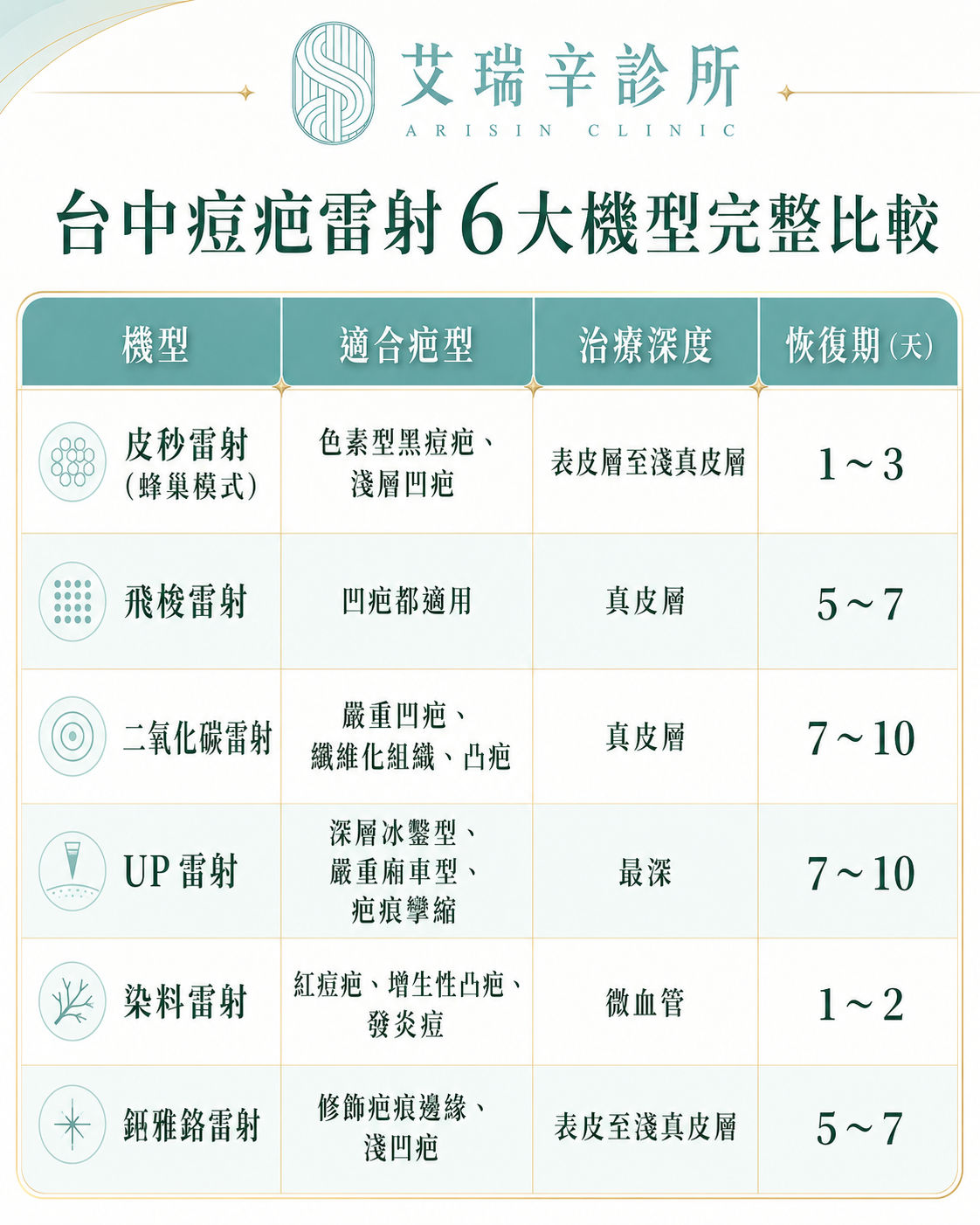
| Suitable for Scar Types | Therapeutic Depth | Recovery Period (Days) | Fee Guide (Yuan) | |
|---|---|---|---|---|
| Picosecond Laser (Honeycomb Mode) | Pigmented Acne Scars, Superficial Pitted Scars | From the epidermis to the superficial dermis | 1~3 | 6,000–15,000 |
| Shuttle Laser | Suitable for all types of indentations | Dermis | 5~7 | 15,000–35,000 (full face) |
| Carbon Dioxide Laser | Severe depressed scars, fibrotic tissue, raised scars | Dermis | 7~10 | 8,000–15,000 (full face) |
| UP Laser | Deep-seated ice-pick type, severe boxcar type, keloid contracture | Deepest | 7~10 | 15,000–35,000 (full face) |
| Dye Laser | Red Acne Scars, Hypertrophic Scars, Inflamed Acne | Capillaries | 1~2 | 5,000–15,000 (full face) |
| Er:YAG Laser | Smoothing Scar Edges and Shallow Indented Scars | Epidermis to the superficial dermis | 5~7 | 10,000–15,000 (full face) |
Single-Laser vs. Combination Laser Treatments: Which Offers More Comprehensive Results?
Most patients have more than one type of acne scar on their faces; they typically include a mix of red marks, hyperpigmentation, and indentations of varying depths. If only a single type of laser is used—such as a picosecond laser—it is not effective enough to treat deep atrophic scars; if only the UP laser is used, while it can address deep pits, improvements in overall facial texture and the reduction of red marks are relatively slow.
Doctors at Arixin Clinic typically develop a combination treatment plan based on the condition of facial acne scars. For example, they may use the UP laser to treat deep fibrosis, followed by the Picosecond Honeycomb laser to improve the texture of the superficial skin and refine pores. If there are red acne scars, a dye laser will also be incorporated into the treatment.
Recommended Laser Selection Pathway Based on Scar Severity
- Stage 1: Mild (primarily pigmented)
- Condition: Primarily red acne marks (telangiectasia) or dark acne marks (hyperpigmentation); the skin feels smooth to the touch and has only very shallow pores.
- Recommended treatment plan: Dye laser (for redness reduction), picosecond laser (for dark spot removal).
- Goal: Restore an even skin tone for a clean, fresh appearance.
- Phase 2: Moderate (Roller Type, Shallow-Bed Type)
- Condition: Acne scars have noticeable unevenness, but the indentations disappear or become less pronounced when the skin is smoothed out.
- Recommended treatment regimen: picosecond laser + fractional laser.
- Goal: Stimulate collagen regeneration, fill in superficial depressions, and improve skin texture and fineness.
- Stage 3: Severe (deep-seated, ice-pick, and fibrotic)
- Condition: The indentation is deep with sharp edges, and the skin feels relatively hard to the touch.
- Recommended treatment plan: Subcutaneous dissection, UP laser/CO₂ fractional laser, and localized erbium-YAG laser (for edge refinement).
- Goal: To sever the downward-pulling fibers, reshape the deep tissue structure, and transform “pits” into “smooth, shallow scars.”
- Phase 4: Combined Maintenance Phase
- Status: Structure has improved to 70-80%; now entering the refinement phase.
- Recommended regimen: Regular picosecond laser maintenance + medical aesthetic treatments, such as exosome infusion.
Complete Guide to Acne Scar Laser Treatment in Taichung
Laser treatment for acne scars is just one part of the treatment process; pre-treatment consultations and post-treatment care are also very important.
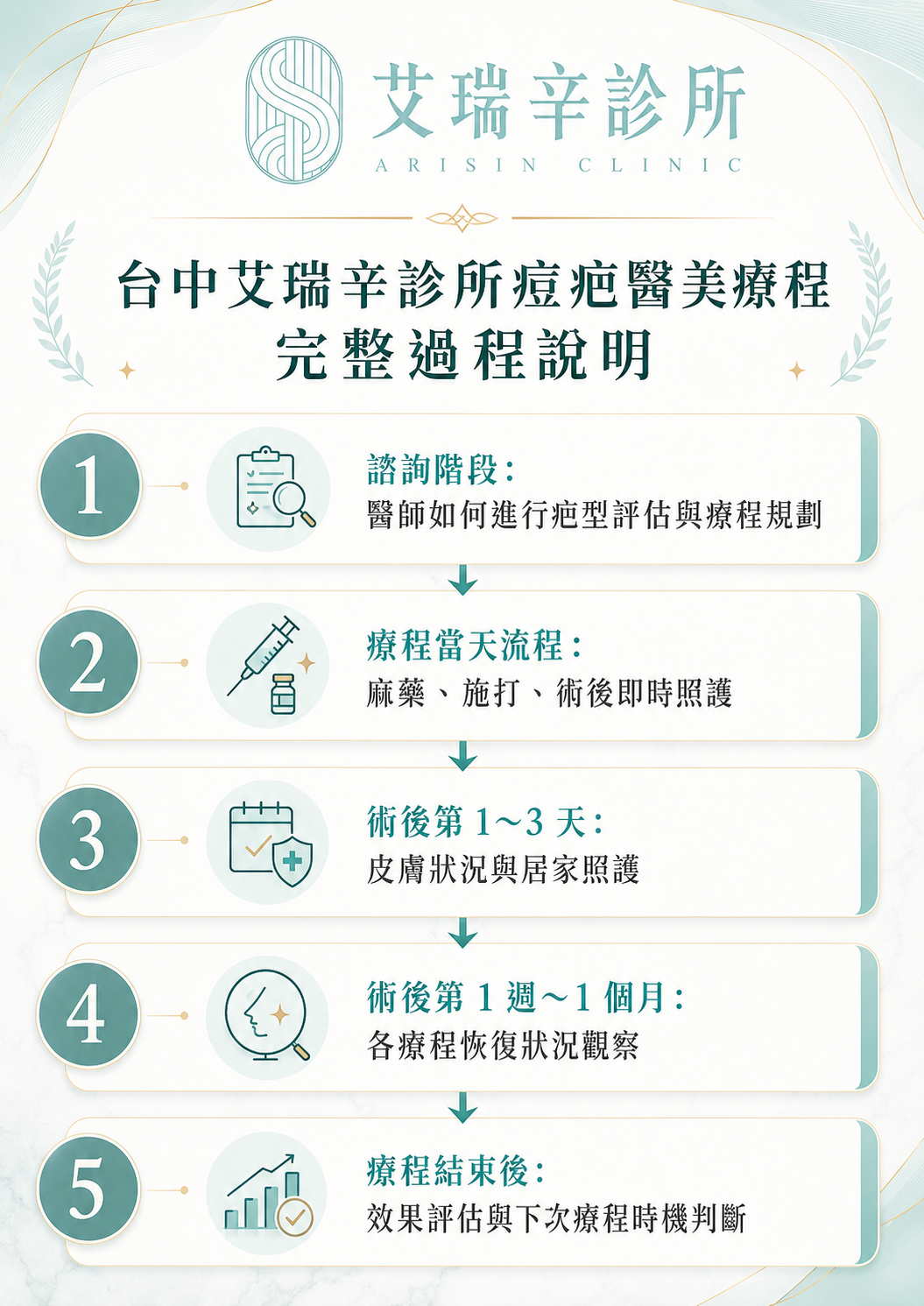
Consultation Phase: How Physicians Choose the Right Combination of Laser Models
Doctors at Arixin Clinic will conduct an initial assessment of the type of acne scars and develop a comprehensive treatment plan based on the patient’s acceptable downtime and budget.
Procedure Day Itinerary: Explanation of Each Stage, from Anesthesia to Injection
- Cleaning and Photography:Before the procedure, you will wash your face, and pre-procedure photos will be taken from various angles for documentation.
- Application of Anesthetic (approx. 20–40 minutes):Applying a numbing agent before the procedure can reduce the pain felt during laser treatment.
- Procedure Performed by a Physician:The laser treatment takes about 30 to 60 minutes. The doctor will switch between different handpieces (such as a honeycomb or focusing lens) depending on the severity of the scar. During the procedure, you may feel a sensation of heat or a slight snapping sensation, similar to a rubber band snapping against your skin.
- Postoperative Sedation:After the procedure, a nurse at Arixin Clinic will help you apply an ice pack to relieve post-operative heat and pain.
Days 1–3 After Surgery: Explanation of Normal Reactions Such as Scabbing and Redness
- Redness and a Sensation of Heat:On the day of the injection, you will experience a noticeable burning sensation on your skin, which usually subsides within 24 hours.
- Fine Scabs:Shuttlecock or CO2 lasers can cause the formation of tiny scabs.
- Tissue fluid:If a deep vaporization laser (UP) is used, there may be a small amount of tissue fluid seeping from the local wound; clean the area with ointment and saline solution as directed.
Week 1 to 1 Month Post-Surgery: Differences in Recovery Progress Among Various Laser Models
- Picosecond Laser:About 3 to 5 days after the procedure, the redness and swelling completely subsided, and the skin became brighter and fairer.
- Shuttle / Er Yachrom:The scab will fall off naturally about 7 days after surgery; do not pick at it. Once it falls off, the skin will appear a delicate pink color.
- CO2/UP Laser:Scabbing may last 7 to 10 days. After the scabs fall off, erythema may persist for 2 to 4 weeks as the dermis reorganizes.
- Key Maintenance Tips:At this stage, moisturizing and sun protection are top priorities.
After the Treatment: Peak Effectiveness of the Laser Treatment and Recommended Follow-up Visits
The primary goal of laser treatment for acne scars is to break down tissue, create micro-injuries, and stimulate new collagen production. Since collagen synthesis takes time, you’ll typically notice the smoothest and most supple skin 1 to 3 months after the procedure. If you encounter any issues during the recovery process, please feel free to contact Arixin Clinic at any time. Arixin Clinic’s professional medical team will provide answers as soon as possible.
Real-Life Cases of Acne Scar Laser Treatment at Taichung Arixin Clinic
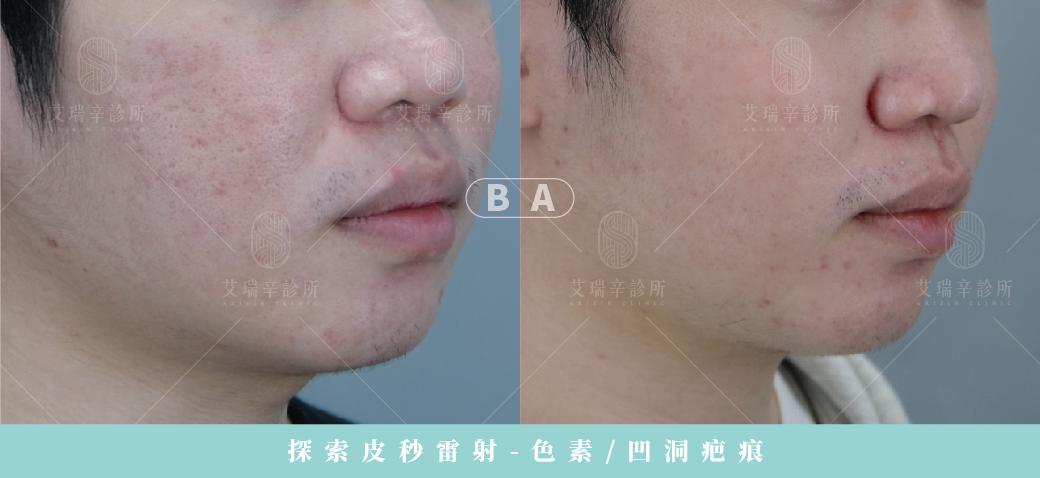
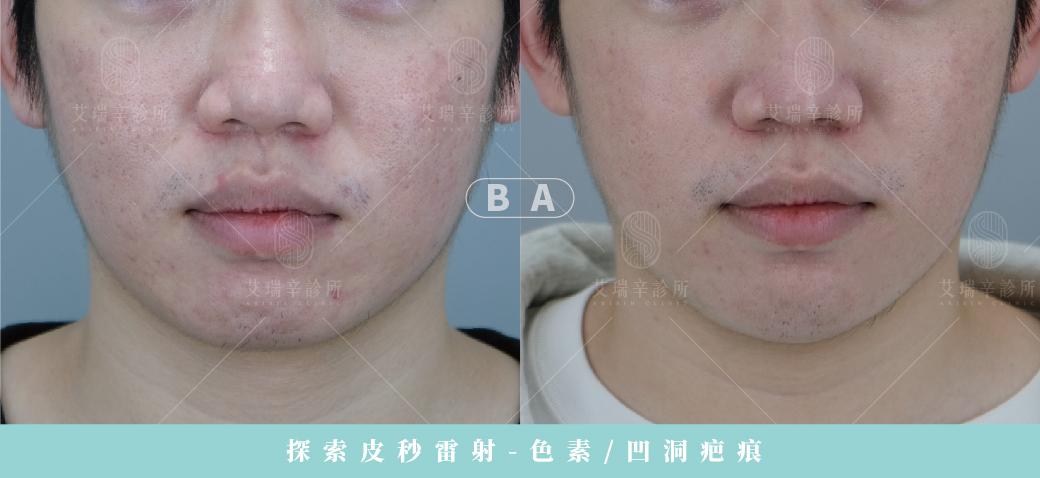
I. De-identified Customer Information
Patient Background: 32-year-old male (Mr. Zeng)
Skin Concerns: I’ve long been troubled by enlarged pores and noticeable acne scars.
Medical History and Chief Complaint: During adolescence, improper squeezing of acne led to indented acne scars of varying depths on the face. The patient lacks confidence in their appearance and hopes to improve their skin condition through professional medical aesthetics.
II. Physician’s Professional Judgment and Assessment
Following a detailed in-office consultation and skin examination by the doctor, it was determined that Mr. Zeng’s skin condition was a combination of issues:
Acne Scar Types: Includes multiple “carriage-wheel” and “ice-pick” acne scars; some areas show epidermal indentations caused by the pulling of fibrotic tissue.
Current skin condition: Characterized by noticeably enlarged pores, excessive oil production, and uneven skin tone caused by pigmentation.
III. Customized Treatment Plans
Doctors adopt a "comprehensive precision treatment" strategy to address skin issues at different levels in stages:
- Discovery PICO:Use a picosecond laser to improve overall skin texture and reduce uneven pigmentation.
- Super Lenses (Multifocal Lenses):Targets localized, deep acne scars by utilizing the LIOB (Light-Induced Optical Breakdown) effect to create cavitation beneath the skin, stimulating new collagen production to fill in the indentations.
- Subcision Technique Combined with PLT Growth Factors:For deep acne scars with severe fibrosis, the physician uses physical exfoliation to gently stretch the fibrous tissue in the epidermis while simultaneously introducing PLT cryocrystals to accelerate healing and optimize tissue regeneration.
- Microneedling Pen:Helps stimulate collagen production, refines pores, and shortens the recovery period.
Extended Reading:What Is a Picosecond Laser? How Does It Differ from the Honeycomb Picosecond Laser? A Comprehensive Guide to Post-Treatment Care
IV. Treatment Outcomes and Progress
Treatment Plan: We anticipate a course of 3–5 combined treatment sessions (subject to adjustment based on the condition of the restoration).
Return to Current Status: After a series of treatments, Mr. Zeng’s skin tone has visibly brightened; the edges of his previously sunken, boxcar-type acne scars have become less defined and smoother, and the appearance of his pores has significantly improved. Customer Feedback: When looking in the mirror now, the visual unevenness has greatly diminished, and he is very satisfied with the progress of his treatment so far.
Key Points for Post-Laser Acne Scar Treatment Care in Taichung
Laser treatment isn’t the end of acne scar treatment; post-treatment care is the key to maximizing the results of the laser procedure.
Skin Care Steps for the First 72 Hours After Laser Treatment
The first 3 days after surgery are the critical period for wound healing, during which the skin is inflamed, red, and swollen, and its barrier function is compromised:
- Wiping with Sterile Saline Solution:If there is any exudate or a small amount of blood, use a sterile cotton swab dipped in saline solution to gently dab the area clean; do not rub back and forth.
- Medical Repair Ointment:For minor wounds caused by UP laser or CO2 fractional laser treatments, apply antibiotic ointment or a specialized healing gel as directed by your doctor to keep the wound moist. If necessary, you may use an artificial skin dressing, changing it every 12 hours.
- Cooling and Soothing:If you feel feverish or unwell, you can apply an ice pack briefly—10 minutes at a time, with a 1-hour break in between—to avoid frostbite.
Sun Protection and Moisturizing: Two Key Post-Surgery Considerations
After laser treatment, your skin will be drier and more sensitive, so it’s important to moisturize and use sunscreen:
- Keep Your Skin Well-Moisturized:Use a fragrance-free, alcohol-free moisturizer with a simple formula, and reapply it whenever your face feels slightly tight or flaky. Proper moisturizing helps maintain the integrity of your skin barrier, reducing skin sensitivity and irritation.
- Protect Yourself from the Sun:If you’ve undergone treatments such as CO₂ laser or UP laser, which may cause wounds, wait until the wounds have healed—about 7 days—before applying sunscreen. In the meantime, you can use physical sun protection methods, such as wearing a hat and a face mask. After 7 days, you can resume using SPF 30–50 sunscreen as usual.
Post-Surgery No-No's: What Can Undermine Your Results
- Removing Scabs:A scab is a natural biological dressing that protects the new, delicate skin underneath. Removing it can lead to uneven healing and may even leave a new scar.
- Use of irritating ingredients:Avoid using skin-lightening products, alpha hydroxy acids, salicylic acid, vitamin A/retinol, or any exfoliating products for 2 weeks after surgery.
- Exposure to high temperatures:Avoid hot springs, steam rooms, saunas, or strenuous exercise, as high temperatures can cause the capillaries to dilate, increasing the likelihood of hyperpigmentation.
- Tobacco, Alcohol, and Spicy Foods:Alcohol and nicotine can slow wound healing, affect microcirculation, and reduce the proliferative effects of laser treatment.
Taichung Acne Scar Laser Treatment: Frequently Asked Questions (FAQ)
Where in Taichung can I get laser treatment for acne scars? How do I choose a clinic?
• Does the clinic offer a range of treatment options? A single type of laser is rarely sufficient to address all issues. A professional clinic should have a variety of devices and techniques available, such as picosecond lasers, dye lasers, UP lasers, subdermal peels, or TCA peels, among others.
.Pay attention to the thoroughness of the consultation: A professional doctor will carefully assess the current condition of your acne scars and honestly explain the limits of the treatment’s effectiveness and the number of sessions that may be required. If a doctor promises that “one treatment will completely cure your scars,” you should be especially cautious.
.Postoperative Care and Contingency Plans: You may ask your doctor whether there is a comprehensive postoperative care program, whether they can address persistent redness or swelling or hyperpigmentation, and whether there is a way to contact them at any time if problems arise.
How many laser treatments for acne scars are needed to see results?
.General Information: Mild pigmented scars usually show significant fading after 2 to 3 treatments.
.Scar Treatment: Since collagen regeneration takes time, a full course of treatment may require 3 to 6 sessions.
.Interval: We recommend waiting 1 to 2 months between treatments to allow the skin sufficient time to recover, ensuring better results during the next treatment.
Extended Reading:How Long Does It Take to See Results from a Picosecond Laser Treatment? A Comprehensive Guide to How It Works, Factors That Affect Results, and Post-Treatment Care
Will there be post-laser hyperpigmentation? Is this treatment suitable for people with darker skin tones?
It’s possible, and the darker your skin tone and the more active your melanocytes are, the higher the risk of post-treatment hyperpigmentation. Although advances in laser technology have significantly reduced energy intensity and pulse duration, post-treatment hyperpigmentation can still occur without proper sun protection. Therefore, it is essential to use sunscreen after the procedure to prevent your skin from darkening before your acne scars have fully healed.
Can I get a laser treatment if I still have acne?
It depends on the situation. If there are only one or two isolated pimples, the doctor can avoid the affected area; however, if you’re experiencing a severe breakout with redness, swelling, and pus all over your face—a period of severe inflammation—the doctor will typically use medication (such as oral retinoic acid) to control the inflammation first, to prevent the laser’s heat from exacerbating the infection.
How much should I budget for laser treatment for acne scars in Taichung?
Prices in Taichung vary significantly depending on the machine model. The following are budget guidelines for a single treatment session:
.Basic Maintenance Plan: Approximately 5,000 to 10,000 yuan.
.Standard Scar Treatment (Fractional Laser/Picosecond Honeycomb): Approximately 8,000 to 15,000 yuan.
.Advanced Deep Reconstruction (UP Laser): Approximately 18,000 to 35,000 yuan.
If you want to improve severe acne scars, we recommend planning your budget around a “package treatment” (approximately 3–5 sessions), with a total budget ranging from about 40,000 to 80,000. However, the final cost will depend on your specific condition and the treatment plan developed by your doctor.
Don’t let acne scars affect your self-confidence! Taichung Arixin Clinic offers customized laser treatment plans for you.
Everyone’s acne scars are unique—they may be red scars, hyperpigmentation, or deep, ice-chiseled-like indentations. We do not advocate a “one-size-fits-all” approach. Instead, through a professional in-person consultation with a physician, we tailor the most suitable laser treatment plan for your acne scars and provide the most comprehensive post-treatment care regimen.
Acne scar treatment is a long-term process that requires expertise and patience. Don’t let acne scars continue to bother you—contact Arixin Clinic today to schedule a consultation with a specialist. Let Arixin Clinic help you regain smooth, even skin!