




Picosecond laser treatment is currently a very popular option in photonic cosmetic procedures. The question many people are most eager to ask during their initial consultation is: “How long after the treatment will I see results?” “Will I feel a difference after just one session?” This article begins by explaining the principles and benefits of the treatment, then covers the timeline for seeing results from picosecond laser treatments, influencing factors, treatment frequency, and key points for post-treatment care.
Picosecond Laser Catalog
What is a picosecond laser? What are its main benefits?
Principles of Picosecond Lasers
A picosecond laser is a type of laser that emits energy in pulses measured in “picoseconds” (one trillionth of a second). Compared to traditional nanosecond lasers, picosecond lasers have shorter pulse durations, allowing them to deliver energy to skin tissue at a faster rate.
The principle behind picosecond lasers is the use of the “photoacoustic effect” to replace the “photothermal effect” of traditional lasers. When ultra-short laser pulses enter the skin, they cause pigment particles—such as melanin and tattoo ink—to vibrate and shatter into even smaller particles, which are then eliminated from the body through natural metabolic processes. Because the treatment time is extremely short, thermal damage to surrounding healthy tissue is relatively low, resulting in a shorter recovery period and milder discomfort.
Benefits of Picosecond Lasers
Picosecond lasers have a wide range of applications, and their common benefits include:
- Fades dark spots: such as sunspots, freckles, and cheekbone moles, among other pigmentation issues
- Improves uneven skin tone: Evens out overall skin tone and enhances radiance
- Minimizes pores and improves rough skin texture: Stimulates collagen regeneration through shockwave effects
- Fading Acne Scars and Pits: When used with specific probes, it can improve scar tissue
- Tattoo Removal: Breaks down tattoo pigment, allowing the design to gradually fade through the body's natural metabolic processes
DermNet, a website founded by the New Zealand Dermatological Society, notes that the primary use of picosecond lasers is to treat tattoos and pigmentation issues. Depending on the wavelength, picosecond lasers are particularly effective at removing blue and green pigments that are difficult to eliminate with other lasers. They can also treat melasma, freckles, sunspots, Nevus of Ota, and more. Furthermore, it reduces melanocytes and lowers tyrosinase activity, thereby continuously suppressing melanin production at its source.
The energy levels, probe selection, and treatment plans required vary depending on the specific skin condition; actual results can only be confirmed after an evaluation by a qualified physician. To learn about the differences in wavelength and technical specifications among various picosecond laser models, please refer to the article “Exploring Picoseconds」。
How long does it take to see results from a picosecond laser treatment? Will I notice a difference after just one session?

The results of picosecond laser treatment are not immediately visible after the procedure but gradually become apparent as the skin renews itself. The following is a general timeline for reference.
Changes Over the Course of a Week
Within a week after a picosecond laser treatment, most people will first notice that their skin appears more radiant and feels smoother; this is because the shockwave effect promotes the exfoliation of dead skin cells. If the treatment is for pigmentation issues, some areas may initially appear slightly darker or develop scabs. This is a normal part of the pigment metabolism process and does not indicate that the treatment is ineffective.
Changes Over One to Three Months
When treating pigmentation issues (such as dark spots and uneven skin tone), it generally takes one to three months—the skin’s metabolic cycle—to see noticeable lightening effects; Meanwhile, results related to collagen regeneration—such as pore tightening and acne scar improvement—also tend to gradually emerge during this period, and the effects become increasingly stable as the number of treatment sessions increases.
Results may vary depending on individual skin condition, device settings, and the level of aftercare. The timeline provided above is for general reference only; we recommend discussing your specific situation with your doctor and scheduling regular follow-up visits.
What Factors Affect the Visible Results of Picosecond Laser Treatments?
Strength of Energy
The energy settings directly affect the depth and intensity of each treatment session. Higher energy levels produce a stronger vibrational effect on pigment or tissue, but may also result in a relatively longer recovery period; more conservative energy settings yield gentler results but may require more sessions to achieve the desired improvement. Energy settings must be individually adjusted by a physician based on the patient’s skin condition; higher is not necessarily better.
Personal Skin Condition
Everyone’s skin type, metabolic rate, pigmentation level, and skin thickness vary, and these factors influence the rate of pigment metabolism and skin repair. Therefore, even with the same treatment regimen, the time it takes for results to appear may differ from person to person.
Level of Postoperative Care
Whether you properly moisturize, use sunscreen, and avoid irritating your skin after picosecond laser treatment directly affects the speed of skin healing and the consistency of the results. Inadequate aftercare may prolong the recovery period and impair the efficiency of melanin metabolism, while failing to use sunscreen properly also increases the risk of post-treatment hyperpigmentation.
Model Wavelength
Picosecond lasers of different wavelengths target slightly different conditions; for example, the commonly used 1064 nm wavelength is often used to treat deeper pigmentation issues, while the 532 nm wavelength is suitable for treating more superficial pigmentation and uneven skin tone. The choice of machine model affects both the treatment plan and the timeframe required to achieve results.
Differences Among Picosecond Laser Models Commonly Used in Clinics
| Model | distinctiveness | Suitable for problem-solving |
|---|---|---|
| Exploring Picoseconds | With a multi-wavelength design and a choice of 8 probes, it can be flexibly configured based on individual symptoms, treatment area, and depth. | Blemishes, uneven skin tone, pores |
| Honeycomb Picosecond | Honeycomb Lens Focusing Promotes Collagen Regeneration | Acne Scars, Pore Minimization |
| 4D Picosecond | Combines multiple probe modes to adjust the depth of the laser's effect | Combination skin, deep pigmentation |
| True Picosecond | Patented pulse technology, with a shorter recovery period | People with sensitive skin or those trying picosecond laser treatment for the first time |
(The table provides a general comparison; actual technical specifications and recommendations for specific models are subject to a physician’s evaluation.)
How often should I get a picosecond laser treatment, and how long do the results last?
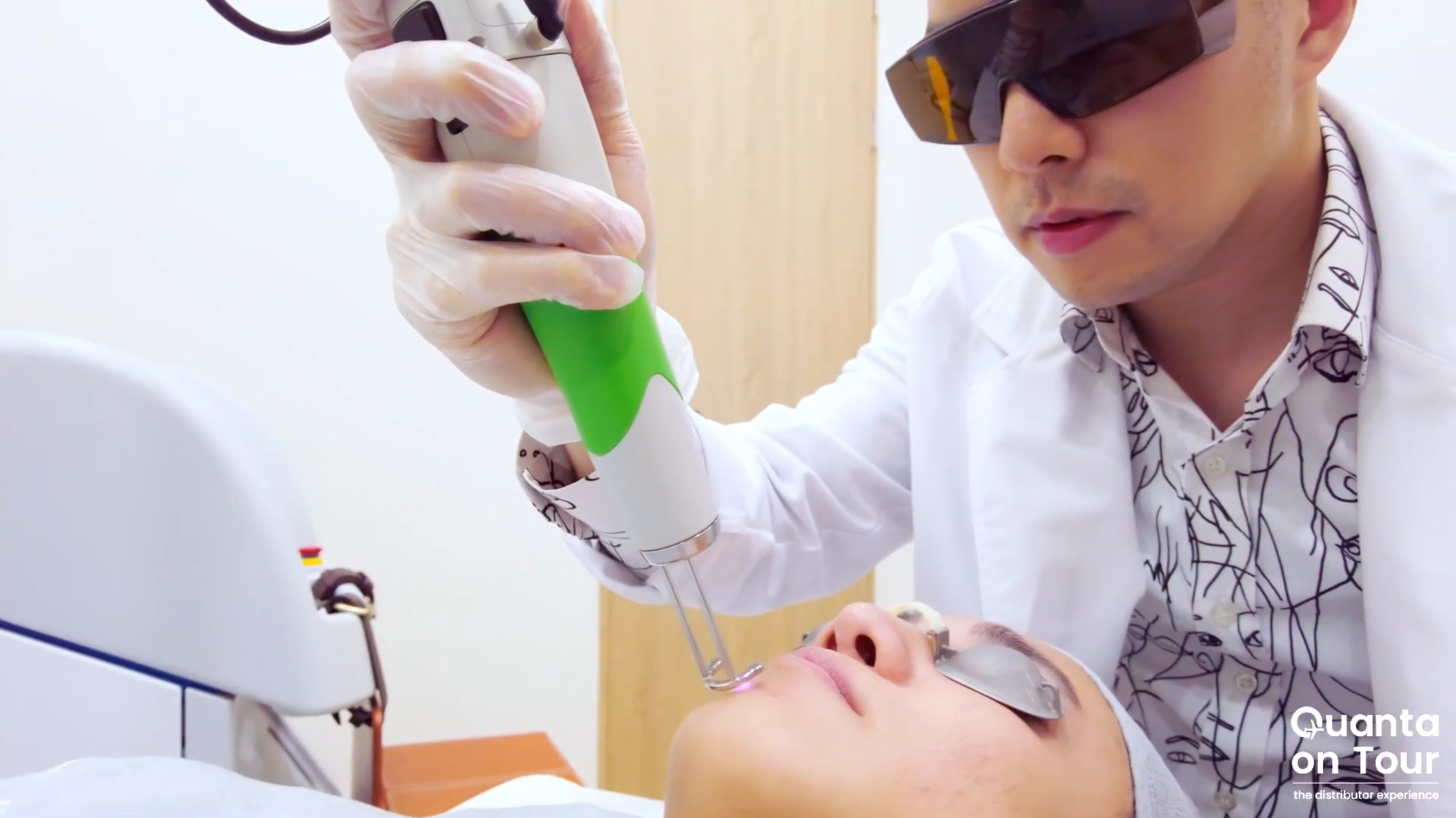
I want to improve my skin's appearance regarding dark spots
If the goal is to lighten spots and improve pigmentation issues, picosecond laser treatment uses laser energy to break down melanin so it can be eliminated by the body. A complete course of treatment typically consists of 3 to 6 sessions, with each session spaced approximately 4 to 6 weeks apart. Even after spots have been reduced, it is still important to maintain daily sun protection to minimize the risk of new spots forming; depending on individual skin condition, maintenance treatments can be scheduled approximately 1–2 times per year.
Simply to improve skin condition
If your primary goal is to improve pores, fine lines, skin tone evenness, and skin radiance, laser treatment can stimulate collagen regeneration. It is typically recommended to undergo at least three sessions, spaced approximately 4 to 6 weeks apart, as skin quality gradually improves with each treatment. After completing the treatment course, you can schedule a maintenance session approximately every 3 to 6 months, depending on your individual skin condition, to help maintain your skin’s health.
The actual frequency of treatments and the total number of sessions will still need to be determined on a case-by-case basis by a physician, based on the individual’s skin condition, treatment goals, and recovery progress. The figures above are provided for general planning purposes only.
How should I care for my skin after picosecond laser treatment to see results faster?
Within 24 hours after surgery
- Cooling and Relief: After the injection, you may experience redness or a burning sensation on your skin. This is a normal reaction. You can wrap ice in a clean towel and apply it to the area for about 10 to 15 minutes at a time to help relieve any discomfort.
- Facial cleansing guidelines: Avoid getting your face wet for the first 12 hours. If you need to cleanse your face, gently rinse it with water—do not rub it.
- Take a break from skincare and makeup: During this period, avoid using products containing acids, skin-lightening agents, alcohol, or preservatives. It’s also recommended that you skip makeup to let your skin rest.
1–3 days after surgery
- Gentle Cleansing: Gently cleanse your face with warm water and a simple, soap-free facial cleanser. After washing, gently pat your face dry with a towel—do not rub.
- Moisturizing and Repair: During this phase, the skin tends to be dry, so it is recommended to use a lotion or cream to boost hydration and relieve tightness and flaking.
- Physical Sun Protection: When going outdoors, it is recommended to prioritize using hats, umbrellas, and face masks to block the sun and avoid direct sunlight; if you need to apply sunscreen, choose a mild physical sunscreen.
- Treatment of Minor Scabbing: The "Honeycomb" picosecond laser treatment may cause minor scabbing. Do not pick at the scabs; let them fall off naturally, as picking at them can lead to hyperpigmentation.
Within 7 days after surgery
- Enhanced Hydration: In addition to hydrating products such as toners and serums, you can also use a moisturizer to lock in moisture, which helps repair the stratum corneum and enhances the skin’s radiance.
- Strict Sun Protection: When going outside, it’s recommended to use sunscreen with SPF 50+ and PA++++, and to reapply it regularly. Even indoors, if you’re near a window, it’s advisable to apply sunscreen—this is a crucial step in preventing skin darkening.
- Pause Skin-Brightening and Exfoliation: During this period, stop using skincare products containing alpha hydroxy acids, salicylic acid, and retinol to allow your skin to rest and repair itself.
- Avoid excessively hot environments: Try to avoid hot springs, steam rooms, or strenuous exercise that causes heavy sweating, to give your skin enough time to stabilize.
Erisyn Picosecond Laser Case Studies
I. De-identified Customer Information
- Customer Profile: A stay-at-home mom who spends most of her time caring for her children and doing household chores, leaving her little time for skincare.
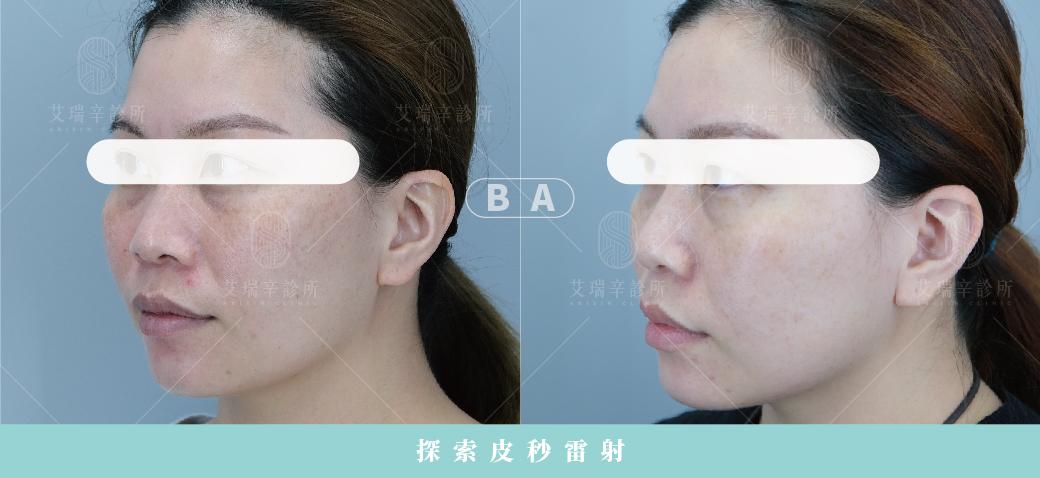
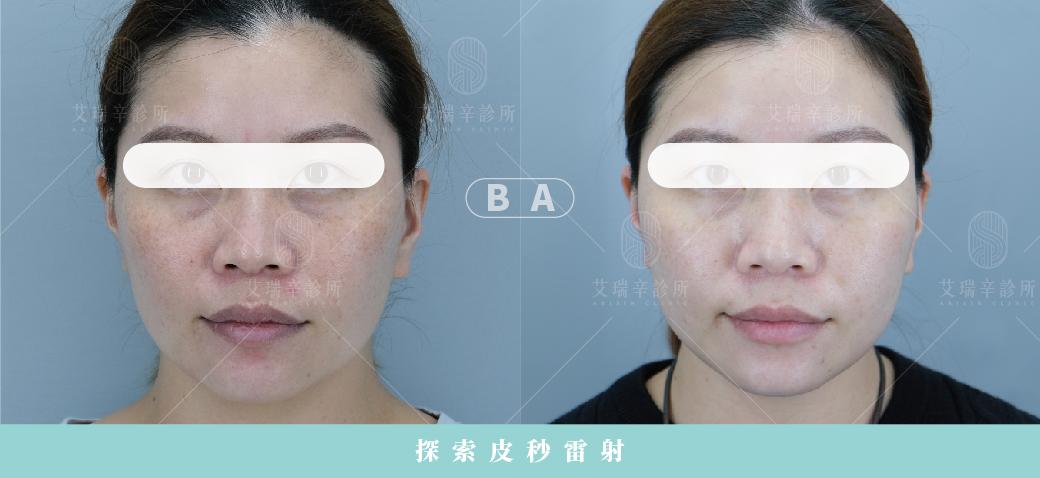
- Skin Concerns: Due to long-term neglect of sun protection, spots of varying darkness have appeared on both cheeks. The skin also appears dull and sallow, giving the face an overall tired appearance.
- Main Concerns: As my child grows older and I have more time to take care of myself, I hope to improve the appearance of facial spots and uneven skin tone so that my skin looks brighter and more radiant.
II. Physician’s Professional Judgment and Assessment
After a detailed assessment of the patient’s skin condition, the doctor determined that the patient primarily had sunspots combined with mild skin discoloration. Considering the client’s desire to improve both the spots and the overall dullness of her complexion, the doctor recommended treatment with the “Discovery Pico Picosecond Laser” and adjusted the treatment parameters to suit the depth of the spots and her actual skin condition.
III. Customized Treatment Plans
- Discovery Pico Picosecond Laser: Treats facial spots of varying depths and adjusts the wavelength and energy parameters to suit the patient’s skin condition.
- Pre-treatment Assessment: After the physician assesses the distribution of spots, skin tone, and overall skin condition, a suitable treatment plan will be developed.
- Treatment Process: Since the treatment primarily targets superficial spots, the doctor determined that no additional numbing cream was necessary after an evaluation. During the procedure, there was a slight stinging and warming sensation, but the discomfort remained within tolerable limits. After cleansing the face, the laser treatment began immediately, and the entire procedure took approximately 15 to 20 minutes to complete.
- Post-Treatment Care: After the treatment, our nursing staff will provide soothing and moisturizing care. We also recommend taking extra precautions against sun exposure and avoiding the use of irritating skincare products for the time being.
IV. Treatment Outcomes and Progress
After a course of treatment, before-and-after photos show that the customer’s previously noticeable spots on her cheeks have faded, her overall skin tone has become more even, and her skin appears brighter. The client mentioned that, as she is usually busy taking care of her family, she tends to put herself last. After improving her skin condition, not only does she feel her complexion has improved, but her family and friends have also noticed that she looks more energetic lately. Through this treatment, the client has rediscovered the importance of taking time to care for herself. She plans to continue scheduling treatments in the future, hoping to further fade the spots and regain her natural, healthy glow.
Frequently Asked Questions About Picosecond Lasers
Do I need to keep getting picosecond laser treatments?
Not necessarily. Picosecond laser treatments are typically administered in a series (usually 3 to 6 sessions per course). Once the desired results are achieved, the treatment can be adjusted to maintenance-based, intermittent sessions depending on your skin condition; it is not necessarily required to continue the treatment indefinitely. Whether you need to continue the treatment should be discussed with your doctor based on your current skin condition.
Does the skin get thinner with each picosecond treatment?
No. When performed correctly, picosecond laser treatment does not thin the skin; rather, it stimulates the production of new collagen in the dermis, making the skin thicker and more elastic. However, if treatments are performed too frequently or at excessively high energy levels—preventing the stratum corneum from repairing itself—the skin barrier may weaken and become sensitive within a short period. Therefore, maintaining a reasonable interval between treatments is crucial.
Does picosecond laser treatment brighten the skin?
Yes. Picosecond lasers use extremely short pulse durations to shatter melanin into fine particles and accelerate the body’s metabolic processes. As a result, picosecond lasers can simultaneously lighten dark spots and improve uneven skin tone, restoring the skin’s radiance. When combined with a honeycomb lens, they can further enhance the skin’s texture and luminosity.
How long is the recovery period for picosecond laser treatment?
Picosecond laser treatment is a minimally invasive procedure with a short recovery period. Depending on the intensity of the treatment and its purpose, recovery typically takes 2 to 7 days. During this time, it is important to keep your skin moisturized and protected from the sun. However, the recovery period may vary slightly depending on your individual skin condition, so it is recommended that you follow your doctor’s post-treatment instructions for aftercare.
Recommended Picosecond Laser Treatment at Ariesin Clinic in Taichung
If you want to improve deep pigmentation spots, pitted acne scars, enlarged pores, or dull skin tone, choosing a professional and trustworthy medical aesthetics clinic is key. Arixin Clinic offers high-quality skin care and non-surgical aesthetic services and is your top recommendation for picosecond laser treatments.
The clinic has introduced original-manufacturer picosecond laser equipment, with treatments personally assessed and performed by experienced, professional physicians. Our team of physicians customizes treatment parameters based on each client’s skin condition and combines them with specialized lenses to deliver a multi-modal treatment approach that addresses skin concerns while protecting surrounding tissue. Adhering to transparent pricing, professional responsibility, and a warm, comfortable service philosophy, Arixin Clinic helps you regain smooth, radiant, and flawless skin in a reassuring, stress-free environment.
Arixin Clinic’s Three Commitments to Your Peace of Mind
- Genuine Equipment and Certified Devices: We strictly maintain medical quality standards by using genuine laser systems and genuine lenses to ensure stable energy output and treatment safety.
- Customized Evaluation by a Specialist Physician: We reject a one-size-fits-all approach; a physician personally conducts the consultation and adjusts the laser wavelength and energy output.
- Comprehensive Postoperative Care System: We provide detailed health education and postoperative follow-up care to help you smoothly navigate the recovery period and reduce the risk of hyperpigmentation.
If you're looking for a picosecond laser treatment, we invite you to schedule a consultation at Arixin Clinic, where our professional team will create a personalized skincare plan to fade dark spots and brighten your complexion.